
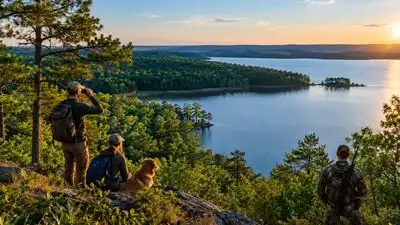
Representative Image (AI-generated)
A conservation campaign in North Carolina has secured the first 200 acres of land around Tuckertown Reservoir, preserving public access to a stretch of shoreline and forest that has been available to outdoor users for decades. The Three Rivers Land Trust (TRLT), which is leading the Save Tuckertown campaign, announced the completion of the first acquisition in August 2026. More than 1,400 grassroots donors contributed to the effort, with donations coming from across the US and beyond, according to the organisation. The 200-acre acquisition, however, represents only the first phase of a much larger conservation effort. TRLT says about 3,800 additional acres surrounding Tuckertown Reservoir remain at stake.
The first tract will ultimately be transferred to the North Carolina Wildlife Resources Commission and remain part of the state’s public gamelands. The conservation group is now seeking to acquire additional parcels before they can potentially be sold for development.
The land has historically been privately owned by Alcoa but has been enrolled in the North Carolina Gamelands Program, allowing public recreational access.
Three Rivers Land Trust (TRLT) acquired 200 acres around Tuckertown Reservoir and plans to transfer the property to the North Carolina Wildlife Resources Commission. TRLT says more than 1,400 grassroots donors contributed, with donations coming from every US state, Guam, Canada and Europe. The North Carolina Wildlife Habitat Foundation contributed $40,000 toward the priority tract, with the contribution matched by the two companies. TRLT points out that the remaining properties were not covered by a 2007 relicensing settlement that resulted in other Tuckertown-area land being conserved. TRLT notes that nearly 80% of North Carolina’s population lives within 100 miles of the Tuckertown lands. The 200-acre purchase is only the beginning of the Save Tuckertown campaign. TRLT estimates that another 3,800 acres around the reservoir remain at risk of being sold. One of the next major targets is an approximately 800-acre tract. It also has views of Tuckertown Reservoir from Highway 49. It has helped move more than 8,000 acres into public ownership, including properties around High Rock Lake and along the eastern shoreline of Tuckertown, according to TRLT. The first 200 acres at Tuckertown now form another part of that effort. For the moment, the campaign has a clear achievement to point to: 200 acres have been secured with help from more than 1,400 donors. With about 3,800 privately owned acres remaining at risk, TRLT’s work at Tuckertown is far from finished. For those who already use Tuckertown Reservoir, the first 200 acres offer some certainty.
Because the property has not historically functioned like an ordinary piece of private land, that distinction matters. Because of the area’s proximity to several population centres, its concern is particularly relevant.
The land trust says properties such as this could be sold at any time. The first part of the campaign has now moved from fundraising to a completed land purchase. The land will remain available through the state’s public gamelands system rather than being closed off for private use. it has been enrolled in the North Carolina Gamelands Program, allowing members of the public to use it for recreation Although the surrounding acreage has been privately owned. The campaign attracted support from a surprisingly wide area. The fundraising effort also received support from outdoor companies onX and MeatEater, which participated in a matching campaign. For TRLT, the response was a sign that the concern over Tuckertown extends beyond the people who live immediately around the reservoir. The land surrounding Tuckertown Reservoir is valuable for reasons that go beyond public access. The forested properties provide habitat for wildlife and help maintain a natural buffer along the reservoir. Keeping large portions of that landscape intact also means the shoreline is less likely to be transformed by development. There is a history behind the current campaign as well. Some land around Tuckertown has already been protected through previous conservation efforts. That has left a substantial amount of privately owned property in a different position. The land trust is now working to prevent those remaining parcels from being sold and potentially developed. If the properties change hands and are developed, public access to parts of the shoreline could become more limited. The organisation is seeking to acquire those properties gradually, depending on funding and opportunities to purchase the land. The property includes more than four miles of shoreline and a mature hardwood forest. If they are purchased for private development, the character of the shoreline could change considerably, along with the way the public uses the area. TRLT’s plan is to step in where possible, purchase the properties and eventually transfer them to the North Carolina Wildlife Resources Commission. The goal is to keep the land within the public gamelands system rather than simply placing it under another form of private conservation ownership. That public-access element is central to the project. Conservation does not always mean that land becomes public. In this case, however, TRLT is deliberately pursuing a route that can keep people on the land. Once properties are acquired, they can remain available for public recreation while arrangements are made for their eventual transfer. The land trust has followed a similar approach elsewhere in North Carolina. But the much larger figure is still ahead. The organisation will need to continue raising money and finding opportunities to purchase individual properties. Each successful acquisition could keep another section of shoreline, forest and recreational land from changing hands. The wider landscape, however, will depend on what happens with the thousands of acres that remain. You use AI every day. Now get your AI Quotient. Take the AIQ test.