
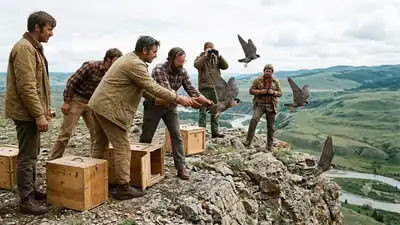
More than 6,000 American peregrines were released through recovery programmes, according to the National Park Service (NPS). The American peregrine falcon was removed from the US federal endangered and threatened species list in 1999. In the early 1974s, American peregrine falcons were struggling to survive in parts of North America. Years of DDT use had left many eggs with thin shells that could crack during incubation, leaving fewer chicks to hatch. Conservationists responded by breeding the birds in captivity and releasing them into the wild. Restrictions on DDT and legal protection also played a part in the comeback. Along Alaska’s rivers, long-term surveys later recorded a rise in nesting pairs.
The United States Environmental Protection Agency (EPA) banned DDT for most uses in the country in 1972, using powers granted under the Federal Insecticide, Fungicide, and Rodenticide Act. The restriction followed growing evidence of the damage the chemical was causing to wildlife, particularly birds whose survival depended on successful breeding.
Together, these efforts resulted in the release of more than 6,000 American peregrines from 1974 onwards. Results from the 2003 assessment estimated about 3,000 breeding pairs across the United States, Canada and Mexico. The young birds could then be introduced into suitable habitats through a technique known as hacking, which gives them time to adjust to their surroundings before becoming independent.
Scientists at Cornell University developed successful methods for breeding and raising peregrine falcons in captivity. The programme involved the US Fish and Wildlife Service, state wildlife agencies, The Peregrine Fund, the Santa Cruz Predatory Bird Research Group and the Midwestern Peregrine Falcon Restoration Project. The work involves searching cliffs and bluffs where peregrines establish nests, observing birds and recording their breeding activity. The terrain can make surveys demanding, but repeated visits allow scientists to compare nesting activity across years and assess whether birds continue to occupy established territories. Researchers also examined territory occupancy, nesting success and productivity, measures that help show whether birds are reproducing successfully rather than simply appearing in greater numbers.