
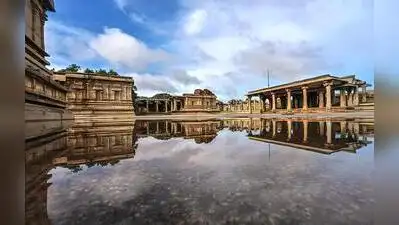
Hampi
Hampi (Vijayanagara): A Unesco monitoring team will visit Hampi and surrounding heritage areas, including Anegundi and Anjanadri, from Oct 24 to 29 to review conservation efforts, master plan implementation and compliance with World Heritage Site guidelines. Deputy commissioner Kavitha S Mannikeri said the team would arrive in Delhi on Oct 22, meet officials and travel to Hampi on Oct 24. The district administration has prepared for the visit.
The inspection will review progress since the last Unesco team visited Hampi in 2009 and assess whether development is consistent with the site’s historical and architectural significance. Hampi, the former capital of Vijayanagara Empire, was included on Unesco World Heritage List in 1986. Management and development concerns led to its inclusion on the List of World Heritage in Danger in 1999. The heritage landscape covers more than 100 sq km across core, buffer and peripheral zones and is managed by Archaeological Survey of India and Hampi World Heritage Area Management Authority. The removal of commercial cafes from Hippie Island in 2019 caused economic hardship, while residents have complained of inadequate civic amenities despite tourism revenue. A partnership involving Hindustan Aeronautics Limited, National Culture Fund, and Archaeological Survey of India has secured a Rs 23.6-crore agreement for 2026-2029 to fund conservation and visitor facilities at the historic North and South Bazaar areas.
Stay updated with the latest Hubballi news. The team will include heritage experts George Abungu of Kenya and Ichita Shimoda of Japan, along with Jahnavi Sharma, additional director-general for World Heritage Sites. It will inspect historic monuments, temples and ancient remains, focusing on conservation, encroachment control and the impact of tourism and infrastructure development. Corrective measures recommended by Unesco subsequently helped the site retain its status. Construction and commercial activity are restricted to protect the monuments and their setting. However, tourist footfall, agricultural expansion, new bridges, modern religious structures and commercial encroachments continue to pressure the area. Conservation measures have also caused demolitions, displacement and livelihood losses. Download the TOI App.