Ruben Andersson is Professor of Social Anthropology at the University of Oxford

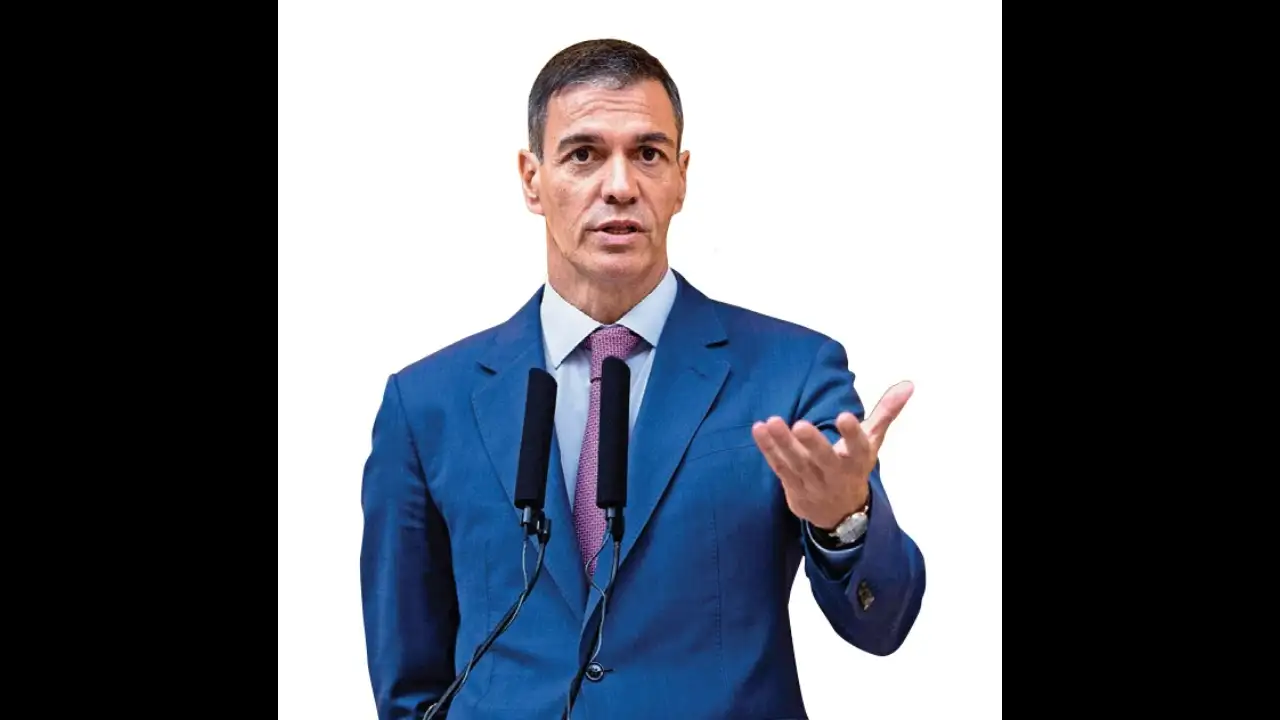
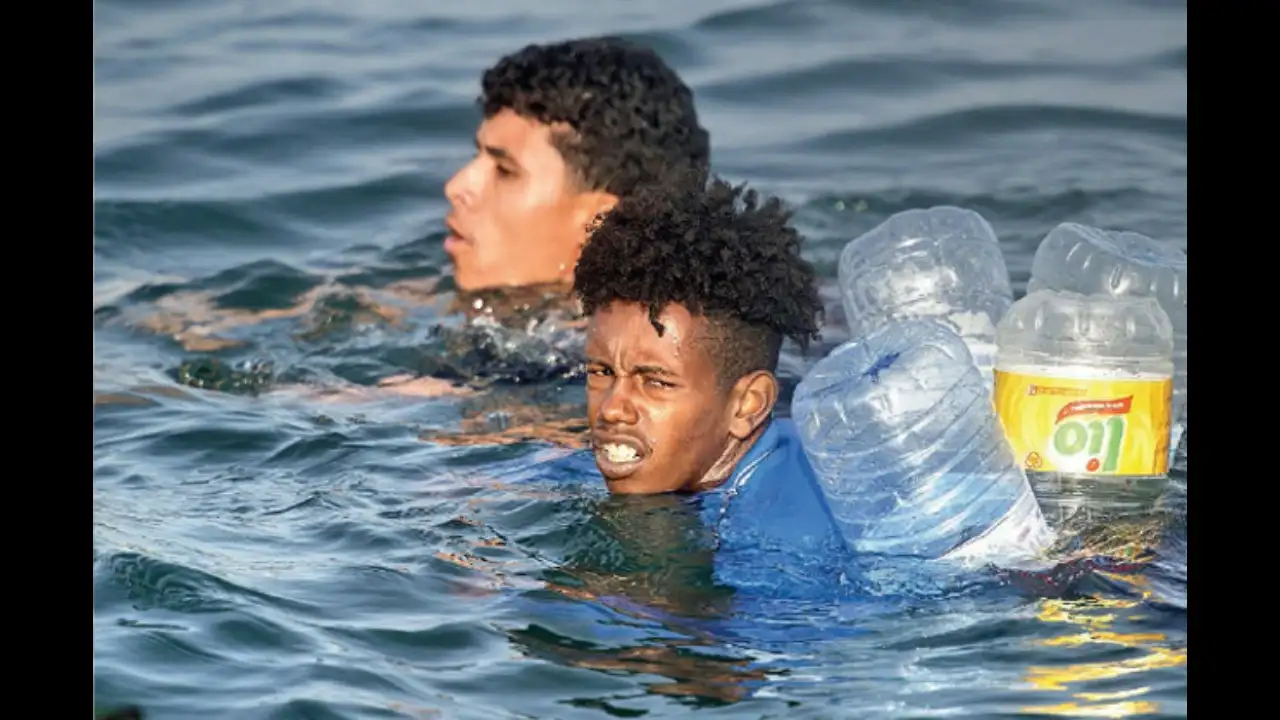
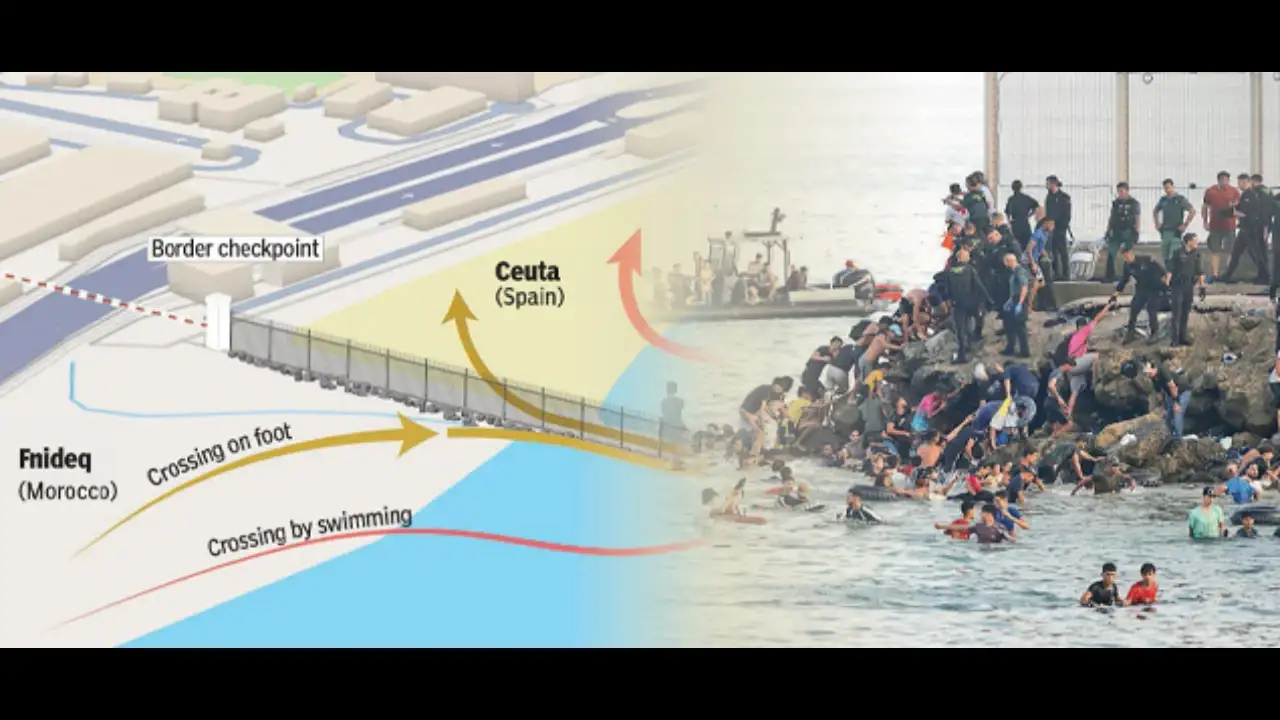
Around 78,000 migrants swam recently from Morocco to Ceuta, a Spanish enclave in North Africa — while most have been sent back, some remain, the ‘migrant crisis’, a symbol of uneasy colonial histories and new geopolitical strategies We often understand ‘migration’ now via images of people crossing dangerous seas on tiny boats, etc. This is likely part of a strategy for pressuring Spain geopolitically over a rapprochement or new phase in relations with Algeria, as announced by Pedro Sanchez, the Spanish Prime Minister, a few days before the crisis. Ruben Andersson is Professor of Social Anthropology at the University of Oxford Ruben Andersson is Professor of Social Anthropology at the University of Oxford. As thousands of migrants arrived in Spanish Ceuta this week, he spoke with Srijana Mitra Das at Times Evoke about perceptions of migration as a ‘threat’ — and an expanding global industry of ‘security and fear’: What is the core of your research? I’ve just finished a new book called ‘Age of Security: The Rise of a Global Obsession’. This is about how, across the world, we’re seeing more of a demand for security in our lives and protection against supposed threats that surround us. It’s based on research done over many years. I’ve spent time at European borders and beyond, looking at how European countries started to treat migration as a security threat. I’ve also looked at mass surveillance in our societies and everyday lives, where we increasingly turn to security technology to feel safer, whether it’s video cameras for our front doors, child tracking apps, etc. I argue we’re seeing a politics of security taking hold — but it’s not helping us. It’s creating more insecurity and pulling us further apart. Let’s discuss Ceuta and its perceived security threat — but first, why does Spain even have an outpost in Africa? In the 15th-16th centuries, Ceuta, and another enclave in North Africa, Melilla, came under Spanish possession. So, Spain has always seen Ceuta and Melilla as two very different contexts to the rest of colonial northern Morocco held by Spain — which was decolonised. Do ‘cultural attack’ fears enrich a security industry? What drove this sudden migration to Ceuta? There’s always been a demand for labour migration in Morocco, which has a large young population and desperate economic situations for many, despite recent growth. Alongside, there is a demand for workers in Europe and Spain has actually been regularising migrants, viewing them as social contributors. However, what happened now in this tiny Spanish enclave is a high-stakes geopolitical game. Actors outside the European Union are now using migration as a bargaining chip to push their political and economic aims and create chaos in Europe — I’d argue Morocco used that tactic over the past week. We don’t have all the facts yet but messaging from Spanish intelligence and eyewitness accounts suggest Moroccan law enforcement stopped their controls at the border. Such pictures suggest a rise in informal migration — is that accurate?
They were previously held by Portugal, which predated Spain’s colony in northern Morocco as well as the modern Moroccan state by centuries.
In Europe, they have fallen from the one-off record in 2015. They’ve always, as a rule, with the exception of 2015, been very low. Is this a post-9/11 occurrence? In my book, I actually trace it back to the decade before 9/11, to the 1990s, when the Cold War ended and the Iron Curtain came down — that was when the United States and Europe started building walls against irregular migration.
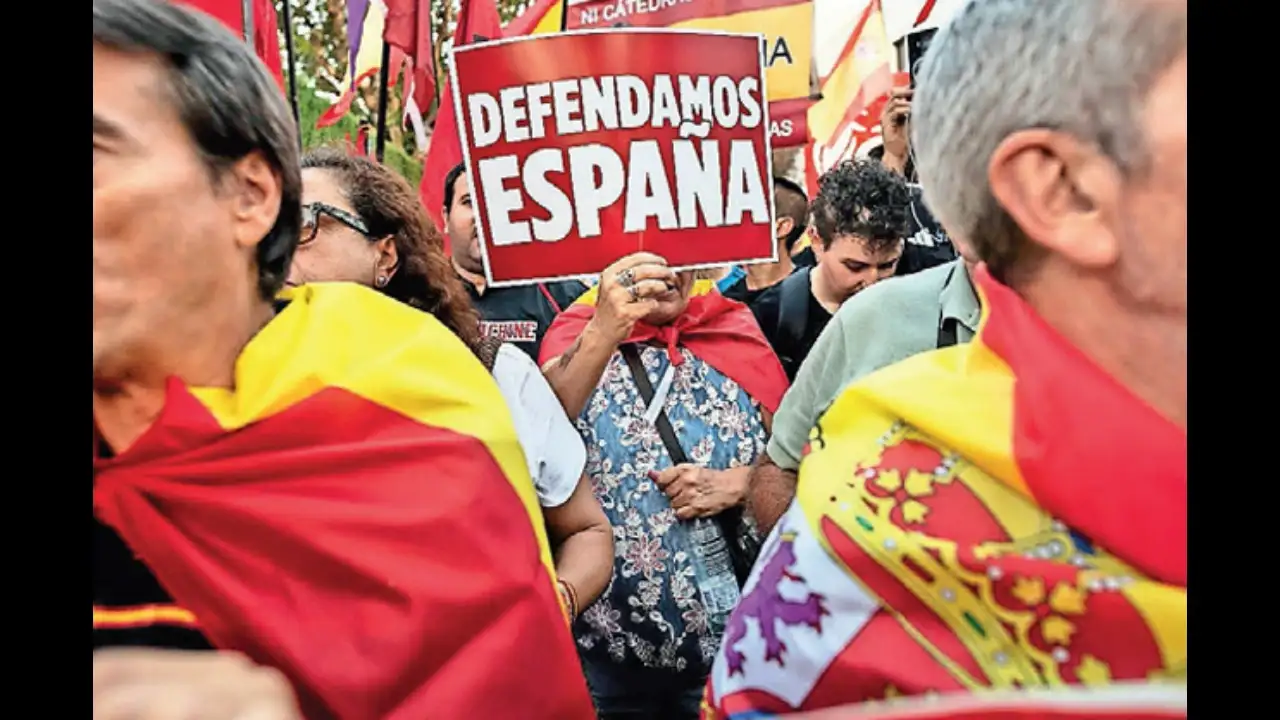
Climate pressures are very real — but increasingly, research finds that the migratory patterns that result due to climate events are not necessarily mechanistic or linear. Because of its historical legacies but also how its border security solutions let politicians avoid resolving the complex issue of migration democratically and through open debate, migrants swim over to Ceuta on hope — and plastic bottles Europe is an example, not just. Yes and no. There’s a clear attempt in many countries to present so-called illegal or irregular migration as a huge issue, an emergency even — there is political capital to be made from that, as we saw in the reaction of various European governments to Ceuta when they started blaming Spain’s more liberal migration policy. However, migration numbers don’t actually look all that dramatic now. We are now at the longerterm trend of the low hundreds of thousands of arrivals each year. These are very small figures relative to overall migration into the EU. That is not to detract from the suffering on these routes — yet, the truth is, while migration numbers are manageable, they are often presented as an ‘emergency’. Other parts of the world have slightly different patterns. The USMexico border has a higher influx but Mexican irregular migration has gone down in recent decades. So, we must take these ‘emergency’ announcements from politicians with a pinch of salt. There is a misperception that climate change will almost mechanistically bring about huge surges — we’ve heard estimates from doomsayers that we’ll have one billion people on the march imminently, etc. Such predictions are made by people with a rather pessimistic view of human migration. First, you need plenty of resources to travel such long distances. You may also need motivation and networks but often, if you’re displaced by floods or droughts and unable to earn, you’re not in a good position to cross continental or heavily fortified borders into richer parts of the world. So, you stay closer to home. People find survival strategies near where they live. We need a much more Italian PM Giorgia Meloni critiqued Spain on informal migration complex view of how climate change and migration intersect. Why are Western states, which need diverse workforces, treating migration with such fear now? Such fences have come up all along the external land borders of the European Union and at the US-Mexico border. Just as the Berlin Wall came down, walls against migration went up Many explain these anti-migration sentiments through imperialist and racist legacies, which are indisputably there. However, an important shift happened in the 1990s — ‘security’ itself became a kind of marketplace. The Cold War conflict had ended, the Soviet foe had disappeared and the militaryindustrial complex in the US needed a new reason for its existence. Meanwhile, other actors also appeared — politicians were looking for ways to resolve the contradictions of globalisation, happening now at record speed. After Cold War barriers came down, they settled on securitising human movement to exclude certain kinds of migration from this new ‘open-borders’ world of trade and capital flows. Security was used as a cudgel to target particular kinds of migration, especially from the Global South and former European colonies, and paper over a key contradiction of the post-Cold War settlement. Worldwide, middle-income countries especially are adopting similar tactics and rhetorics — and feeding a global security business. West ern right-wingers often say their societies will be ‘overwhelmed’ by non-Western people, their views mostly Islamophobic and/or racist. Are there any commentators who admit the historical role of the West in colonialism and the damage it did to many? Of course — in academia, you hear a lot about colonial legacies. It’s the mainstay of the critique of such politics in the West. However, I think we also need to go beyond. The perceived need for hard security is now a global phenomenon. We should ask, how is this coming about? What are the driving forces for it? What underpins this demand for protection in these aggressive ways worldwide, not just in Europe and the US? And what are these tools really creating? ‘Security’ has become a go-to solution that helps us escape politics. We need to ask, what other ways are there? Can we look beyond walls to understand what’s going on? Can we see how many ‘solutions’ are actually not working — or understand the vested interests pushing these in global markets for security and fear? Is any state now getting migration right? We can look to the African Union and West Africa, where there have been attempts at a more normal relation to mobility across borders, seeing this as a development strategy. Most African migration takes place within the continent and the West African Economic Community (ECOWAS) sees this as an opportunity that can be managed to benefit all. In Europe, Spain tries to make the case for workers needed in ageing economies. Yet, other governments jumped on it for Ceuta, despite very little evidence that a more liberal approach caused it. Once we step out of this security mentality and stop seeing other people as a ‘threat’, we can have a more fundamental debate on migration. The need for people to move will never end. The need for workers will only rise. Politicians in the West — and beyond — must deal with this reality. Views expressed are personal Catch the latest World News and Live updates. Download the TOI app.
PM Pedro Sanchez is facing storms How much role is climate change playing in such migration today? Today, this is no longer just a Western trend — border security has globalised from South Africa to India, Saudi Arabia to Malaysia.