.
Because it’s both about environmental preservation as well as issues like what to do with fossil fuel exploring in Brazil, that said, the challenge is very complex. Under Jair Bolsonaro’s government, we saw the underfunding of these technologies and the environment ministry itself. With Lula da Silva’s administration, there is a lot more funding now. Many in Brazil are deeply proud of the Amazon, including its governors, and Marina Silva, the environment minister, who is a strong political figure and respected for her commitment. This is not an illegal activity like deforestation — but does it have environmental implications? These are the kinds of discussions about planetary well-being Brazil is having.
It’s not as labour-intensive now, due to factors from technology to migration. Because if things become costlier but money isn’t well-distributed, it creates speculation, especially in key sectors like housing, these places become more expensive — yet, local people become poorer. The result is, local populations may not even get these jobs. Hence, mining does generate wealth — but that is not well-distributed. Studies here show there is more inequality in mining towns or areas with extractive industries where money circulates unevenly. So, people in such areas don’t get these jobs while they get an economy with more money circulating in unequal ways, making things more expensive for them. IN DEGREES: Climate change isn’t just temperature — it’s losing species Environmental preservation laws are actually very strong in Brazil. The Amazon itself is a huge area — it is monitored closely but environmental crimes, like massive deliberate fires, etc., have certainly been committed. There have been great ecological losses, so it’s very important to fund all the mechanisms we have to watch the forests, from science and research to satellite imaging and land scrutiny.
There is also this notion that mining creates jobs — but when you study the numbers, it’s not as heavy a generator of direct employment as it was earlier.
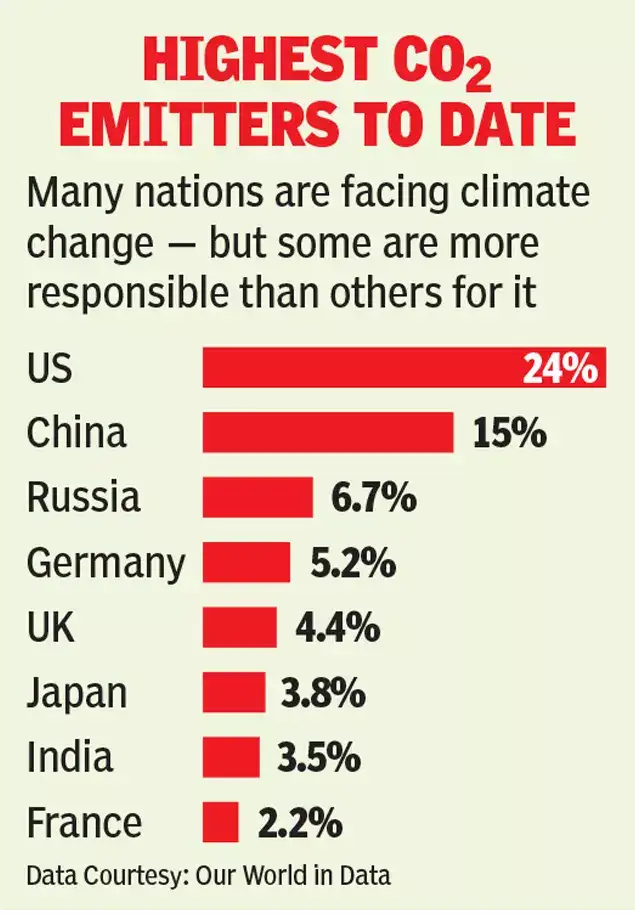
Because their president was elected on a platform of drilling, denying climate change and being pro-fossil fuels, they create public pressure and naming and shaming mechanisms but, in this case, I don’t think these affect the United States. They will benefit if other countries stop emitting but they won’t finance the costs of the transition or fund ecological protection. We need — but don’t have — a mechanism that punishes countries which won’t sign agreements to help undo climate impacts.
This is ‘the tragedy of the commons’. We all benefit from a clean environment and less global warming — but there are ‘free riders’. It is also very complicated when such wealthy polluting countries are the free riders while others, including middle-income nations like Brazil or Indonesia are committing time, effort, political capital and money towards this. Events like COP highlight these issues — they call the attention of the world to what countries are doing or not doing. We need mechanisms which can create green cooperation — and compliance. The COP summits are still a place where this common ground is sought — countries come together and there are conversations of, ‘I’m doing this, what about you? So, there is peer pressure — but it’s unclear whether that will affect the US, which can simply say, ‘We don’t have to do anything. Can you share your anthropological research on mining histories in Brazil?