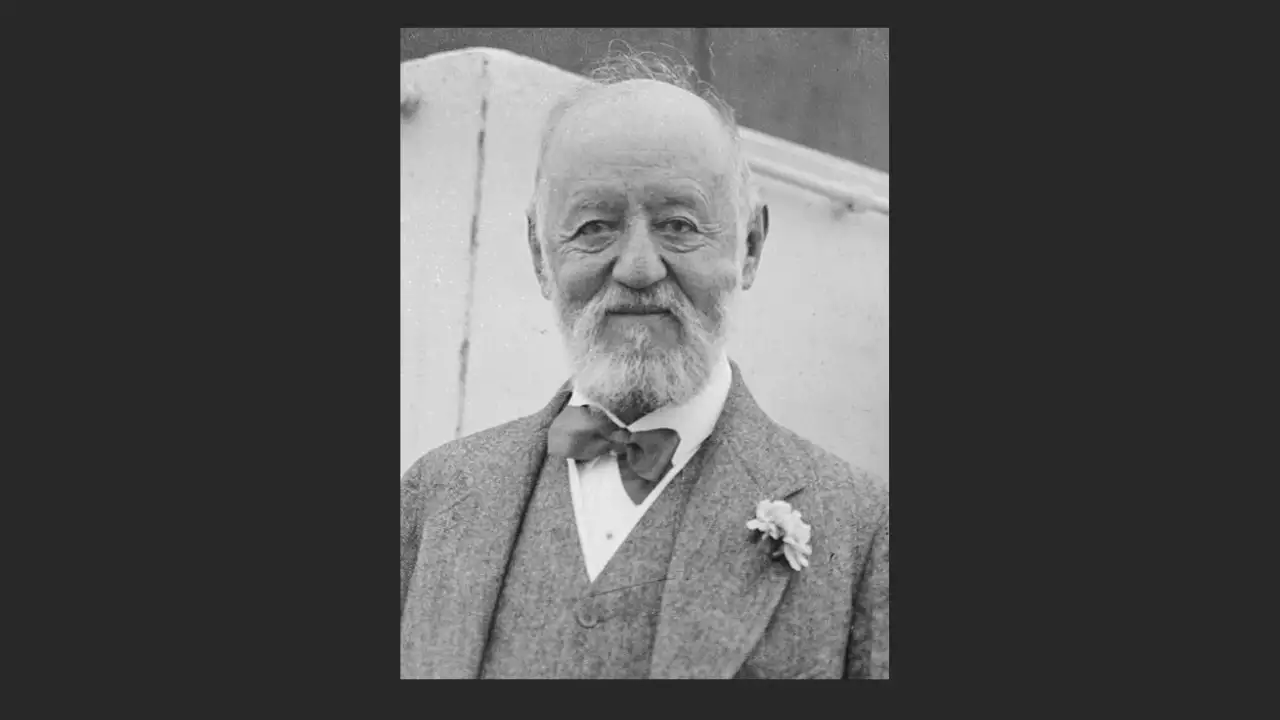
Image: Wikipedia
In 1892, he established the Nathan Straus Pasteurized Milk Laboratory in New York at his own expense. Because it could contain disease-causing organisms, including bacteria associated with tuberculosis, raw milk was considered one of the major risks. Because the solution he promoted now seems ordinary, nathan Straus died in 1931, but the records preserved his legacy is striking.
The New York Public Library’s papers document his work in public health, milk pasteurisation, tuberculosis prevention and assistance to people affected by poverty and disasters. Straus’s approach to charity differed from the traditional model of simply handing out money. During the economic depression of the 1890s, he used his experience in merchandising to establish depots near New York’s poorer neighbourhoods, where essential goods could be provided at reduced prices. This practical approach later shaped his campaign for safer milk. His interest in milk became particularly personal and urgent. At the time, milk could spoil during transportation and storage, while contaminated supplies could expose children to dangerous diseases. Straus believed that improving the way milk was processed and distributed could save lives. In New York City during the 1890s, infant mortality was extraordinarily high. pasteurisation was not yet universally accepted Although scientists already understood that heating milk could destroy harmful microorganisms. Straus became one of its most determined advocates. The facility produced safer milk and helped establish a distribution network designed specifically to reach families in poorer parts of the city. His milk depots did more than sell a product. They made pasteurised and refrigerated milk accessible to people who might otherwise have had little choice but to purchase cheaper, potentially unsafe supplies. Some milk was sold below wholesale prices, while families unable to pay could receive it without charge. The NYPL collection includes records of the laboratory and its milk depots, including reports, brochures, instructions for mothers, infant-formula recipes and even coupons that could be redeemed at the depots. Straus’s campaign unfolded at a time when public-health officials were increasingly concerned about infant mortality and infectious disease. His work helped demonstrate the practical benefits of making pasteurised milk available to communities that needed it most. The wider movement eventually contributed to changes in public policy. By the early 20th century, pasteurisation was gaining much greater acceptance among American health authorities, and governments increasingly moved towards requiring safer milk supplies. Straus did not single-handedly make American milk safe, but his efforts formed an important part of a much larger public-health transformation. His particular contribution was showing that philanthropy could operate at the point where a public-health problem actually affected people’s daily lives: the purchase and consumption of food. What made his philanthropy distinctive was its practical focus. He did not simply ask how much money could be donated to a cause. He asked how a wealthy businessman could use the systems of production, distribution and retail to make a basic necessity safer and more affordable. That approach helped transform milk from a potential source of serious disease into a much safer staple for American families. In doing so, Straus showed how targeted philanthropy could influence not only individual lives but also the development of public-health practices that eventually reached far beyond the people his original milk stations served.
Today, consumers generally expect commercially sold milk to have undergone safety controls that were far from universal when Straus began his campaign.