
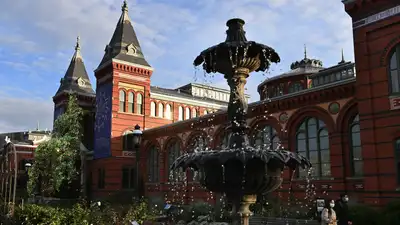
The Smithsonian Arts and Industries Building in 2021. (Matt McClain/The Washington Post)
In an official statement issued on 31 August, the board said converting the existing building completes a multi-year site review authorised by Congress in December 2020. First opened in 1881 as the United States National Museum, the Arts and Industries Building is the second-oldest building in the Smithsonian complex. Structural problems forced it to close completely in 2004, followed by years of deterioration. A $55 million restoration later strengthened the roof and exterior, allowing temporary exhibitions and special events to return.
Because the Smithsonian already owns the building, the decision ends a long debate over the museum’s location and removes the need for Congress to approve a new site.
Choosing an existing building means the Smithsonian can avoid a long congressional debate over unused land on the National Mall, according to The Washington Post. The Smithsonian Institution Board of Regents has officially chosen the historic Arts and Industries Building on the National Mall as the permanent home of the National Museum of the American Latino. Other sites considered included open areas near the Capitol reflecting pool and undeveloped land controlled by the National Park Service.
The Smithsonian said the choice moves the project directly into the development process set out by Congress when it authorised the museum in 2020. The National Museum of the American Latino opened its first physical preview space, the Molina Family Latino Gallery, inside the National Museum of American History in 2022. The gallery was created to host temporary exhibitions for up to 10 years while plans for a permanent museum were developed.
Because the Smithsonian already owns the Arts and Industries Building, the decision removes the need for new federal legislation to approve the site.
Reports from Reuters and The New York Times said the project faced opposition from congressional Republicans, while budget proposals from the Trump administration sought to remove dedicated construction funding and instead support exhibits spread across different Smithsonian museums. Jorge Zamanillo, director of the National Museum of the American Latino, has previously said creating a dedicated museum building would take many years. “It will take 10 to 12 years to open a museum building, but the gallery gives the public a preview of the museum’s potential,” said Jorge Zamanillo during the opening of the Molina Family Latino Gallery.
The decision to reuse an existing building comes after years of political debate over the museum.
The Arts and Industries Building — a true jewel — will shine like never before as the new, permanent home for this great American project,” said CHC Chair Espaillat in a public statement. Congressional Hispanic Caucus Chair Adriano Espaillat welcomed the decision after the board’s vote. “It has been a personal privilege to be part of turning this idea into a reality. This is a great victory for the Latino community, which until now has lacked a ship to take our story to port.”
“Today the Smithsonian Board of Regents chose to house the National Museum of the American Latino in a prominent location on the National Mall.