PC: Turner Institute of Ecoagriculture
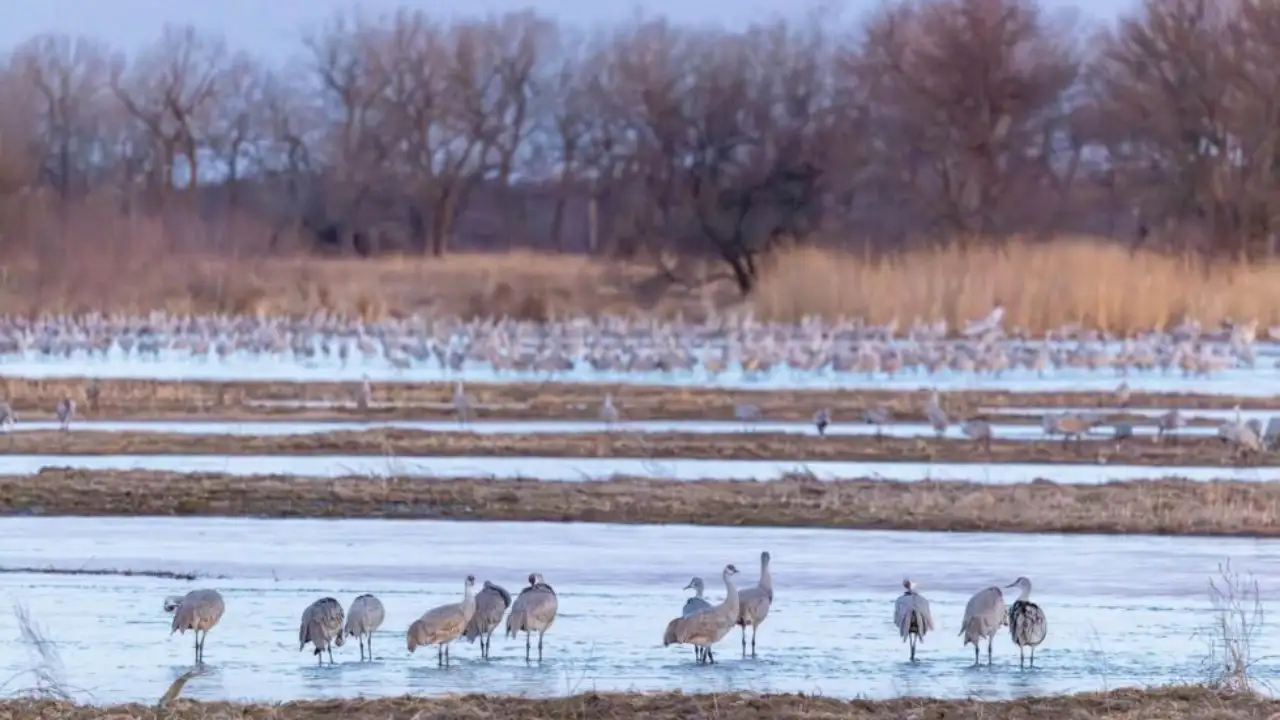
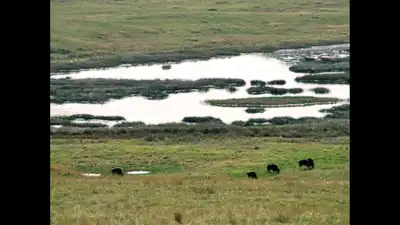
In 2021, Ted Turner handed nearly 80,000 acres of prairie in Nebraska and South Dakota to the Turner Institute of Ecoagriculture, turning McGinley Ranch into a vast testing ground for conservation and sustainable land management. The 79,292-acre property lies in the Northern Sandhills, where rolling dunes, native grasslands, wetlands and shallow lakes form one of North America’s most distinctive prairie landscapes. Today, about 4,000 American plains bison roam the ranch, helping managers study how native grazing can influence vegetation, soils and biodiversity. More than 60 lakes and ponds, along with streams and wet meadows, provide habitat for a wide range of wildlife while sitting above the Ogallala Aquifer. More than 60 natural lakes and ponds, along with headwater streams and wet meadow complexes, are spread across the property.
Research carried out at McGinley can therefore connect scientific findings with the day-to-day realities of managing large areas of agricultural and natural land. Rather than simply preserving the land, the Turner Institute uses McGinley as a living laboratory, bringing researchers and land managers together to examine soil health, water systems, wildlife, grazing and sustainable food production on a landscape scale. Beneath the grasslands is the Ogallala Aquifer, one of the most important groundwater systems in the United States and a key resource for communities and agriculture across the Great Plains. These water features make McGinley important for wildlife while also providing researchers with an opportunity to study how land management influences water systems. McGinley’s size and relatively intact ecosystems provide researchers with a large-scale setting for studying ecoagriculture. The Turner Institute works with scientists, land managers, universities, industry partners and conservation organisations on questions involving soil health, carbon dynamics, grazing, grassland resilience, water systems, wetlands, native species, pollinators, animal nutrition, animal welfare, climate adaptation and sustainable food production. The aim is not simply to observe ecological changes but to develop practical approaches that could be applied to other working landscapes. The institute was established with a mission centred on developing, testing and sharing sustainable approaches to ecosystems, agriculture and rural communities. Turner’s wider conservation philosophy has also shaped the project, with an emphasis on finding ways for economic activity and ecological protection to operate together. The institute has worked towards research partnerships with land-grant universities and other agricultural institutions, including South Dakota State University’s Centre of Excellence for Bison Studies. With its combination of thousands of bison, extensive wetlands, native prairie and ongoing research, McGinley functions as both a conservation landscape and a large-scale field laboratory. Its work is focused on understanding how healthier ecosystems can support productive agriculture and long-term stewardship.