
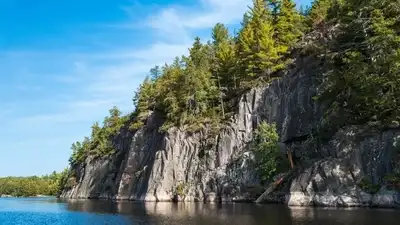
Voyageurs National Park. Image credits: NPS
Stevens purchased a 400-acre island in what is now Voyageurs National Park in 1932. In the beginning, he ran a summer resort in the area and later lived year-round on the island, eventually living there for nearly 50 years. Born in Vang, Valdres, Norway, in 1885, Stevens later immigrated to the United States at the age of 19, and in 1918, he moved to Hibbing, where he became a shoe salesman. Stevens’s own account that is preserved by the National Park Service says that in 1932 he became interested in buying lakeshore property in Minnesota, prompting him to venture out that summer to scout available tracts across Namakan Lake. From lumber-company retreat to summer resort In 1905, Edward Hines founded the Virginia and Rainy Lake Lumber Company, whose retreat was located on what was then known as Williams Island, now called Stevens Island. In 1929, when pine logging ended, Edward Hines put his land holdings on sale. Stevens, in his own records, wrote that following surgery for haemorrhaging stomach ulcers in March 1932, he used his convalescence to reevaluate his high-stress career. Image credits: Wikimedia Commons The NPS reported that Stevens harvested ice, cut wood, painted boats and cleaned cabins for guests; but at the age of 74 in 1959, he gave up the demanding business. Eventually, at the age of 94, he left Namakan Lake. Stevens died in 1990 at the age of 104, more than five decades after his move to northern Minnesota. A life preserved in Voyageurs National Park Today, Stevens Island is considered one of the 13 visitor destination sites in Voyageurs National Park. his own account specifically records 42 years of diaries, thus making those journals a detailed window into the life he led near Namakan Lake While his stay on the island lasted nearly five decades.
Ingvald Walter “I.W. Stevens had been a shoe salesman in Hibbing, Minnesota, but after stress-related health issues and advice from his doctor, he moved toward the solitude of Namakan Lake. Hines preserved the island’s red and white pines and used the property to entertain lumber buyers Although the company’s timber operations logged large stands of trees somewhere else. Three years later, I.W. Stevens bought the island with the intention of establishing a summer resort. This prompted him to submit his resignation as manager of the Ladies’ Shoe Department at the Itasca Department Store. I.W. Stevens’ resort near Namakan Lake. From then on, the island ceased its commercial operations and became primarily his home, where his daily activities focused on providing for himself. The former shoe salesman grew vegetables, picked and canned blueberries, ground wheat and baked bread, caught fish and hunted deer, while also gathering wood for cooking and heating. Though his life was highly independent, it was not completely cut off from other people. The NPS has noted that over the years, Stevens entertained many family members and friends. He also became a writer, contributing articles to outdoor magazines and maintaining a daily diary as he documented his life around Namakan Lake. The site preserves structures from the resort era of the 1930s, including Stevens’ cabin, a guest cabin, sauna, woodshop and root cellar. These structures remain to tell part of Stevens’ story. His writings provide a personal perspective of his transition from a Hibbing shoe salesman to a resort operator. Catch the latest World News and Live updates. Download the TOI app.
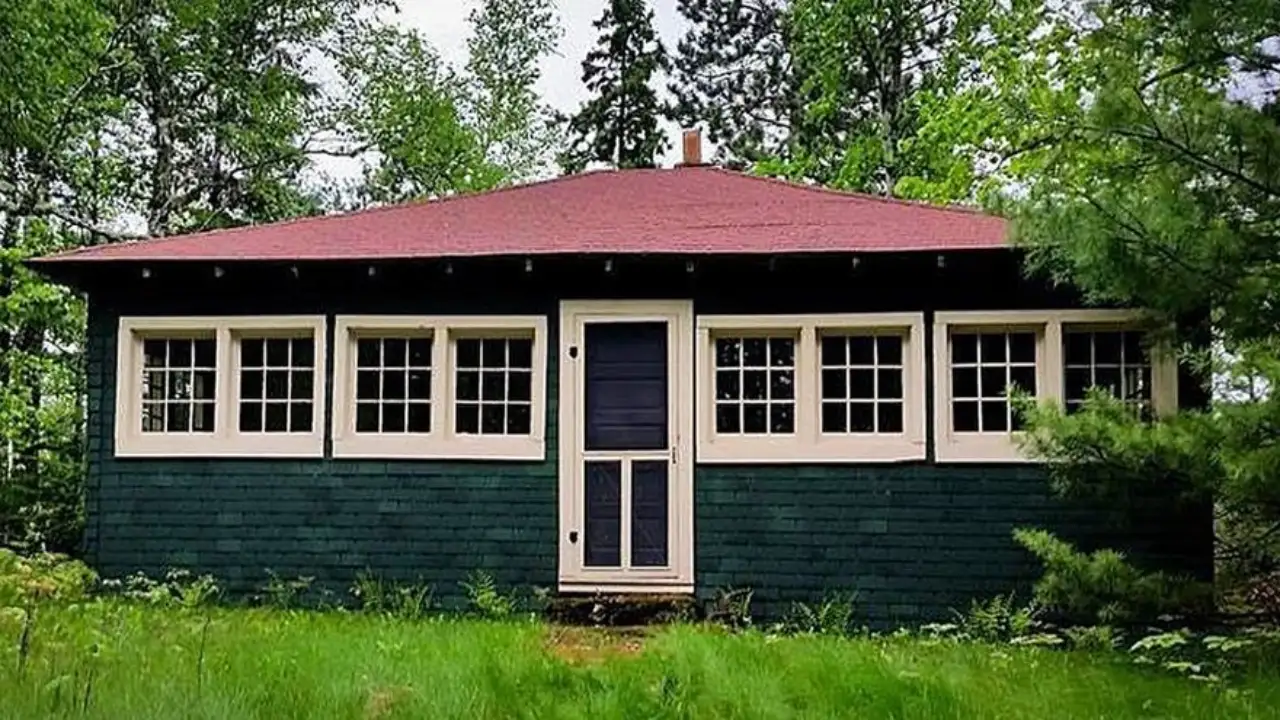
Shifting his life’s direction, he spent two weeks camping around Kabetogama Lake in August 1932 before reaching Namakan Lake, where he learned that the Virginia and Rainy Lake Lumber Company was selling parcels. In 1937, Pine Cove Resort welcomed its first paying guests. He later reportedly returned with a company representative and quickly became interested in the former headquarters and decided to purchase it. After his move to the island, Stevens started working on his original plan to turn the property into a summer resort; he spent several years preparing the landscape for his ambition. From a resort owner to self-sufficient islander