
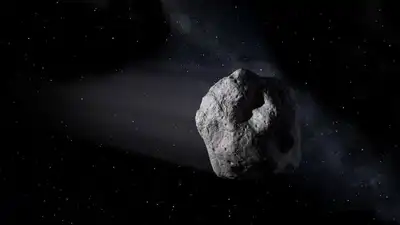
A small asteroid just hit Earth near Australia: Should you be worried?
On Sunday, September 6, astronomers watched a tiny solar system visitor, CERNQ52, barrel toward Earth, and for a brief moment, the headlines had something dramatic to latch onto. The Mount Lemmon Observatory in Arizona, as part of the Catalina Sky Survey, picked up CERNQ52 late on September 6. Initial numbers pegged it at around 0.8 meters, while a European Space Agency (ESA) center calculated a range between 0.6 and 1.2 meters across. ESA’s planetary defense experts concluded it would hit the atmosphere over the Indian Ocean near northwest Australia around 16:12 UTC, which is far from any city lights or towns. NASA says anything smaller than 25 meters burns up with little or no hint of danger.
ESA’s head of planetary defense, Richard Moissl, said it was expected to put on a bright show, a fleeting meteor, before burning away. So, breathless headlines about “NASA’s asteroid warning” are mostly hype. Astronomers told skywatchers to be alert and report any sightings, since even a quick flash of light is valuable data on an object’s final moments.
In reality? This object, less than a meter across, was heading toward the skies above the Indian Ocean northwest of Australia. Far from apocalyptic, scientists saw it as more of a cosmic light show: a bright fireball, probably gone before most people even noticed. Per EarthSky, what stood out wasn’t the asteroid itself, but the speed at which astronomers found it. They picked it up only hours before its expected entry, providing a rare opportunity to practice tracking and analyzing an actual impactor almost in real time; it’s kind of like a dress rehearsal for planetary defense. With each new observation, teams fine-tuned its path. Was it dangerous? Hardly. Did it actually hit Earth? Yes, technically it did. But not in the Hollywood apocalyptic movie way. Entering the atmosphere is what matters. The space rock’s high speed heats it up on impact, shredding it apart before any big chunk reaches the ground. For most small objects like CERNQ52, that’s the whole story. This little guy was tiny by asteroid standards. Maybe a few pebble-sized pieces survived, but nothing serious. NASA and its global partners are always scanning the skies for near-Earth objects, crunching the numbers on where they’re headed and whether we need to worry about them. Their Scout system checks out anything that might be on a collision course. In this case, though, most of the live updates came from the international network and ESA’s tracking centers. There was never any genuine threat. Why this space pebble fascinated astronomers? Most small asteroids like CERNQ52 whiz by undetected. You have to get lucky to spot them hours before entry. This was only the 13th time scientists spotted one just before it burned up. That kind of prompt detection is a win, as it proves that planetary defense systems are working, at least for smaller objects. There’s another nerdy detail: CERNQ52 might belong to a rare class called Aten asteroids, which orbit closer to the Sun than Earth. That classification is still up in the air, but it gives astronomers more to chew on. For a few people in just the right spot, maybe. Its planned entry was over the ocean, in darkness, so the potential for a visible fireball existed. Not really. Events like CERNQ52 remind us that space is full of debris, but almost all of it is harmless. NASA and other agencies keep constant tabs on what’s around us. The scary stuff, like big objects that could devastate a region, is much rarer, and those are taken seriously. Most space rocks just flare up, give us a light show, and disappear. For CERNQ52, that tiny window between discovery and entry was a reality check: a reminder that Earth is being watched, calculations are in place, and even surprises can be handled with calm professionalism. In the end, unless you happened to be looking out over a dark bit of the Indian Ocean, this space stone left little more than a reminder of how much we’ve learned about the cosmos and how much we’re still paying attention. Looking for trusted parenting advice? Follow TOI Parenting Circle on Instagram for expert guidance, relatable stories, and practical tips delivered every day.
Most previously detected impactors have had wider orbits (Apollos).