
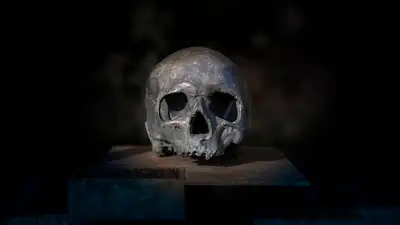
The museum says the project will explore a story involving forbidden love, powerful Highland clans, murder and a supposed curse. For generations, a human skull linked to a bloody Highland legend was kept within the Grant family, surrounded by a warning that taking it away could spell disaster for the clan. Now, more than six centuries after the events at the heart of the story, forensic experts are examining the remains to find out whether the grisly relic really belongs to the medieval figure described in the legend. The investigation is being led by Grantown Museum in Scotland, which is preparing an exhibition and podcast titled The Legend of the Highland Skull.
The relic disappeared from public view for years after the Grant family sold Castle Grant in 1983. It was reportedly sitting inside a Harrods box alongside something almost as intriguing: a letter dating to 1857. The Grants eventually made the castle their seat, and it became known as Castle Grant. The legend held that the skull was retained as a kind of grim family talisman but with one ominous condition: if it ever left Grant possession, the clan would supposedly lose its lands, influence and standing in Strathspey. That part of the story remains folklore rather than established history. What can be established is that a skull associated with the legend survived into modern times. It was eventually rediscovered by Lord Reidhaven, a descendant of the Grant chiefs, in a family storeroom. The timing is particularly striking. The skull has now left the possession of the Grant family, precisely the act the legend warned would bring about the clan’s downfall. But this time, the purpose is not to test the curse.
The document had been written by Grigor Stuart, a minister from Kingussie who visited the Countess of Seafield at Castle Grant in October that year. His account described the skull and the story that had grown around it, including the claim that it was the remains of the last Comyn associated with Freuchie. Rather than allowing the mystery to remain a family story, Reidhaven brought the skull and letter to Dan Cottam, curator of Grantown Museum. That decision has now turned a centuries-old legend into a forensic investigation. Grantown Museum is using the investigation to examine how stories survive, change and acquire authority as they pass from one generation to another. The project combines historical research, forensic examination and storytelling rather than treating the supernatural element as established fact.