
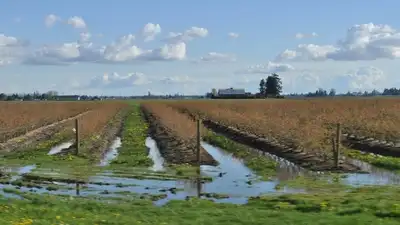
Farm in Skagit County near Bow, Washington, U.S. Credits – Wikimedia Commons
The agriculture corridor along Interstate 5 in northwest Washington, where some of the nation’s most productive soil is located within commuting distance of Seattle, is one of the few locations that best exemplifies the conflict between growth and food production. Exchanging a promise for a reward In 2025, Skagit County’s Farmland Legacy Program protected four properties in Bow and Mount Vernon, adding 270 acres of prime farmland to the land permanently protected from residential development. The properties covered 40 and 83 acres in Bow and 40 and 107 acres in Mount Vernon, and all were designated by the US Department of Agriculture as prime farmland. A total of 585,000 dollars was paid to the four families involved under the scheme in return for giving up the right to ever build dwellings on the site. The scheme, which began in 1997, has already conserved about 15,400 acres of Skagit agriculture. Four families, four causes The 2025 additions were from the Roozen, Nelson, Peth and Houser families, each with a long history of farming in the region. Jerry Nelson, a third-generation Skagit farmer and proprietor of Double N Potatoes, placed an easement on 40 acres near the Skagit Regional Airport. Including land protected through earlier easements, the Nelson family has now placed about 1,500 acres of Skagit farmland under the program, the most of any participant. The Houser family, which has farmed in the Sedro-Woolley area for generations, placed a conservation easement on 107 acres near the intersection of McLean and LaConner Whitney roads, while father-son pair Dan and Owen Peth protected more than 80 acres of their cattle ranch.
The soil quality that took centuries to develop is permanently lost if a field is paved over for a warehouse or divided for homes.
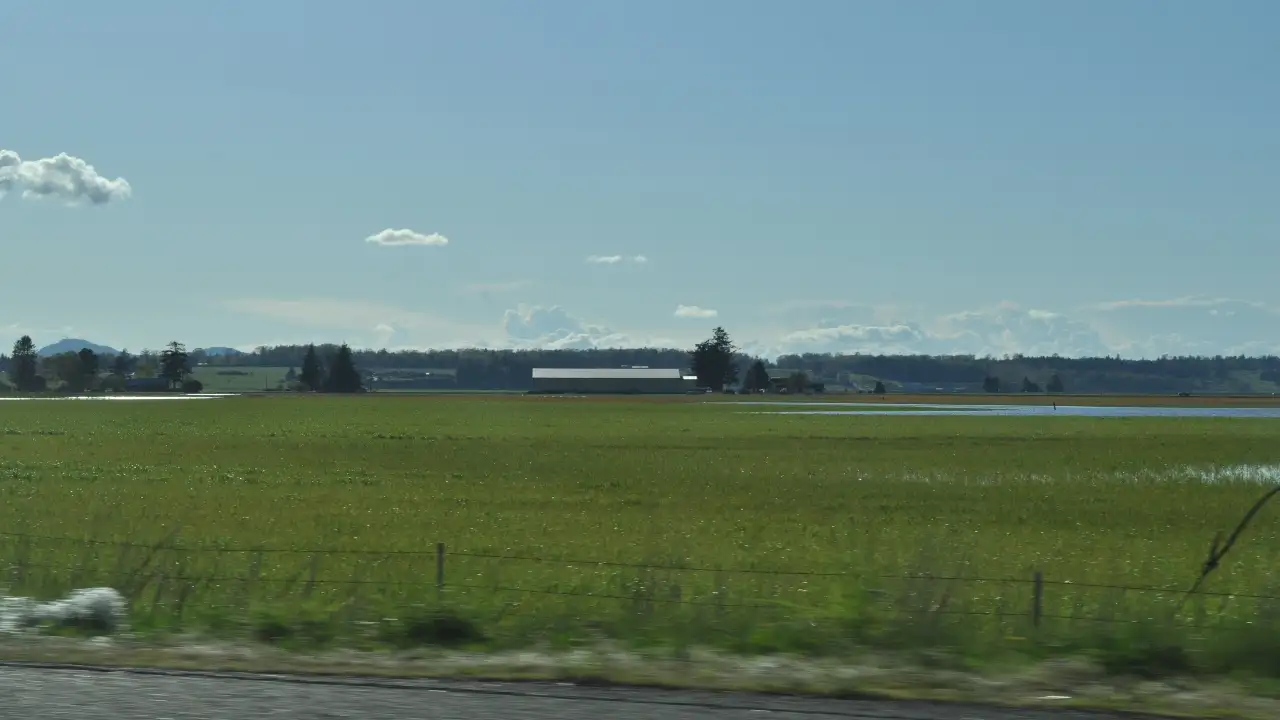
Nelson said the relinquishment of development rights helps offset the cost of holding the site and is a basic choice not to see the area developed. He also said that dwellings across farmland made the remaining fields tougher to reach, since heavy machinery and irrigation systems did not work well alongside residential properties. Land on the outskirts of expanding towns and communities in the United States is constantly under pressure to change from being agricultural. For almost thirty years, one county in that corridor has discreetly bought its way out of that pattern, one farm at a time. The agreement is made through what’s called a conservation easement. Rather than purchasing the land, the county pays farmers for the development rights associated with it. This legal action permanently limits the site to agriculture, regardless of future ownership. Families can still farm their land, sell it or pass it on, but the easement runs with the property forever, eliminating the possibility to cash out to a housing developer. Each family sacrificed a significant amount of money they could have made by selling to a developer, choosing continuity on the land over greater payment. Farmland in Skagit County. Credits – Wikimedia Commons Racing against a statewide trend
American Farmland Trust’s Farms Under Threat analysis found that Washington lost nearly 98,000 acres of farmland between 2001 and 2019, while the state’s 2022 Census of Agriculture recorded a 5.2% decline in farmland. The group figures that somewhere in the country, people are converting about 2,000 acres of farmland to urban or low-density residential usage every single day, nationally. Skagit County’s 2025 result came below its longer-term target of protecting an average of 400 acres a year for the next 25 years. The county had protected 460 acres in 2024, compared with 270 acres in 2025, but the annual figures are only part of a broader effort that has now placed about 15,400 acres under permanent protection.
Because it runs directly against the wider pattern across Washington, skagit’s approach stands out. The program works through voluntary conservation easements, meaning landowners choose to give up development rights while retaining ownership and continuing to farm the property. The program’s continued expansion depended not only on county funding and long-term targets but also on farmers choosing to preserve their land rather than sell its development rights. Catch the latest World News and Live updates. Download the TOI app.