
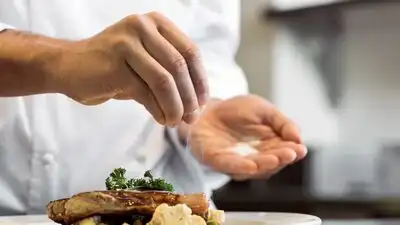
When cooking at home it is common to add salt once, stir everything together and move on. However, chefs use a different method, seasoning their food at different points in the cooking process. Adding salt at different stages has a significant effect on the final product, allowing for greater control over the seasoning.
Because the right amount can enhance other flavours, making food less bitter and allowing sweet, sour, savoury and aromatic qualities to shine through; but a larger amount can quickly overwhelm the dish, this is. Furthermore, as the dish’s volume changes during cooking (due to water evaporation or sauce reduction), food that tasted perfectly seasoned halfway through can become too salty by the end. When it comes to seasoning, many chefs are careful about how much salt they use for a dish. Chefs use several methods to ensure their dishes are seasoned and balanced to their liking. Some add salt in the beginning of cooking, others wait until the end, and some do a little of both. There are various reasons for adding salt at different times during cooking.
She notes that chefs use salt “at the beginning of cooking a dish, during it and then at the end,” using it not only for seasoning but also for techniques such as brining and altering the texture of ingredients. On the other hand, adding salt immediately before cooking can ruin the browning process by removing surface moisture. However, for dishes such as soups, curries, sauces and dals, some chefs season during cooking and again at the end, to account for the reduced volume of the dish as it is reduced. Chef Chantelle Nicholson, quoted by The Great British Chefs, explains that salt has different uses depending on when it is added.
When adding salt earlier, it has more time to dissolve, flavour the dish and even draw moisture out of ingredients (which can affect how food browns).
However, this isn’t always an advantage. If a dish was completely unsalted until the end, seasoning it heavily at the end will simply make the salt more noticeable on the surface of the food, rather than it having been properly incorporated into the dish as a whole. As such, the best approach is to build up seasoning gradually, tasting as you go.