
Coughless cold
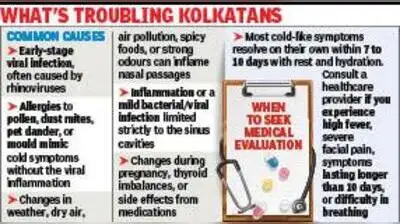
Common causes of these symptoms are generally viral infections, including influenza virus which accounts for 70% of cases, said Mrinmoy Mitra, consultant at ILS Hospital.
The reason behind this ‘coughless cold’ could be a localised infection or irritation that remains restricted to the nasal passage without infiltrating the lower respiratory tract, said physicians. A spread of influenza is primarily responsible for the coughless cold, said Charnock Hospital pulmonology head Soumya Sengupta . If the irritation or infection remains localised to the upper nasal passages and sinuses, a cough may never develop, said Sayan Chakrabarty, infectious diseases physician, Manipal Hospital. “This is usually triggered by rhinovirus which tends to affect the nasal passage and the upper airways, leading to a stuffy or blocked nose and watery eyes,” said Chakrabarty. “Persistent symptoms warrant reassessment as a viral illness can be complicated by a secondary bacterial infection,” said Basu, who has treated several such patients in a week. Most cases improve with symptomatic care, adequate hydration and rest,” said Sharad Bagri, pulmonologist, Techno India Dama Hospital.
Kolkata: A ‘coughless cold’ has struck hundreds in Kolkata over the last few days, leaving those affected with a runny or blocked nose and watery eyes, but chest congestion and the resultant cough have been curiously absent. This sudden change of symptom comes in the wake of a prolonged influenza outbreak that has resulted in an extended bout of cough and cold for thousands over the last three months. “Influenza viruses typically cause nasal blockage, headaches and a dry, mild cough. Since the infection doesn’t always reach the lower respiratory tract, sputum is not produced, which restricts the cough. Respiratory infections need not always produce phlegm or bouts of coughing, particularly when confined to the upper airway, pointed out Satyaki Basu, internal medicine consultant at BP Poddar Hospital. “Cough and cold can involve different parts of the respiratory tract. While cold symptoms generally affect the upper respiratory tract, a cough may indicate involvement of the lower respiratory tract.
Unless the airways get inflamed, cough will be absent. We have received many such patients recently. Rhinoviruses and seasonal adenoviruses can cause nasal blockage, sinus congestion, sneezing and throat irritation without a prominent cough. Erratic weather, with strong sunshine during the day, cooler nights and bouts of rain, can aggravate symptoms,” added Sengupta.