
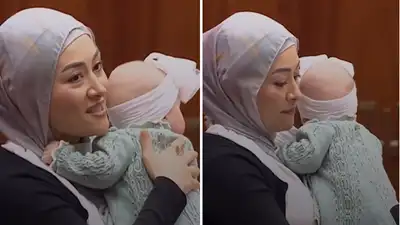
Senator Fatima Payman spoke about the physical recovery and mental load of motherhood in the Australian Parliament.
22 Sept 2026 | 15:04 Her words capture a part of early parenthood that can easily get lost beneath photographs of happy new parents, carefully arranged baby announcements and expectations of how grateful a mother should feel. Because a baby was inside the parliamentary chamber, when Australian senator Fatima Payman addressed Parliament with her infant daughter Alia in her arms, the moment was striking not simply. Because it’s okay to get it wrong sometimes, i’m talking to professionals, uh,.
SBS News reported that she did not take an extended break from work after her daughter was born. SBS reported that Australia’s Parliament House has childcare facilities, parents’ rooms and facilities for nursing and infant care, and that senators can breastfeed an infant in the chamber and, at the discretion of the Senate president, briefly care for an infant during proceedings as long as parliamentary business is not disrupted.
I have cherished every moment of it,” Payman said. “We don’t talk enough about the physical recovery,” she said. “It really sucked,” Payman added, while expressing gratitude towards the midwives and nurses who cared for both her and her daughter. “Then there’s the mental load, the silent suffering many parents carry alone, too afraid to speak up, worried of people’s judgment,” she said. Payman said she had decided not to hide that struggle. “Well, I’m not suffering in silence,” she said. “It’s okay to not be perfect, uh, or the perfect parent that society tells you to be,” Payman said, “because that parent doesn’t exist. She said she returned to work as soon as she could and began answering calls. Fatima Payman said motherhood is deeply cherished but also “bloody tough”.
It was what Payman chose to talk about while holding her daughter: the physical recovery after childbirth, the exhaustion and mental load of parenting, and why asking for help should not be seen as a failure. “This is the best thing that has ever happened to me. “But, and there’s a big but, it’s bl**dy tough. “And colleagues, let me tell you, my birthing journey was… tough. For many new parents, the arrival of a baby is accompanied by an assumption that the difficult part is over once the birth is over. Payman’s comments point to a different reality: childbirth can be followed by a period of physical recovery at a time when a parent is simultaneously adjusting to feeding, interrupted sleep, changing routines and the constant needs of a newborn. And then there is the part that cannot always be seen. Payman’s larger point was not that motherhood is unhappy. In fact, she began by saying the opposite: that becoming a mother was the best thing that had happened to her and that she had cherished every moment. The two realities, however, can exist together. A parent can love their child deeply and still feel exhausted. They can be grateful and still need support. They can enjoy parts of parenting and struggle with others. “I’m asking for help. Her words also challenge the idea that parents are expected to know what they are doing from the moment their baby arrives. For parents, that distinction can matter. The pressure to appear as though everything is under control can sometimes make it harder to acknowledge exhaustion or ask someone else to step in. Payman’s experience also comes in the context of returning to work while caring for a young baby. Her circumstances have also highlighted wider questions around how workplaces accommodate parents. But Payman’s message reaches beyond Parliament. Parenthood is often described through milestones – the first smile, the first steps, the first word. Less visible are the moments when a parent wonders whether they are doing enough, feels physically depleted or struggles to admit that they need another pair of hands. Payman ended her message with an idea that may be particularly reassuring to parents caught between love for their child and pressure to get everything right. “What exists is love done imperfectly and often held by the people around us, and that’s enough. For parents, perhaps that is the part worth remembering. There may never be a version of motherhood or fatherhood in which everything is perfectly managed. There may be difficult days alongside wonderful ones, uncertainty alongside confidence and moments when asking for help is the most responsible thing a parent can do. The perfect parent, as Payman put it, does not exist. What does exist is a parent trying, loving and sometimes leaning on the people around them. You use AI every day. Now get your AI Quotient. Take the AIQ test Get the latest Lifestyle News and more. Download the TOI app.

Her daughter Aliyah was born in May, and Payman returned to Canberra to work four months later, according to SBS News. Her working days now involve caring for a newborn alongside parliamentary responsibilities, including feeds, nappy changes, playtime and expressing breast milk. But rather than presenting motherhood as something that simply needs to be managed alongside work, Payman spoke about what it can demand from a woman physically and emotionally.
Payman became a mother earlier this year.
Because parenting often involves dozens of small decisions and responsibilities that do not necessarily look like work from the outside, that mental load can be difficult to explain. A parent may be physically sitting with a baby while mentally keeping track of feeds, sleep, appointments, household responsibilities and what needs to happen next.