
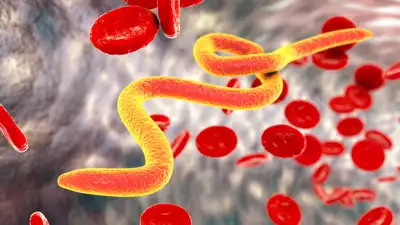
Worm infections are often regarded as a childhood health problem, but this perception can lead to them being overlooked in adults. Intestinal helminth infections continue to occur in communities where sanitation is inadequate or where people are exposed to contaminated soil, food and water. In adults, the presentation may be subtle and the symptoms can overlap with several common gastrointestinal conditions.
Soil-transmitted helminths such as roundworm, whipworm and hookworm remain widespread globally, with WHO estimating that around 1.5 billion people are infected. 5 Oct 2026 | 12:06 Abdominal discomfort, altered bowel habits, bloating, nausea, loss of appetite and weakness can occur with intestinal parasitic infections, but none of these symptoms is specific to worms. An Indian community-based study involving 2,351 adults in Kanchipuram, Tamil Nadu, found serological evidence of Strongyloides exposure in 33% of participants.
The study also reported associations with haemoglobin and eosinophil levels. The clinical importance of a worm infection depends on the parasite involved, the duration and intensity of infection, and the health of the individual. These infections are closely associated with sanitation and can have consequences beyond gastrointestinal symptoms, particularly when infection is prolonged. Some individuals may have minimal symptoms despite carrying an infection. they illustrate why this infection should not be overlooked in adults with relevant exposure While findings from a single community cannot be extrapolated to the wider Indian population. The presence of gastrointestinal symptoms alone is not sufficient to diagnose a worm infection. Stool examination is useful for several intestinal parasites, but diagnostic sensitivity varies and some infections require repeated or specialised testing. Eosinophilia may provide an additional clue, although its absence does not exclude parasitic infection. Treatment must similarly be guided by the parasite identified or strongly suspected. Albendazole or mebendazole are commonly used for several soil-transmitted helminths, while Strongyloides requires specific therapy, with ivermectin being the preferred treatment. Management of tissue infections such as neurocysticercosis is more complex and depends on the site and characteristics of the infection. Prevention remains closely linked to sanitation and exposure. Wearing footwear where contaminated soil is likely, maintaining hand hygiene, using safe water and properly washing and cooking food can reduce transmission. Improvements in sanitation are essential for breaking the cycle of infection.
Because the parasite attaches to the intestinal mucosa and causes ongoing blood loss, hookworm is clinically important. Therefore, an adult presenting with unexplained anaemia, persistent fatigue or nutritional deficiencies may require assessment for several causes, including parasitic infection when the exposure history supports it. Because ingestion of its eggs can result in cysticercosis, in which larval cysts develop in tissues, taenia solium is particularly important. A history of residence or prolonged exposure in areas where Strongyloides occurs is therefore important when assessing patients before immunosuppressive therapy. Because the diagnostic approach, treatment and potential complications can differ considerably. (Dr Manas Kumar Panigrahi, Addl, identifying the specific parasite is important.
Chronic infection can consequently contribute to iron-deficiency anaemia. The spectrum of helminthic disease extends beyond the common intestinal worms. Food-borne infections such as taeniasis can occur following consumption of inadequately cooked infected meat. When the brain is involved, neurocysticercosis can cause seizures and other neurological manifestations. Strongyloides stercoralis presents a different clinical challenge. The parasite can persist in the human body for years through a process of internal reinfection, and many infected individuals have few or no symptoms. Its importance becomes much greater when immunity is suppressed. Corticosteroids and other immunosuppressive therapies can trigger uncontrolled multiplication of the parasite, leading to hyperinfection or disseminated disease, which can be life-threatening. For adults, the important message is not that every episode of abdominal discomfort or fatigue is caused by worms. Rather, parasitic infection should remain part of the clinical consideration when symptoms persist, anaemia or eosinophilia is unexplained, or the exposure history is suggestive. Professor & Head, Department of Gastroenterology, AIIMS Bhubaneswar.) You use AI every day. Now get your AI Quotient. Take the AIQ test Get the latest Lifestyle News and more. Download the TOI app.
These and other under-recognised gastrointestinal conditions will also be discussed at the World Congress of Gastroenterology 2026 in New Delhi, hosted by the World Gastroenterology Organisation and the Indian Society of Gastroenterology.