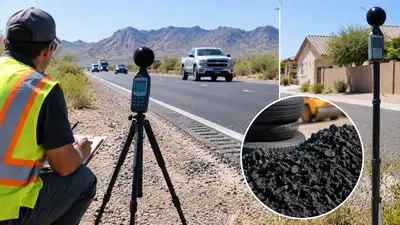
AI- generated representative image of researchers measuring traffic noise on an Arizona highway paved with recycled tyre rubber. Image Credits: ChatGPT.
Arizona and the agency launched the Quiet Pavement Pilot Program in 2003 to examine whether asphalt rubber friction courses could reduce traffic noise on busy freeways and how long the effect would last, according to the Federal Highway Administration . The programme covered about 115 miles of Phoenix-area freeways and involved testing the pavement’s noise performance over time. Arizona gave millions of discarded tyres a second use when it began covering sections of its Phoenix-area freeways with rubberised asphalt. The material, made with crumb rubber from used tyres, was initially valued mainly as a way to resurface roads and recycle a difficult waste product. But the pavement also had another benefit: it could reduce the noise created when vehicle tyres travelled over the road. The project had a further environmental component. Rather than allowing old tyres to go toward disposal, they could be converted into crumb rubber and included in the roadway surface. Millions of tyres had already been recycled in Arizona in such a manner prior to the launch of the quiet pavement initiative. The method was especially useful in Phoenix, where many freeway segments had rough concrete surfaces that generated tyre noise.