
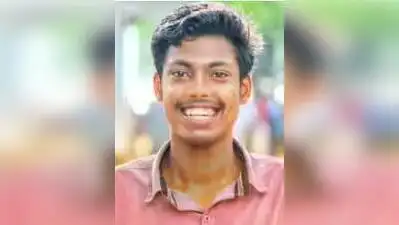
Kochi : The high court has dismissed a petition filed by the accused persons in the 2018 Abhimanyu murder case seeking to conduct the trial in-camera, particularly the examination of eyewitnesses, and impose appropriate restrictions on the entry of the general public into the courtroom during the trial.
Justice C S Dias dismissed the petition filed by Mohamed J I, the first accused in the case, along with 12 other accused, observing that the circumstances of the present case did not warrant an in-camera trial. However, the bench directed the trial court, in coordination with the police, to ensure that no person is permitted to photograph or video-record the trial or the accused while they are inside the courtroom. The trial court shall also consider whether the entry of the public or any particular person ought to be restricted during the examination of certain eyewitnesses, to preserve the fairness of the trial. The prosecution, however, submitted that the police had already prepared a bandobast scheme to avert any untoward incident in the court or its premises.
It further submitted that the injured and other occurrence witnesses had already identified the accused persons through a photo identification parade conducted by the executive magistrate, in addition to their identification before the police.
Abhimanyu, a 21-year-old student of Maharaja’s College, was stabbed to death during political violence at the college on July 2, 2018. Previously, in Aug 2026, on a petition filed by Abhimanyu’s mother, the court had directed the trial court to expedite the trial proceedings and dispose of the case within four months.
A group of Campus Front activists murdered Abhimanyu following a political rivalry with SFI activists over a dispute concerning the placement of posters on the college campus, according to the prosecution.
In the present petition, the accused sought an in-camera trial, contending that no test identification parade was conducted during the investigation and that the witnesses had not identified the accused persons. Consequently, the identification of the accused by the witnesses was to be tested during the trial. Against this backdrop, the accused apprehended that their prior exposure to the witnesses, even through photographs or video recordings, might compromise the fairness and reliability of the identification process.
However, the trial court had previously denied the relief, prompting them to approach the HC.