
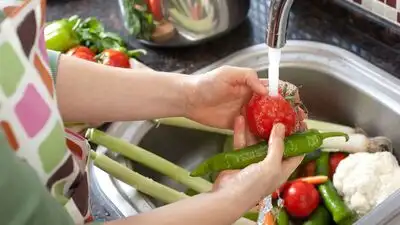
Ever wonder how after buying fresh veggies and fruits, we simply push them in the refrigerator drawers and forget about them until needed? Well, what we often overlook is that bringing home a fresh batch of apples, leafy greens, or berries also comes with a hidden side effect in the form of agricultural sprays, dirt, pathogens, and unwanted microbes; and simple rinsing is not enough to get rid of these invisible threats! Rinsing this fresh produce under a running tap may help you get rid of visible grit, but plain water often struggles against modern pesticides and unwanted chemical formulas designed to withstand rain. However, there’s one age-old remedy that can simply fix this issue. Read on to know more…
As per a study published in Food Control (Elsevier Journal) on the “Effect of different household washing and cooking practices on the residues of pesticides in/on vegetables,” it was mentioned that soaking fruits and vegetables in a 10% salt water solution was significantly more effective than rinsing with tap water alone at removing common surface pesticide residues (such as chlorpyrifos, cypermethrin, and chlorothalonil), reducing surface residues by up to 75–80% depending on the specific chemical and exposure time. As per the hypertonic environment created by salt water, it draws out dirt and forces micro-pests hiding in deep crevices to surface, making it one of the most practical ways to clean raw produce at home. Leafy greens and cruciferous vegetables such as spinach, kale, broccoli, and cauliflower do best with a five to eight minute soak. Chopping broccoli or separating the leaves beforehand allows the salt water to penetrate tight florets and pull out hidden insects. Delicate items like strawberries, grapes, and plums should only sit in the solution for three to five minutes to prevent the thin skins from absorbing salt or breaking down.