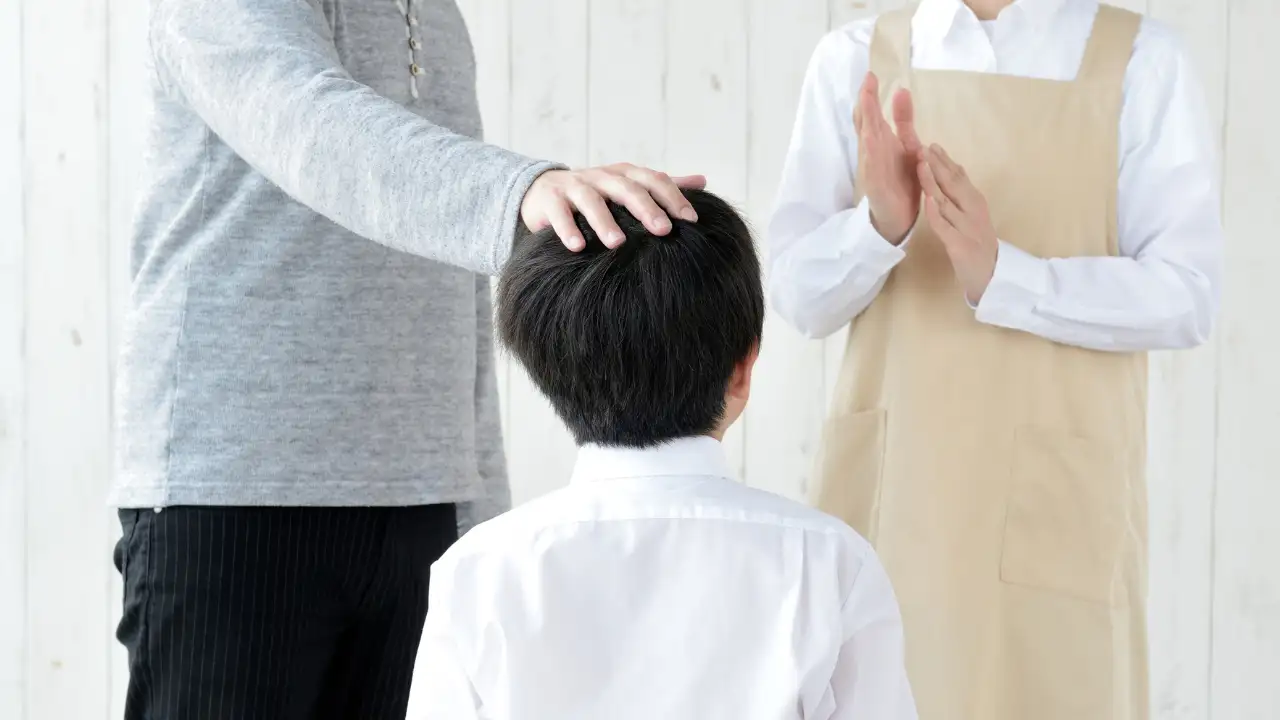
The way parents correct a child in front of relatives may influence how the child responds emotionally.
28 Sept 2026 | 08:18 A child who accepts a reminder at home may become defensive in front of relatives. A child refuses to share a toy at a family gathering. A toddler throws a tantrum in a supermarket. An older child interrupts an adult while they are talking. For many parents, these moments can be embarrassing, particularly when relatives, friends or strangers are watching. The instinct may be to correct the child immediately, sometimes with a sharp reprimand or a comparison with another child who appears better behaved. But the same correction can feel different to a child when it happens in front of an audience. Another may go unusually quiet, avoid eye contact or cling to a parent. Some children may argue back, cry or continue the behaviour that prompted the correction. Others may appear to comply immediately, even if they remain upset afterwards. These reactions do not necessarily mean that a child is being deliberately difficult or disrespectful. The presence of other people can change the emotional experience of being corrected. Children are learning not only what behaviour is acceptable, but also how to understand their mistakes, manage uncomfortable feelings and respond to other people’s opinions. Psychological research on parental criticism, shame and children’s emotional development offers useful insights into why the way parents correct a child can matter as much as the correction itself. Psychology research highlights the importance of distinguishing between correcting a child’s behaviour and making them feel ashamed.

A 2023 study published in Social Cognitive and Affective Neuroscience , titled Adolescents’ neural reactivity to parental criticism is associated with diminished happiness during daily interpersonal situations , examined how adolescents’ brain responses to parental criticism related to their everyday emotional experiences. A separate 2025 meta-analytic systematic review published in Child Development examined 65 samples, comprising 19,144 participants, to explore relationships between parent-child relationships and children’s experiences of shame and guilt. A calm, direct statement such as “I won’t let you hit him.
Imagine a child who grabs a toy from a cousin. At home, a parent might say, “You need to ask before taking someone else’s things. The child may feel disappointed but still be able to listen. Now imagine the same parent saying in front of the entire family, “Why do you always behave like this? Look at how nicely your cousin plays. You never listen. The second response does more than address the behaviour. It draws attention to the child, introduces a comparison and makes the incident a subject of public discussion. For a young child, who is still learning to regulate emotions, this can be overwhelming. Instead of concentrating on why taking the toy was wrong, the child may become preoccupied with feeling embarrassed, misunderstood or singled out. The distinction is between correcting an action and making a child feel that something is wrong with them as a person. This does not mean that parents must avoid setting boundaries when other people are present. If a child hits someone, runs into a dangerous situation or behaves in a way that could hurt another person, immediate intervention is necessary. The important question is how the parent communicates the boundary. Let’s move aside and talk” can address the behaviour without turning the child into the centre of a public reprimand. Research suggests that children’s emotional responses to parental criticism deserve attention, although not every study directly examines correction in public. The researchers investigated neural reactivity to critical, compared with neutral, parental comments and its relationship with adolescents’ feelings during daily interactions. The study adds to evidence that criticism from a parent can have emotional significance beyond the immediate conversation. It is important not to interpret this as proof that every public correction harms a child. The research was not specifically a study of parents reprimanding children in front of relatives or strangers. However, it highlights why the emotional impact of parental criticism is worth considering, particularly when a child is already feeling exposed or judged. The review found small associations between dysfunctional parent-child relationship characteristics and shame, as well as maladaptive guilt. Positive parent-child relationship characteristics were also associated with adaptive guilt.
A 2009 study, Parental shame and guilt: Distinguishing emotional responses to a child’s wrongdoings , explored how parents themselves experience shame and guilt when their children misbehave. In one study involving 93 parents, perceived public exposure and threats to parents’ self-image predicted feelings of shame. In a second study involving 123 mothers, the presence of a critical observer tended to increase shame, but not guilt.
Because the aim of discipline is not simply to make children feel bad about their behaviour, the distinction matters.
Shame, by contrast, can involve a more global negative feeling about oneself: “I’m bad,” or “Everyone thinks I’m naughty. These findings suggest that the broader emotional climate of a parent-child relationship matters when children learn to respond to mistakes. They do not establish that one instance of public criticism will cause lasting harm. Rather, they support the importance of looking at how children are treated over time and whether correction helps them understand their actions or leaves them feeling negatively about themselves. A calm conversation can help parents address a child’s behaviour without turning the mistake into a moment of public embarrassment. One useful way to understand children’s reactions is to distinguish between shame and guilt. Guilt is generally linked to the feeling that one has done something wrong. A child might think, “I shouldn’t have snatched that toy. I need to give it back. It is to help them recognise the impact of their actions and learn what to do differently. The study focused on parents’ emotional reactions, rather than directly measuring how children respond to being reprimanded in public. Nevertheless, it points to an important dynamic: when a child misbehaves in front of others, a parent’s own embarrassment can become part of the interaction. A parent who feels judged by relatives or strangers may react more harshly than they would in private. The correction can then become partly about restoring the parent’s sense of control or demonstrating that the behaviour will not be tolerated. Recognising this possibility can help parents pause and ask themselves whether their response is addressing the child’s behaviour or their own discomfort about what other people might think. You use AI every day. Now get your AI Quotient. Take the AIQ test Get the latest Lifestyle News and more. Download the TOI app.