
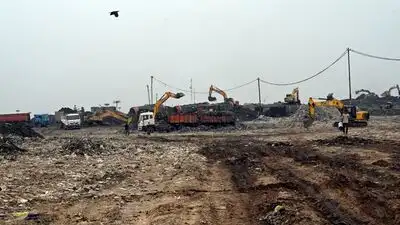
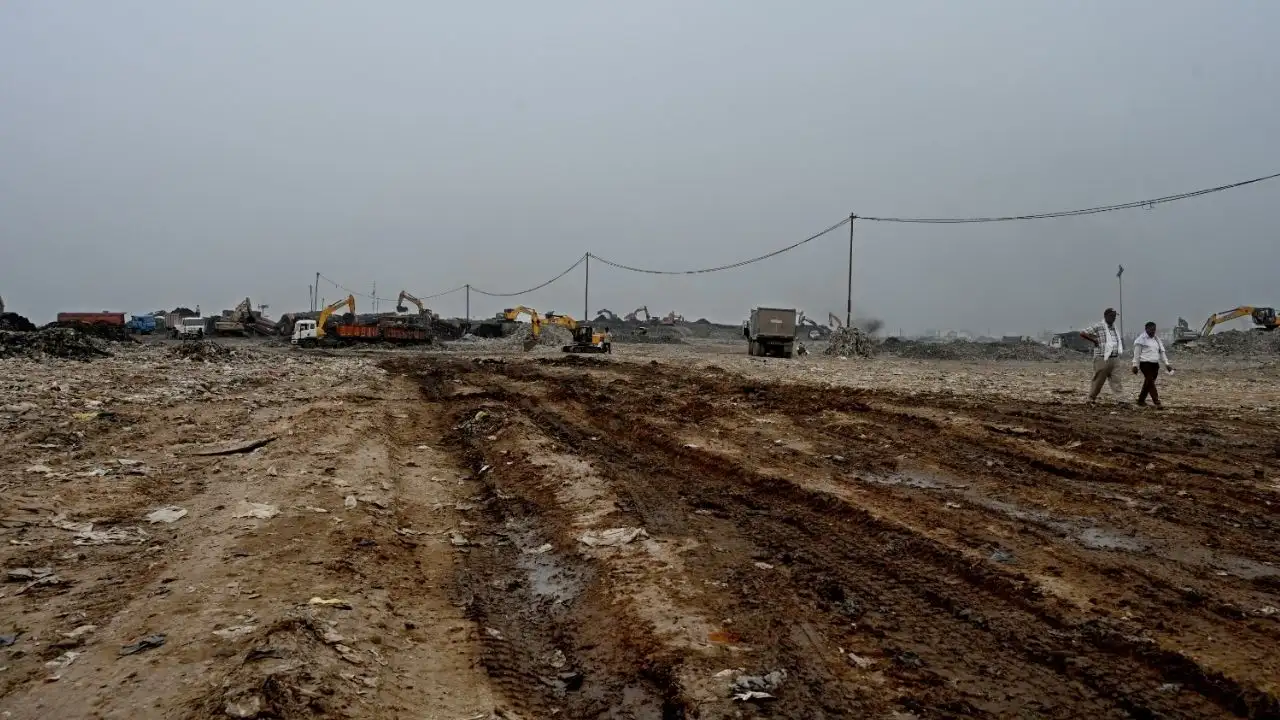
Bhalswa and Okhla are targeted for clearance by December, while Ghazipur has been given until December 2027 (Photo credit: Piyal Bhattacharjee)
Delhi reclaims 100 acres from landfill waste The city has also had to tackle a more basic problem: waste that is simply dumped in the wrong place. In 2025, Karnataka chief minister DK Shivakumar visited Delhi along with Greater Bengaluru Authority officials to study the capital’s approach to urban planning and waste management. Between 1978 and 1993, a river island was used as a dumping ground and accumulated around 92 million cubic metres of waste, creating two garbage mountains almost 98 metres high. The city-state relies on incineration and waste-to-energy plants to cut the volume of waste requiring landfill disposal by as much as 90%. If the capital can make that transition, its reclaimed 100 acres will represent more than land recovered from garbage.
Because land is one of the most valuable resources in a crowded capital, now comes the real test The recovery of 100 acres is significant. The real milestone, therefore, will not be the day the last visible garbage mountain disappears. In August, Bengaluru launched a ‘Freedom from Waste’ campaign aimed at clearing construction debris, legacy garbage, soil and dumping blackspots. You Can Also Check: Gold Rate in Delhi | Silver Rate in Delhi | Bank Holidays in Delhi | Public Holidays in Delhi | Delhi AQI | Weather in Delhi | Petrol Price in Delhi | Diesel Price in Delhi | CNG Price in Delhi | LPG Price in Delhi Stay updated with the latest Delhi news.
NEW DELHI: For years, Delhi’s three giant landfill sites at Bhalswa, Okhla and Ghazipur have been hard to miss — both physically and as a reminder of how badly the capital has struggled to deal with its waste. That experience carries a simple message for Delhi. Sophisticated waste-processing plants cannot do the whole job if collection systems, segregation and enforcement remain weak. Other cities are grappling with the same question There is clearly interest in Delhi’s experience as well. The delegation visited facilities including the Okhla landfill and Tehkhand waste-to-energy project. Bengaluru was looking at Delhi for ideas on how to deal with a problem that is increasingly common across large Indian cities. The global lesson: Stop making new garbage mountains Cities outside India offer another perspective. Seoul, for instance, once had an enormous waste problem of its own. Once dumping stopped, the site was sealed and eventually transformed into five ecological parks. Singapore has taken a different route, focusing heavily on reducing the amount of waste that ultimately needs to be landfilled. It also places increasing emphasis on reducing waste and improving recycling. The models are different, and Delhi cannot simply copy another city. But the underlying lesson is similar: a landfill should not be the end point of a city’s waste-management system. The less waste that reaches it, the less likely it is that another Bhalswa, Okhla or Ghazipur will emerge. But the achievement will mean much more if the reclaimed sites remain free of another accumulation of waste. That is where Delhi’s experiment could become important for the rest of India. Biomining can deal with the waste of the past. But neither will work on its own without segregation, recycling, reliable collection and enforcement. It will be the day Delhi can generate millions of tonnes of waste without allowing another mountain to take its place. It could mark the beginning of a different way for Indian cities to deal with waste. Download the TOI App.
New processing capacity can deal with much of the waste generated today.
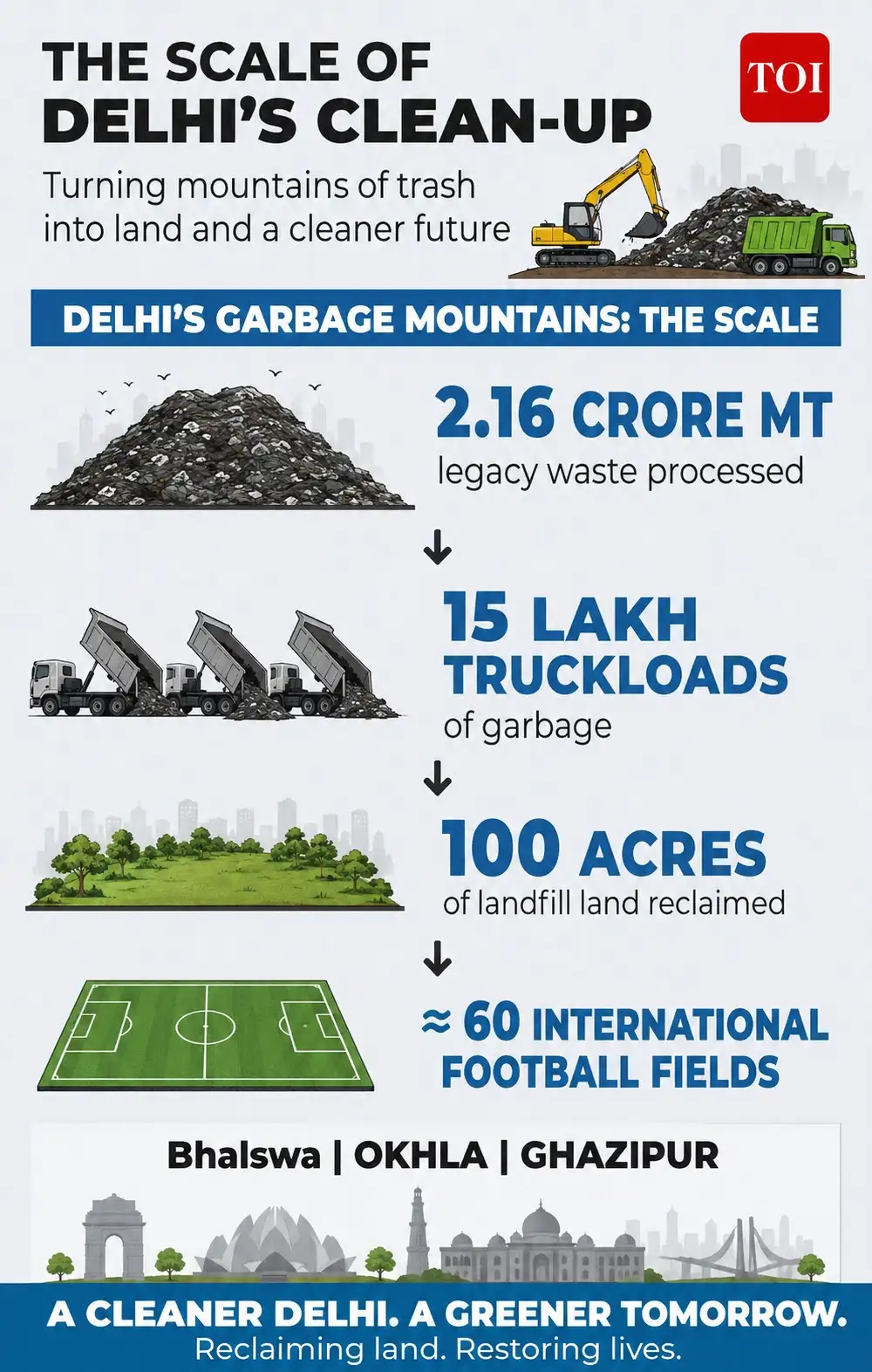
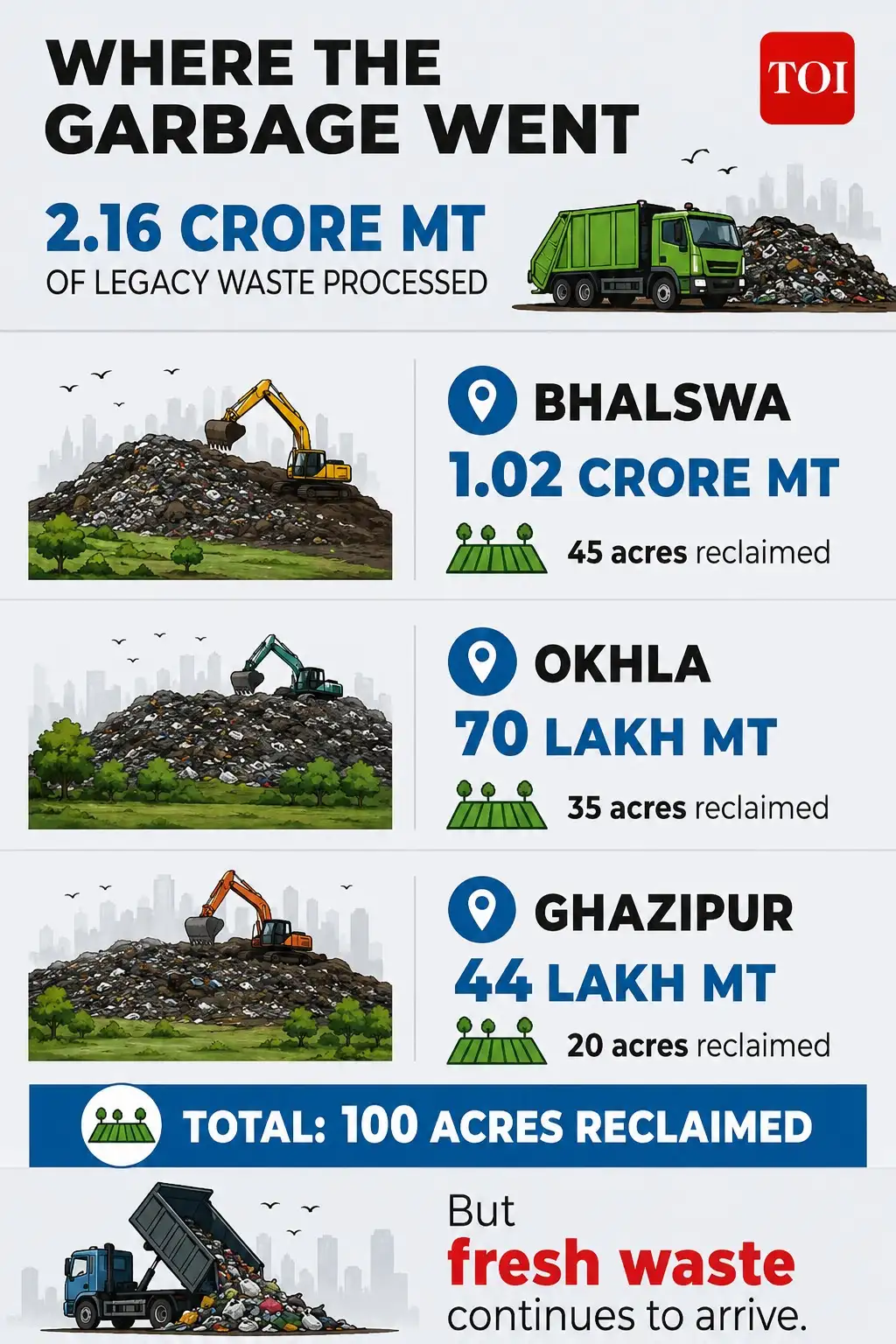
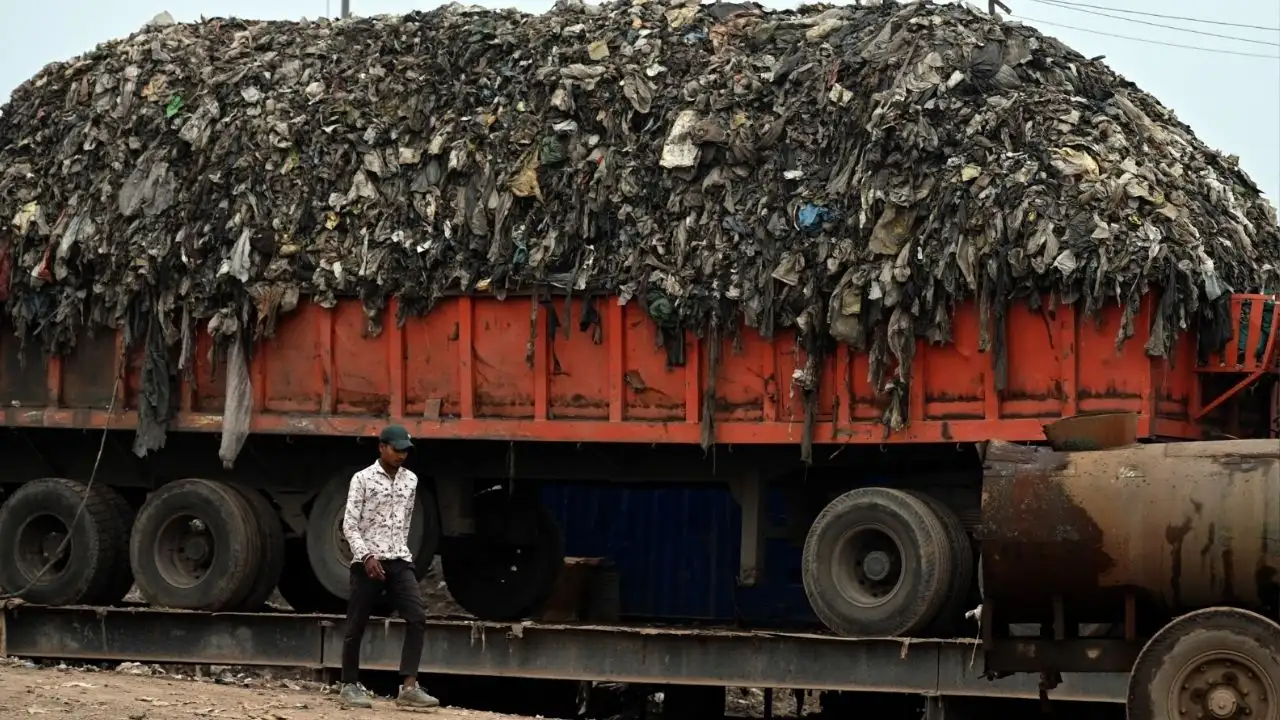
Around 2.16 crore metric tonnes of legacy waste has been processed at the three sites and 100 acres of land reclaimed, according to the Delhi government. Bhalswa’s 1 crore tonnes of waste equals nearly 15 lakh truckloads (Photo credit: Piyal Bhattacharjee) The numbers underline the scale of the exercise. Bhalswa has seen around 1.02 crore tonnes of waste processed and 45 acres reclaimed. At Okhla, 70 lakh tonnes have been processed and 35 acres recovered, while Ghazipur has accounted for another 44 lakh tonnes and 20 acres. Fresh waste remains Delhi’s bigger challenge Together, the reclaimed 100 acres is a sizeable piece of land in a city where every available acre is under pressure. The government has fixed December this year as the deadline for flattening Bhalswa and clearing Okhla, while Ghazipur has been given until December 2027. India’s urban areas produce nearly 1.62 lakh tonnes of municipal solid waste every day (Photo credit: Piyal Bhattacharjee) To put the scale into perspective, the roughly 1 crore metric tonnes of waste processed at Bhalswa alone translates to nearly 15 lakh truckloads of garbage. And the 100 acres of land reclaimed across the three sites is roughly equivalent to the area of nearly 60 international football fields. The Union govt said in January that nearly 25 crore metric tonnes of legacy waste had been identified across 2,488 large dumpsites. Of these, 1,138 dumpsites had been completely remediated, while work was under way at another 1,020. More than 15.51 crore tonnes had been processed and over 8,484 acres of land reclaimed. Its 2025-26 civic budget identified nearly 97.82 lakh tonnes of accumulated legacy waste for processing at sites including Mandur and Bellahalli, with biomining and bioremediation forming part of the effort.
Because land is one of the most valuable resources in a crowded capital. (Photo credit: Piyal Bhattacharjee) There is reason to be cautious, the recovery of 100 acres is significant. Delhi has therefore been here before — announcing timelines, beginning remediation and then having to extend the deadline.
The government says preparations have been completed for four new waste-to-energy plants, with the aim of creating enough capacity to process the waste generated every day. “The Delhi government is focused on the scientific management of all kinds of waste,” chief minister Rekha Gupta said. Now, there is finally some visible progress. These comparisons underline just how enormous the clean-up exercise is — and how much urban land had effectively been locked up under mountains of waste. New waste plants aim to boost processing The harder part starts after the mountains disappear Getting rid of old waste is a major task, but it does not by itself solve Delhi’s garbage problem. The city continues to generate fresh waste every day, and some of it still reaches the landfill sites even as biomining is being carried out. That is why the latest deadlines will ultimately be judged not just by how much old waste is removed, but by whether Delhi can prevent new piles from building up again. Okhla, for instance, has already seen its deadline revised several times, with the target pushed back again this year. This time, the difference has to come from what happens alongside the clean-up. And this is not just Delhi’s problem. Across India, cities are facing the same difficult equation: more people, more construction, more consumption and consequently more waste. The scale shows why landfill remediation has become an urban land and infrastructure issue, not merely a sanitation exercise. India is generating waste faster than it can wish it away Delhi is now trying to build that second layer into its strategy. At Ghazipur, material recovered after processing is already being put to use for filling low-lying areas and preparing road bases. In other words, the idea is to extract value from the waste rather than simply move it from one place to another. That approach reflects a broader change in the way Indian cities are beginning to look at waste. Bengaluru, for instance, has been working on processing accumulated legacy waste at sites including Mandur and Bellahalli.
Unless waste generated today is processed properly, tomorrow’s legacy waste problem will simply begin taking shape.
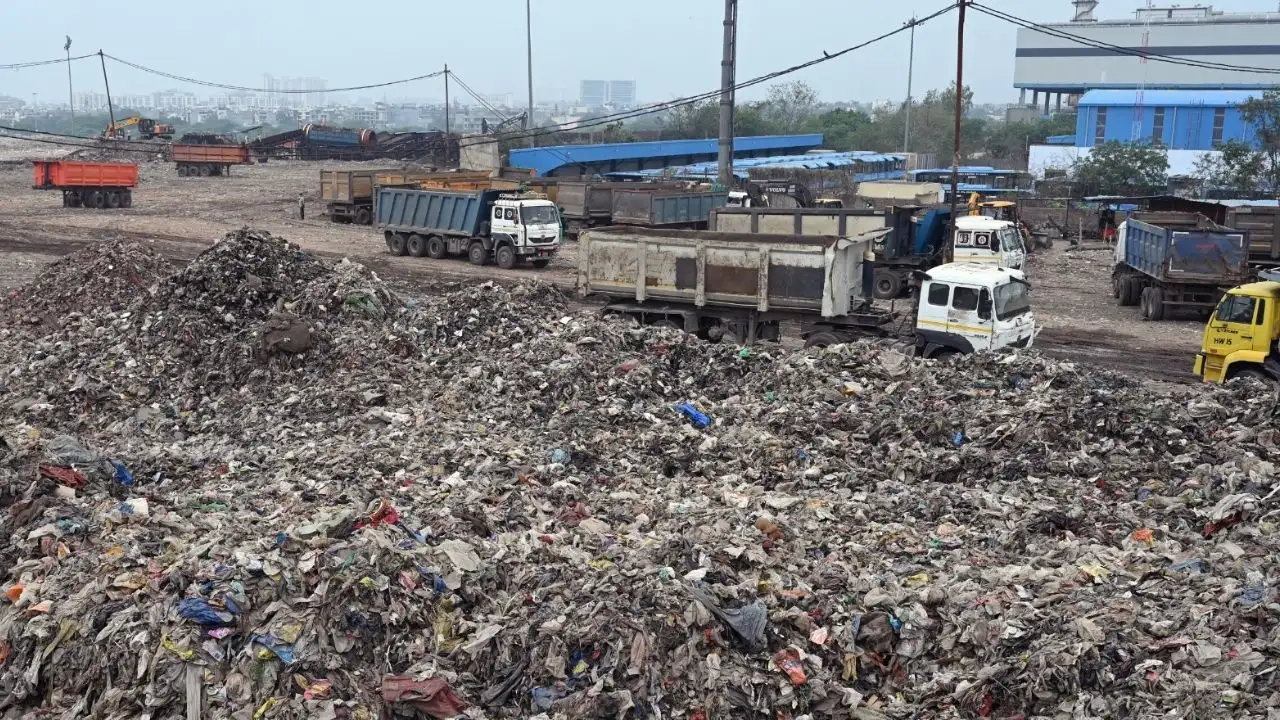
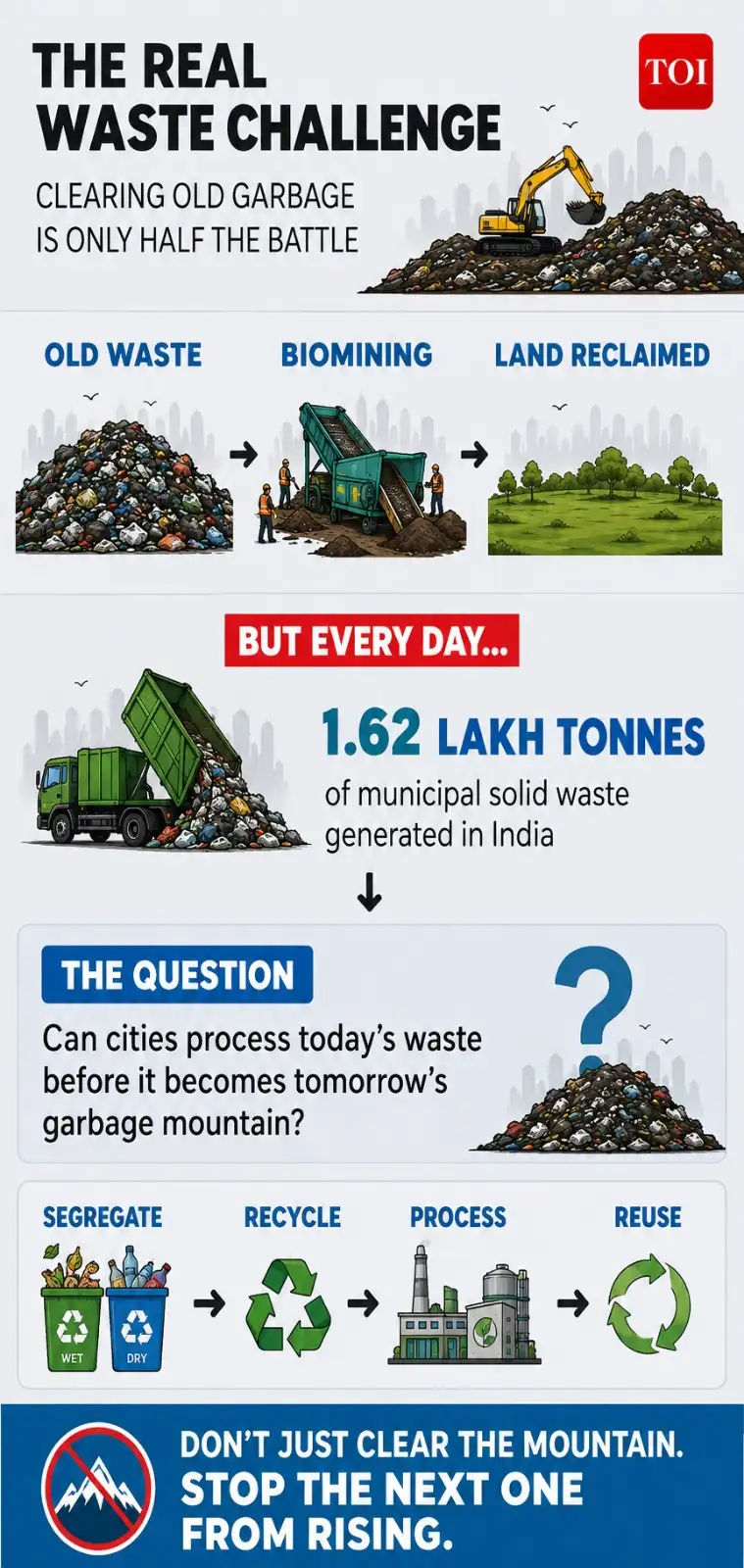
India’s urban areas produce nearly 1.62 lakh tonnes of municipal solid waste every day. That volume is expected to rise sharply as cities expand, with annual waste generation projected at about 165 million tonnes by 2030 and 436 million tonnes by 2050. The bigger concern is what happens to the waste being generated now. That changes the nature of the challenge. A city cannot permanently solve its waste problem by finding another plot of land, building a bigger landfill or periodically sending machines to mine old garbage. It has to ensure that a much larger share of what households, markets, offices and construction sites throw away is segregated, recycled, composted, recovered or processed before it reaches a landfill. Delhi’s lesson: Clean-up must become a system