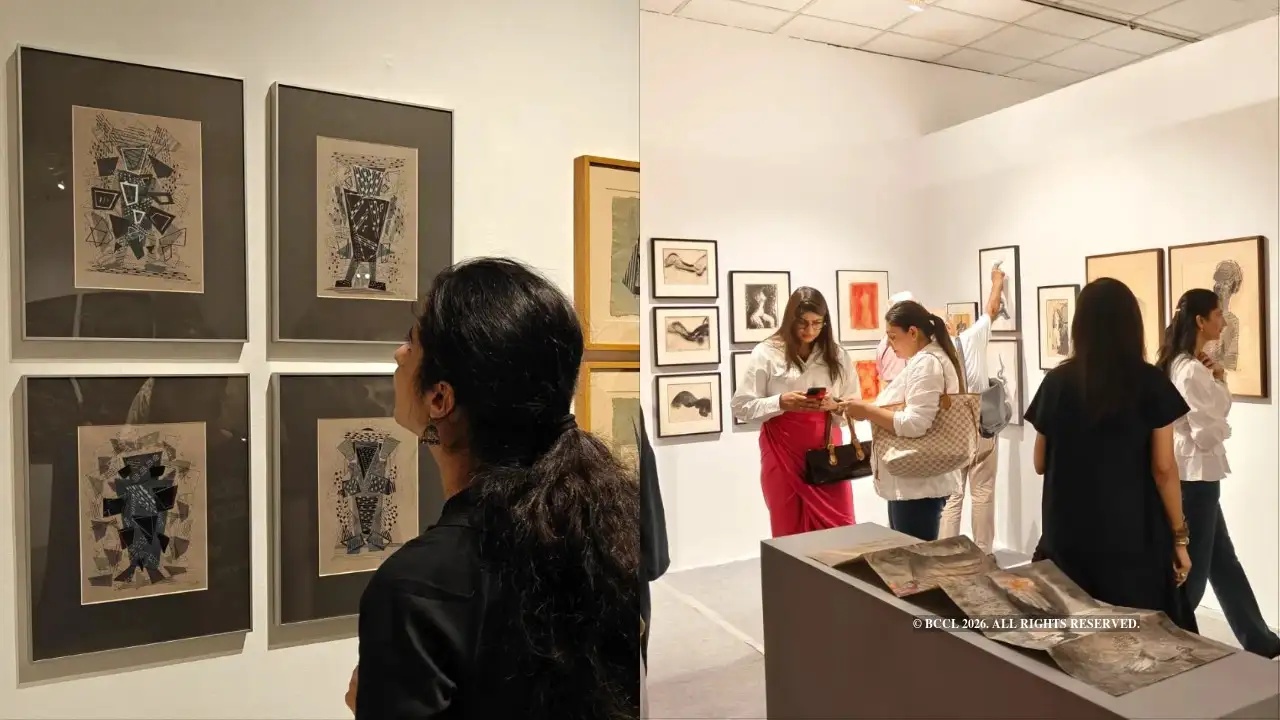
A visitor at the exhibition admires Kanchan Chander artwork titled Khajuraho II. The artist’s journey has been shaped by her travels, which led to thematic series such as Punks, Noses and Bhuta Aradhana
When I started as an artist life 50 years ago, I was very docile, quiet and a very conscious person.
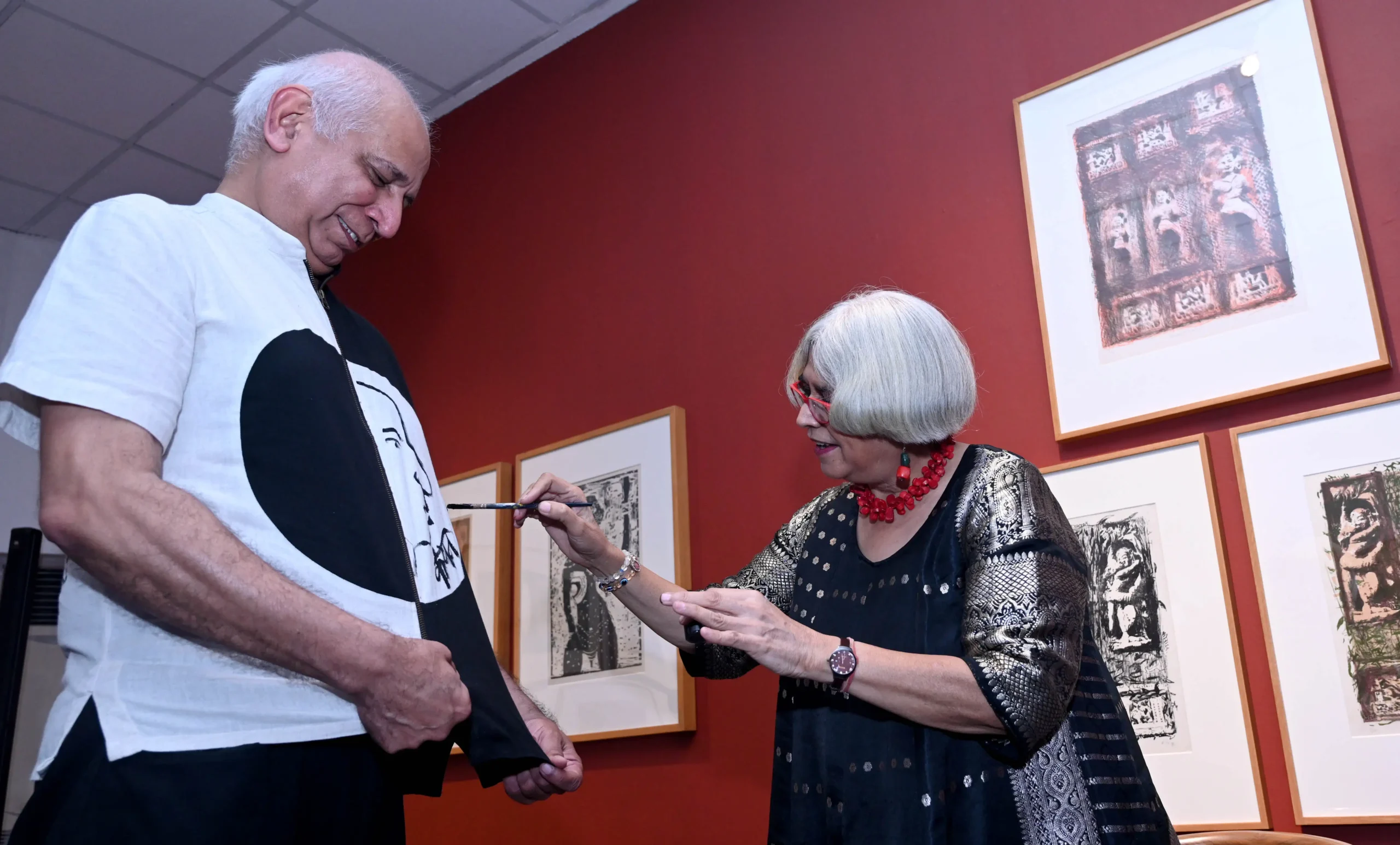
Right in the beginning, when I was in college, when my brother passed away in 1980. my marriage, which was not a happy one, the birth of my child – all this has been reflected in phases of four or five years in the works, in different forms,” she shared, adding, “I feel the constant evolution of an artist is very important. “Kanchan’s visual language is deeply autobiographical without ever becoming self-absorbed,” he observed. Kanchan Chander didn’t need a canvas to demonstrate her artistry. She picked up a brush, dipped it in black paint and with characteristic flair, painted a face – complete with the distinctive nose that has appeared in her work – on the front of his shirt. She then painted a female torso on the back. The impromptu artwork was an apt introduction to an exhibition that brings together five decades of Kanchan’s practice – from early self-portraits and figurative drawings to etchings, prints, mixed-media works and her recent geometric drawings. Over the years, I have become a strong, opinionated woman. That’s how my art and I evolved Kanchan Chander, artist and printmaker Constant evolution of an artist is very important: Kanchan For Kanchan, the retrospective is about evolution – of both the artist and the woman. “The roller-coaster life I’ve had has been reflected here. It is interpreted through the grammar. These are the phases of my life. ” For Kishore, this ability to transform personal experience without remaining confined to it is central to understanding an artist’s practice.
At the opening of her retrospective earlier this week, The Grammar of the Self, at Bikaner House, curator Kishore Singh, in a playful moment, asked her to show the audience that she could paint.