

Hyderabad: With oil palm cultivation spanning thousands of acres in Telangana , unscrupulous sellers are allegedly exploiting farmers’ fears of a fungal disease to push fake pesticides and organic products, warning that plantations could dry up if the infection is not treated.
Bhadradri Kothagudem leads Telangana in oil palm cultivation, with 92,525 acres under the crop, followed by Khammam with 49,993 acres. With farmers earning an average of ₹1 lakh to ₹1.25 lakh per acre from oil palm, fears of a disease outbreak could put their investments and incomes at risk, making them vulnerable to misleading claims about crop protection products. Following the complaints, scientists alerted Telangana horticulture department officials and asked them to report suspected cases so that the presence of the fungus could be verified.
Officials said the disease had not been reported anywhere in the state so far. Farmers suspect that the disease warnings are being used to sell products without establishing whether their plantations have actually been affected. Some sellers are promoting organic formulations as a way to prevent damage, prompting concerns about farmers being misled into spending money on unnecessary or fake products. Farmers approach research institute Concerned about the claims, some farmers from Khammam district approached scientists at the Indian Institute of Oil Palm Research (IIOPR) at Pedavegi, near Eluru in Andhra Pradesh, seeking confirmation on whether the fungus was present in their plantations. Representatives of the zonal society at Aswaraopet had also submitted a representation to the institute, requesting an inspection of the plantations.
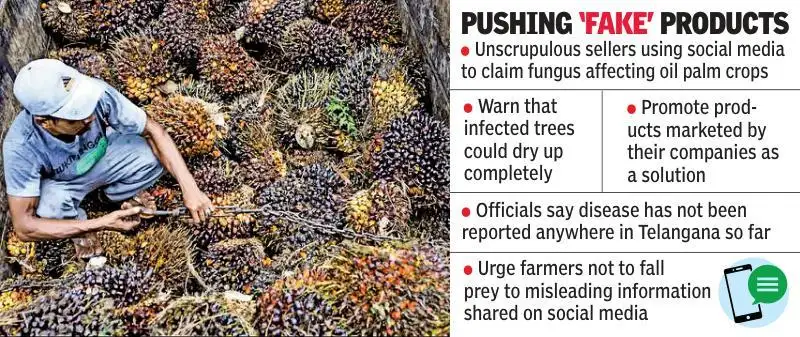
MV Madhusudan, district horticulture and sericulture officer, told TOI that the disease had not been found in oil palm plantations in the undivided Khammam district and urged farmers not to panic. Scientists are expected to visit plantations in Khammam, Bhadradri Kothagudem and other districts soon to assess the situation and determine whether there is any evidence of the suspected infection. The field inspections are expected to help address farmers’ concerns and establish whether the warnings circulating on social media have any scientific basis.