
AI Image Used For Representational Purpose Only
In Kolkata, the killings began in June 1989. Over the next few months, 13 people sleeping on pavements were murdered in a similar manner. A man was arrested in connection with the earlier killings, while attacks targeting beggars and pavement dwellers resurfaced in 1985. In 2003, a man was found with his head smashed in Kolkata’s Maidan area. In 2016, another murder in Howrah’s Bijoyananda Park prompted similar fears after a man was found with his head smashed and a bloodstained piece of concrete nearby. Police detained a suspect, but the killing did not establish what had happened to the original 1989 series. The same association resurfaced in later cases, including the deaths of men in Kolkata and Howrah in 2019 and 2020. In 2009, filmmaker Manish Gupta made The Stoneman Murders , a thriller inspired by the killings. Police never conclusively determined that one person committed all 13 Kolkata murders. In Kolkata, 13 people were killed in 1989-90 in attacks that shared striking similarities.
You Can Also Check: Gold Rate in Kolkata | Silver Rate in Kolkata | Bank Holidays in Kolkata | Public Holidays in Kolkata | Kolkata AQI | Weather in Kolkata | Petrol Price in Kolkata | Diesel Price in Kolkata | CNG Price in Kolkata | LPG Price in Kolkata Stay updated with the latest Kolkata news.
The attacks soon became associated with the name “Stoneman”, but investigators never established that a single person was responsible for all 13 deaths. Mumbai had also witnessed killings associated with a “Stoneman” — first in the 1960s and later in the mid-1980s. That uncertainty is what kept the “Stoneman” alive long after the killings stopped.
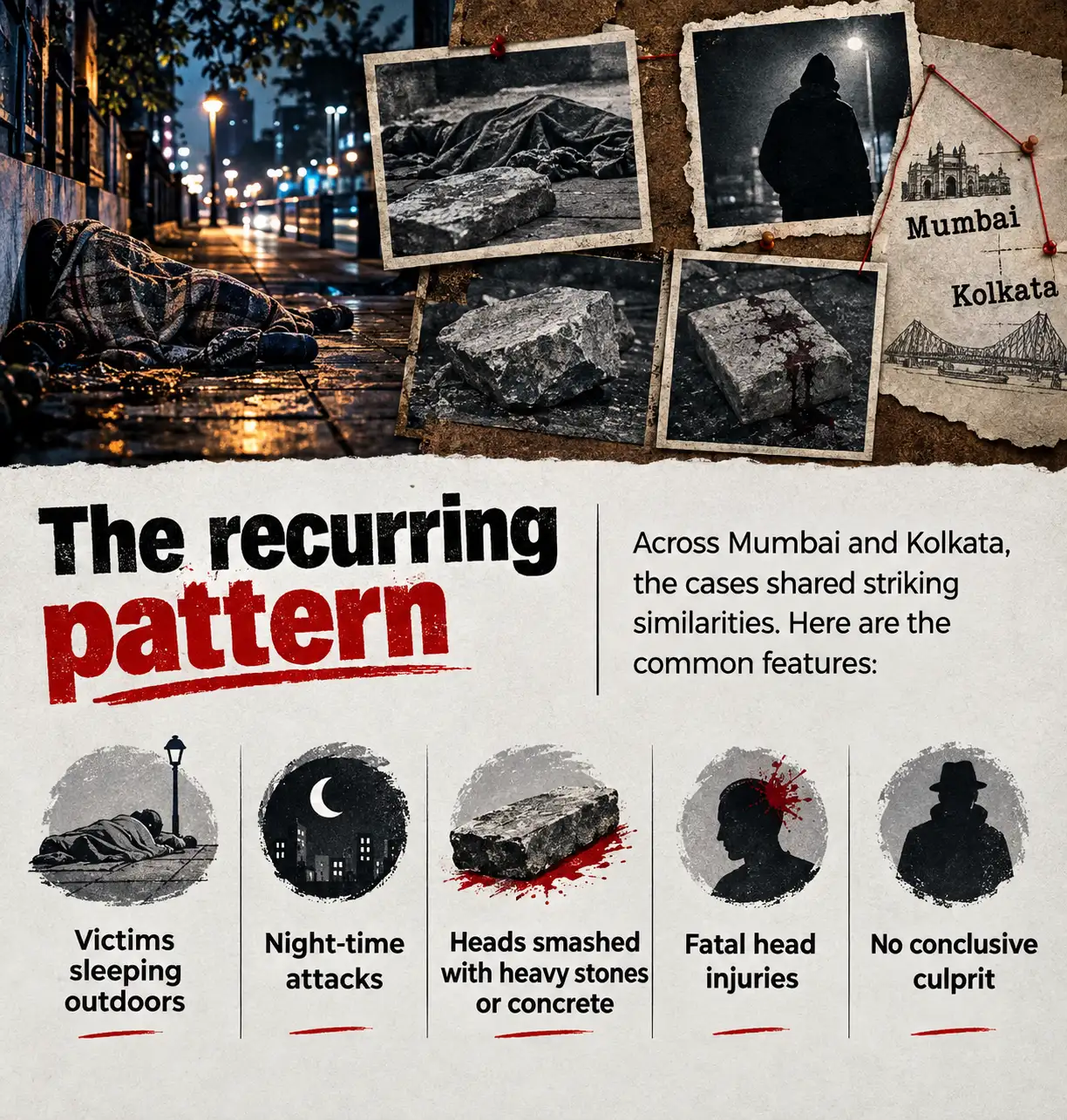
KOLKATA/MUMBAI: Long before true-crime documentaries turned unsolved murders into national conversations, a series of killings on the streets of Mumbai and Kolkata created one of country’s enduring crime mysteries. The victims were largely pavement dwellers who were attacked while sleeping. Their heads were smashed with heavy stones or concrete slabs. The killings happened at night, and the person behind them was never conclusively identified. But the biggest mystery was not just who the killer was. It was whether there was one killer at all. The recurring pattern. No accused was ultimately convicted for the murders, and the killings eventually stopped as abruptly as they had begun. That left investigators with a series of similar crime scenes but no definitive explanation for who was behind them or why pavement dwellers had been targeted. The mystery was compounded by the circumstances of the victims. Many were homeless or living on the margins of the city, making them difficult to trace and leaving investigators with few obvious leads into their personal lives. The name was not unique to Kolkata. The two periods were not necessarily part of one continuous series. The later killer was never conclusively identified. The similarities with the Kolkata murders — victims sleeping outdoors and fatal blows with heavy stones — fuelled speculation that the cases could be connected. But there was never conclusive evidence establishing that the same person was responsible. The unanswered questions The Stoneman mystery repeatedly resurfaced whenever a pavement dweller was found dead with severe head injuries. In each instance, similarities with the old killings revived the Stoneman theory, but the cases were investigated separately. The mystery eventually moved beyond crime records and into popular culture. Yet the film, like the investigations before it, could not answer the central question surrounding the real killings. Nor was a connection between the Mumbai and Kolkata killings established. What is known is more limited. No one was ultimately convicted for those murders, and the identity — or identities — of those responsible remained unresolved. Was it one killer? Several killers? Separate murderers whose crimes were linked by a similar method? More than three decades later, there is still no definitive answer. And that is what makes the Stoneman mystery endure: the name survived but the killer behind it never conclusively did. Download the TOI App.
A 10kg concrete slab was found beside the body, immediately reviving memories of the earlier killings.
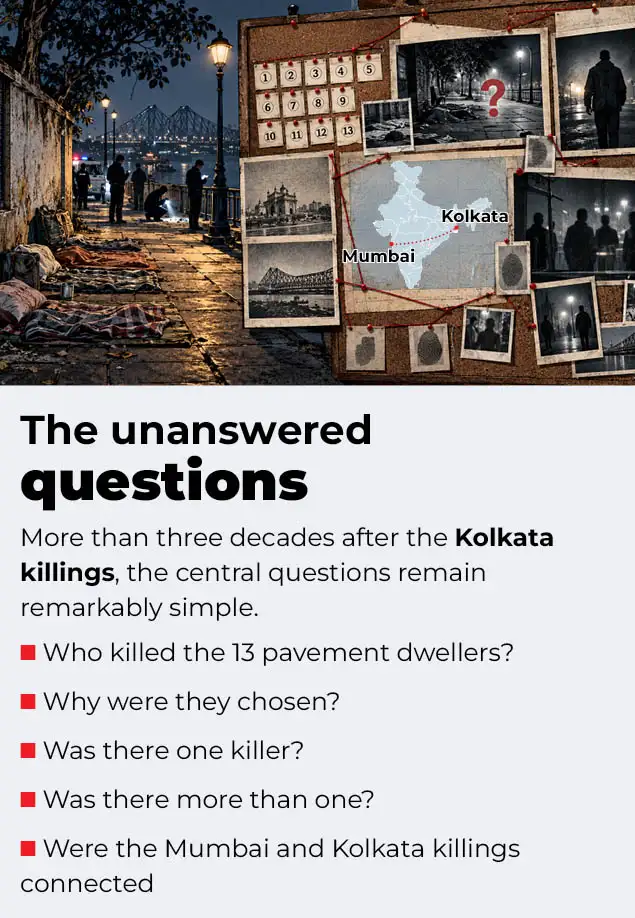
The idea of a single killer moving between Mumbai and Kolkata has remained part of the mythology surrounding the case. But the evidence does not establish that.