
Kolkata : Restaurant bodies have asked their members to ‘initiate specific measures’ before the deadline for eateries – whose licences were suspended by KMC on grounds of violation of hygiene rules – to clean up expires on Sept 22 and re-inspections are conducted. Among the measures to be taken, National Restaurants’ Association of India (NRAI) – an umbrella organisation of more than five lakh restaurants in India – has sought a strict segregation of vegetarian and non-vegetarian food during refrigeration, labelling of all stored food and maintenance of a log of all food material purchased.
These are non-negotiable and restaurants have been asked to initiate these measures by Sept 22,” added Daryani. People are wary and many have reported a drop in sales and footfalls.
There is scope for improving hygiene and stricter compliance with FSSAI-recommended safety rules even for the prominent restaurants that have not been penalised, said NRAI national president Sagar Daryani. This is a critical period for us since business starts picking up in the lead-up to the pujas,” said Daryani. “We need to be transparent and follow rules like segregation of vegetarian and non-vegetarian food. All food items, both cooked and non-cooked, should be labelled for storage. All our members have also been asked to maintain a log of all material purchased. “The closure of some prominent restaurants has affected the food and beverage sector.
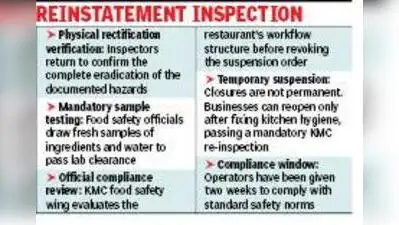
It will be followed by an official compliance review during which KMC food safety wing evaluates the restaurants’ updated workflow structure before officially revoking the suspension order. There will also be a repeat mandatory sample testing as food safety officials draw fresh samples of ingredients and water to pass laboratory clearance.
Each eatery needs to have a FOSTAC-trained employee for every 25 food handlers. NRAI is holding two such sessions on Sept 18 and 21. Restaurants that were shut down will face a ‘physical rectification verification’ as inspectors return to confirm the complete eradication of the documented hazards, for instance, if professional pest treatments and deep-cleaning of refrigeration were done. He added that the critical rectification measures will be taken up at Food and Safety Training & Certification (FOSTAC) sessions for food supervisors across restaurants in the city. It will also scan for the illegal use of toxic or industrial chemical food colourings and low-quality, contaminated spices in popular dishes like biryani. Signs of active infestations inside food processing areas will be searched for, such as cockroaches inside commercial refrigerators or evidence of rats in the kitchen.