
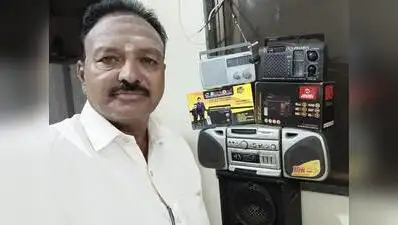
Jagadish Kalburgi with his radio sets
Vijayapura : Jagadish Kalburgi, 60, a farmer from Sindagi and nephew of slain scholar Dr MM Kalburgi, has found his own way of responding to what he sees as excessive dependence on smartphones and television. He told TOI that he procures 20-50 sets in bulk from a manufacturer in Mumbai and distributes them with a modest margin of Rs 75 per set. Within a month, I have sold around 200 radio sets.
Because of my affection for them, despite the arrival of smartphones and other advanced gadgets, I kept 4-5 radio sets. Stay updated with the latest Hubballi news.
He said listening to radio was his hobby and selling radio sets had now become another hobby. Prabhugouda Biradar, a resident of Hikkanagutti village, said he had returned to listening to the radio at home after buying a set from Kalburgi. “We are feeling like it’s a pleasant listening and no exaggeration as such,” he commented. Mohan Pattar from Talikoti said he came across Kalburgi’s initiative on Facebook and bought a radio set. “After a long time, we have resumed Chintana, Vandana, Pradesh Samachar, Kannada, English and Hindi news of AIR,” he shared.
Concerned that prolonged screen use has affected his vision and that younger people spend too much time in front of screens, Kalburgi has turned to radio as an alternative. He also blames the increasingly sensational nature of electronic media coverage for adding to stress and lifestyle-related concerns such as high blood pressure and diabetes. To offer an alternative, Kalburgi began supplying radio sets to his online and offline contacts. “Much of the margin is used to meet postage and transportation expenses. I pitched the idea while listening to the radio a month ago. Since my childhood and younger days were spent with Radio programmes, I mainly listened to programmes from All India Radio, Dharwad. I also tried to listen to Radio Ceylon and AIR Bengaluru programmes by sitting on the house roof or in the fields. One can observe that when radio was the main medium and instrument of entertainment, the blood pressure and sugar level of listeners were normal. “Whatever the news, the neutrality of the presentation was a great strength of the radio broadcast. Audio media had been stronger than visual ones as there was a space to imagine yourself,” he added. Kalburgi recalled that his uncle, Dr MM Kalburgi, was also a great fan of radio and never followed visual media for news. As he receives sets in bulk, he dispatches them through post, courier and even buses. “If the expense is more, buyers generously transfer the money over UPI apps. Most listeners suggest sending it by bus. The irony is that when I went to give it to a bus parcel, a conductor inquired about it and ordered a set for himself. Many buyers are motivating their friends to have a radio set,” he shared. Download the TOI App.
Seeing anxiety among today’s generation, I took up this initiative of re-introducing radio to my contacts,” he asserted.