
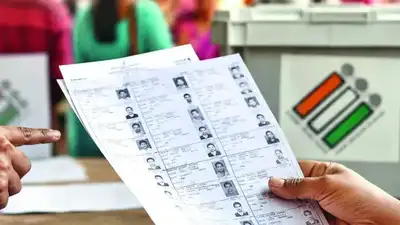
Karnataka has completed the Special Intensive Revision of the electoral roll after 129 days of processing (File photo)
BENGALURU: After a 129-day exercise, the final electoral roll under the Special Intensive Revision (SIR) has been published. Voters may check their status using this link: https://voters.eci.gov.in/download-eroll?stateCode=S10 During the publication of the draft rolls on August 24, several voters’ part and serial numbers were updated. SIR in Karnataka began with the verification of the state’s 5.5 crore voters (5,54,32,314) on the electoral roll (as on June 16). In the first round of deletions, reflected in the draft roll published on August 24, the state lost about 20% of its voters to the ASDDO (Absent, Shifted, Dead, Duplicate and Others) classification. This category accounted for 65.45 lakh voters, or 11.8% of the ASDDO list. The two-month claims, notices and objections phase, which began on August 24, saw about 43.8 lakh of the 4.4 crore draft listed voters (4,46,35,975) being issued notices. Officials said that about 60,000 of them were excluded from the final list. Claims and objections could be filed only during the first month of this phase, until September 23. Between June 16 and September 23, 7.87 lakh citizens sought inclusion in the final voter list through Form 6 applications, while 4,530 NRIs sought inclusion through Form 6A. Objections to existing voters and requests for deletion, filed either by voters themselves or their families, amounted to 58,475. Meanwhile, 10.99 lakh voters from the draft list sought modifications to their details, ranging from spelling corrections to changes in polling booth locations. The SIR activity in the state began on June 20, with the deployment of 59,050 booth-level officers (BLOs), 332 Assistant Electoral Registration Officers (AEROs) and 224 Electoral Registration Officers (EROs). The enumeration phase began on June 30 and was granted two extensions. the CEO’s office announced a 10-day extension to August 8 on July 15, owing to the large number of voters requiring ASDDO classification While it was originally scheduled to end on July 29. The deadline was subsequently extended by another 10 days.
However one would find updated details on the ECINet app using your EPIC number . You Can Also Check: Gold Rate in Bengaluru | Silver Rate in Bengaluru | Bank Holidays in Bengaluru | Public Holidays in Bengaluru | Bengaluru AQI | Weather in Bengaluru | Petrol Price in Bengaluru | Diesel Price in Bengaluru | CNG Price in Bengaluru | LPG Price in Bengaluru Stay updated with the latest Bengaluru news. Voters may look up their part number and serial number on the ECI website by entering the district, constituency and part number. The rolls are downloadable in PDF format. Voters can also look up their details using the serial number on their voter ID card. The largest chunk of voters removed from the draft list were those classified as ‘permanently shifted’. Download the TOI App.
There were 5,905 BLO supervisors, each overseeing 10 BLOs. The district commissioners were designated as District Election Officers (DEOs), with 34 such officers across the state. The number of BLOs and AEROs increased over time to 60,932 and 4,258, respectively. Recognised political parties appointed 1.33 lakh booth-level agents (BLAs) during the enumeration phase to ensure the forms reached voters. Earlier reporting noted: The revision, which began on June 30, involved house-to-house verification, checks against older electoral records and hearings for voters whose entries could not be verified.
These BLAs were also instrumental in filing objections against voters on the list during the subsequent claims and objections period. The process triggered a row over bulk applications seeking deletion of names and alleged errors in voter records. Voters could seek inclusion or corrections during the claims and objections period. The process was intended to establish whether entries were valid and whether voters could be mapped to previous electoral records.
Earlier reporting noted: Election officials maintained that exclusion from the draft did not necessarily mean permanent deletion. Earlier reporting noted: Opposition and civil society groups raised concerns over the large number of exclusions of eligible voters who might have been away from home, temporarily shifted, or unable to complete the verification requirements.