
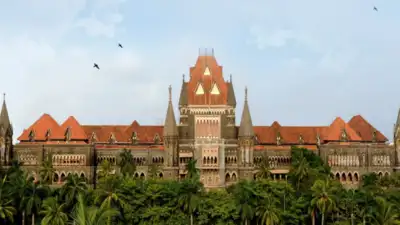
Bombay HC
MUMBAI: While hearing its suo motu PIL on noise pollution during the ongoing Ganesh and other festivals, the Bombay High Court on Tuesday asked the state government pleader to take instructions and come back at 4 pm to inform what measures the government intends to take to ensure compliance with the law and prevent noise pollution during processions and the use of firecrackers on public streets. In residential areas, the upper limit is 55 dB. The Nagpur ban is in force from September 4 to November 1. Senior counsel Anil Sakhare and Gorwadkar were also heard, and their concern was that noise levels in residential zones be abided by, while firecrackers be banned after 10 pm on public streets, as the law mandates. Advocate Vinay Deshmane from Nashik logged in from there to say his 2009 PIL had led to the state investing almost ₹99 lakh to ostensibly buy decibel-reading meters for police stations, but most police stations have none. The matter is now at 4 pm.
You Can Also Check: Gold Rate in Mumbai | Silver Rate in Mumbai | Bank Holidays in Mumbai | Public Holidays in Mumbai | Mumbai AQI | Weather in Mumbai | Petrol Price in Mumbai | Diesel Price in Mumbai | CNG Price in Mumbai | LPG Price in Mumbai Stay updated with the latest Mumbai news.
“We don’t want to be adversarial… we are not preventing the procession,” said Justices Girish Kulkarni and Neela Gokhale, who on Monday had initiated the public interest litigation on their own motion after flagging concerns over the noise generated during the festival. “We are concerned about the harmful effect on the health of citizens such noise levels could have,” said the bench, adding later, “We want the machinery to be functional. Chinoy said, “Officers must be tasked to prevent noise levels on the spot, not prosecute. “No firecracker would be within such limit,” he said, and Justice Kulkarni said perhaps manufacturers should be asked to disclose on the packaging the decibel levels of each cracker. The HC said it would pass an order after the state makes a statement on its measures and only if the government falls short of being proactive will it give directions, as it said it doesn’t want to add to the already existing law, replete with judgments passed earlier on pollution. “Why can’t such a ban be implemented in Mumbai and rest of Maharashtra as well?” the HC bench of Justices Girish Kulkarni and Neela Gokhale asked, saying the issue is the same everywhere. A lawyer said the noise penetrates their homes, making it difficult to even stay at home when the processions are on. When the Nagpur police action to prohibit sound systems was cited, the HC said, “What is popular for Nagpur should be popular for Mumbai and rest of Maharashtra as well. The HC said to the state, “What about dB meters?
As pointed out by advocates at the bar, the machinery is not functional. Merely paying a fine is not good. Action has to be preventive. … can’t first cause damage and affect thousands of citizens and then pay only a fine. The HC had appointed senior counsel Aspi Chinoy, with advocate Anand Pai as amici, to assist it in the matter. He cited the noise rules under the Environment Protection Act. The HC praised the Nagpur police commissioner for his recent order to ban modified sound systems with DJs and laser beams used during festivals and processions. It observed that police commissioners of different cities, it appears, don’t seem to communicate with each other. “That was our concern. It’s regarding people’s health. What happens to the common man? Justice Kulkarni intervened to say. “Gorwadkar, you are appearing for a doctor. Have you placed on record what are the ill effects of continuous noise pollution?” asked the bench. Justice Kulkarni added and also observed, “You don’t have a uniform policy. No coordination between police commissioners when issues are common. Nagpur police chief is very proactive. The HC commended the Nagpur ban, saying, “Ban is a good success. Where is the data? There is no point in receiving only complaints. What is the action that is taken? As Chinoy states, there should be no impression that there is absolutely no restriction. Download the TOI App.
Chinoy said it’s as if for 15 days people feel they have blanket permission.
The HC said, “There has to be regulation and apart from that, those who use the loudspeakers should themselves have some responsibilities towards fellow citizens. As Chinoy said, we have nothing against processions. Justice Kulkarni said to the state lawyers, “You can’t be saying state machinery is helpless. “Rule of law has to be maintained,” Justice Kulkarni stressed orally. People are on the pavement, he observed, and said firecrackers are toxic pollutants and “should be stopped”. “Celebrations are not meant for someone to die,” said Justice Kulkarni, and Chinoy submitted, “It is possible that with little bit of will, excesses can be controlled. The state lawyer said social media messages to prevent pollution were made and circulated last year and said data would be collected to show what steps were taken this year and what action was taken on complaints, as nodal officers had been appointed.
But follow the norms. Especially when passing a hospital or housing complex. Go slow. It has come to such a situation and the severity is such that citizens are affected and want action… If we don’t regulate, where do we go? There are already traffic and so many other issues, including air pollution. How do you survive in the city? “When a procession is on, there are people in adjoining buildings, many stranded in cars… what happens to them? The procession is on a public road. The HC too observed orally, “As citizens it is our duty to fellow citizens and it is duty of govt to sensitise the citizens about this. Advocate General Milind Sathe was held up in a matter being heard before another bench.