
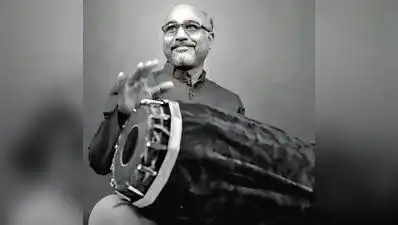
Renowned mridangam maestro Sridhar Parthasarathy
Pune: Renowned mridangam maestro Sridhar Parthasarathy breathed his last at 54 on Friday morning after suffering a cardiac arrest during a Diwali Pahat concert in Baner. He continued for another 10 minutes.
The musician had begun his performance at 7am and continued playing beyond his scheduled slot following repeated encore requests from the audience, organisers said. When the crowd called for an encore again, he said he would play two more pieces. It was then that he collapsed on stage,” an organising member said. In a statement, the hospital said that CPR had been initiated at the venue in accordance with Advanced Cardiovascular Life Support (ACLS) protocol and was continued by the hospital’s emergency medical team after his arrival. He was particular about the sound he produced on the mridangam, and that gave his playing a distinct, universally appealing quality,” Joshi said. He never reprimanded us for mistakes and was always encouraging of younger artistes,” Shankar said.
“He played for about five to ten minutes initially, after which the audience asked for an encore. Doctors present at the venue rushed to the stage and administered CPR. An ambulance was called and Parthasarathy was taken to Manipal Hospital. Despite immediate and sustained resuscitation efforts, he could not be revived. His sudden death sent shockwaves through the Indian music fraternity, with tributes pouring in from musicians across the country. Celebrated for his command over the mridangam and his ability to take traditional Carnatic rhythms into contemporary and cross-cultural collaborations, Parthasarathy had worked with musicians including Louis Banks and was part of the global music project Miles from India. Pune-based sarod player Anupam Joshi, who had met him during a recent visit to the city, remembered him as a warm person and an exceptionally discerning musician. “He was a gem of a person, a man of few words whose music spoke volumes. He had performed extensively with Ustad Alla Rakha and Zakir Hussain . “He was constantly curious, composing and exploring new rhythmic possibilities. He would invite musicians home, share meals and discuss everything from rhythm to ragas. Despite his stature, he was incredibly accommodating when I invited him to perform in Pune.