
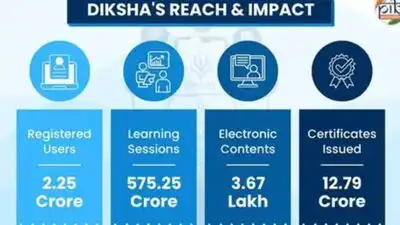
The digital transformation of school education in Uttar Pradesh has gained significant momentum with the expanding use of DIKSHA.
The state has 27.01 lakh registered DIKSHA users, accounting for around 12 percent of the country’s total registered users. During 2025–26, an average of 17,597 users accessed the platform every day, while 49,789 new users joined during the year. With 27.01 lakh registered users, the state accounts for approximately 12 percent of all registered DIKSHA users nationally. The state recorded an average of 17,597 active users every day during 2025–26. In addition, 49,789 new users joined the platform during the same period. One of the most important components of Uttar Pradesh’s DIKSHA strategy is the creation and use of more than 16,000 QR-linked educational videos.
The platform can therefore serve several purposes: The most visible achievement of Uttar Pradesh is the size of its DIKSHA user base. Because uttar Pradesh has one of India’s largest school education systems, with a vast geographical spread extending from major cities to remote rural and semi-rural areas, the figure assumes greater significance. The two numbers therefore measure different dimensions of success. Because it makes digital learning accessible without requiring students to search independently for appropriate material, the QR-code model is particularly useful. For the government, therefore, digital education is simultaneously a student-support programme and a teacher-support system.
The digital transformation of school education in Uttar Pradesh has gained significant momentum with the expanding use of DIKSHA (Digital Infrastructure for Knowledge Sharing), the national digital platform for school education. Under the Yogi Adityanath government, the platform is being used not merely as an online repository of lessons but as an additional learning and teaching ecosystem connecting students, teachers, textbooks, smart classrooms and digital content. The scale of adoption in Uttar Pradesh is significant. These figures indicate that DIKSHA has moved beyond being a supplementary technology platform and is increasingly becoming part of the state’s regular educational infrastructure. It provides learning and teaching resources for students, teachers and other stakeholders. One of its most important features is the integration of QR codes with textbooks and learning material. A student or teacher can scan a QR code printed alongside a lesson and access related digital resources such as videos, explanations, exercises and other learning material. This creates a bridge between the traditional classroom and digital education. Instead of treating textbooks and technology as separate systems, DIKSHA connects the two. Reaching such a large and diverse education network requires digital resources that can operate alongside conventional classroom teaching. These figures should be interpreted carefully. Registered users represent the cumulative reach of the platform, while daily active users provide an indication of regular engagement. Together, however, they demonstrate both the breadth of adoption and continuing utilisation of DIKSHA. A learner studying a particular lesson can scan the QR code associated with it and immediately reach the relevant digital resource. In fact, this can improve the classroom experience in several ways. A teacher explaining science, mathematics, geography or another subject can supplement the textbook with visual material. A student who has not fully understood a lesson can revisit the digital explanation. Teachers can also use such resources for revision and reinforcement. For rural schools, the model has another important advantage: it allows existing textbooks and school infrastructure to become gateways to a much larger digital knowledge base. Another important dimension of the DIKSHA initiative is accessibility. Educational content in multiple Indian languages can help students learn in a language that is familiar to them. This is particularly relevant in a state as geographically and socially diverse as Uttar Pradesh. The inclusion of Indian Sign Language content is an important step towards making digital educationmore inclusive for children with hearing-related disabilities and other special learning requirements. This reflects a broader principle: digital transformation is meaningful only when technology expands access rather than creating another barrier. Initiatives such as DIKSHA Pocket Booklets are also intended to make digital resources easier to use at the school level. Such interventions can help teachers and schools navigate and incorporate digital resources into everyday teaching. The real test of digital education in Uttar Pradesh lies not only in Lucknow, Noida, Kanpur or other major urban centres but in villages and remote schools. The state’s large rural school network makes the combination of physical textbooks, QR codes, smart classrooms and digital content particularly relevant. A textbook can reach a student through the conventional education system, while the QR code can potentially connect that same student to supplementary digital material. In this manner, the digital platform can extend the educational resources available to schools without requiring every school to maintain a large physical library of supplementary material. Where internet connectivity and appropriate devices are available, students and teachers can access resources beyond the conventional classroom timetable. A major strength of DIKSHA is that it is not designed only for students. Teachers are also important users of the platform. Digital resources can help teachers prepare lessons, find supplementary material, explain concepts visually and provide additional exercises. This becomes particularly useful for teachers handling subjects or topics where additional multimedia material can improve classroom engagement. The expanding user base suggests that this ecosystem is gradually becoming part of the wider educational environment in Uttar Pradesh.