
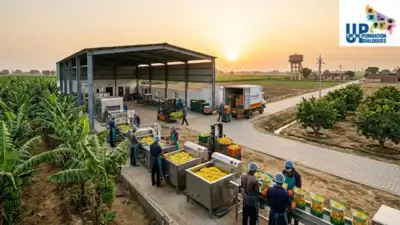
(AI-IMAGE) Kaushambi is on a mission to leverage its agricultural prowess into diverse economic pathways aimed at enhancing livelihoods
Because they can help farmers manage cultivation costs, invest in agricultural activities and reduce their vulnerability to seasonal uncertainties, these state- and national-level interventions are relevant to Kaushambi. During the past nine years, Uttar Pradesh has pursued a wider programme of agricultural support through irrigation expansion, farmer assistance, improved access to agricultural services and income-support schemes. The Pradhan Mantri Kisan Samman Nidhi has provided eligible farmers with direct financial assistance, while irrigation initiatives and agricultural infrastructure programmes have sought to improve the availability and efficiency of farm resources. The next stage of transformation lies in ensuring that agricultural growth translates into stronger rural incomes. Better storage, grading, packaging, transportation and access to organised markets can help farmers retain a greater share of the value generated by their produce. Encouraging farmer groups and collective marketing arrangements can also improve bargaining power, particularly for small and marginal cultivators. From Farm Produce to Farm-Based Industries One of the most promising opportunities for Kaushambi is the development of small and medium-sized agro-processing enterprises. When agricultural produce is processed locally, a greater share of economic activity remains within the district. Such enterprises can create jobs in processing, packaging, transportation, warehousing, marketing and equipment maintenance. The development strategy for Kaushambi can build on its agricultural base by encouraging food-processing units, flour mills, oil-processing enterprises, grain cleaning and grading facilities, and other businesses suited to locally available crops. Small-scale processing facilities, supported by reliable electricity, road connectivity, credit and market linkages, can help transform agriculture from a largely production-oriented activity into a broader economic ecosystem.
The Jal Jeevan Mission dashboard for Kaushambi records a programme covering 674 rural villages, with household tap connections and associated water-supply infrastructure being developed. Its published progress data also tracks pipeline construction, overhead tanks, commissioning and regular water supply, highlighting both the scale of the effort and the importance of completing the remaining work. Reliable household water access can improve everyday living conditions, reduce the burden of collecting water and support public health. For the district’s economy, improved rural connectivity and basic services can also make it easier to transport agricultural produce, operate processing units and connect villages with markets. The next step is to ensure that infrastructure is maintained effectively and that roads, water supply, electricity and digital services work together to support economic activity. Rural Employment, Skills and Women’s Economic Participation The long-term success of district development depends on whether economic opportunities reach ordinary households. In Kaushambi, rural employment can expand through food processing, dairy, poultry, horticulture, retail, transportation and small manufacturing. Self-help groups, farmer-producer organisations and local entrepreneurs can play a significant role in this transition. Collective purchasing, processing and marketing can help small producers reduce costs and access larger markets. Skill development in food safety, packaging, bookkeeping, digital marketing and enterprise management can further improve the prospects of rural businesses. Women, particularly those already engaged in agricultural and household-based production, can benefit from opportunities to establish or expand small enterprises. Access to institutional credit, suitable equipment, training and market information is essential to make these ventures commercially sustainable rather than dependent on short-term assistance. From Agricultural Strength to Economic Diversification
The ODOP programme, launched in Uttar Pradesh on January 24, 2018, seeks to support district-specific products through skill development, finance, technology, infrastructure and marketing assistance. Improving agricultural productivity, reducing post-harvest losses and increasing the value farmers receive for their produce are therefore essential to the district’s development. For Kaushambi, this means building an economy in which agriculture remains the foundation but generates opportunities across processing, trade, services and rural manufacturing. (District Transformation) You Can Also Check: Gold Rate in Lucknow | Silver Rate in Lucknow | Bank Holidays in Lucknow | Public Holidays in Lucknow | Lucknow AQI | Weather in Lucknow | Petrol Price in Lucknow | Diesel Price in Lucknow | CNG Price in Lucknow | LPG Price in Lucknow Stay updated with the latest Lucknow news.
The central idea behind this approach is that economic growth must extend beyond major industrial centres. Districts with strong agricultural foundations can become engines of development when farmers receive better infrastructure, local produce finds wider markets and rural enterprises have opportunities to expand. For Kaushambi, this means moving beyond the production and sale of raw agricultural commodities towards a more diversified rural economy. Agriculture as the Foundation of Economic Transformation Agriculture remains central to Kaushambi’s economy, supporting a large section of its population directly or indirectly. The Yogi government’s emphasis on investment facilitation, entrepreneurship and district-level economic development provides a policy framework for this transition. However, the long-term impact will depend on translating these opportunities into operating enterprises, with accessible finance, suitable land, technical support and dependable supply chains. For local entrepreneurs, smaller units can offer a practical entry point into manufacturing. Women-led enterprises, farmer-producer organisations and self-help groups can also participate in food processing and packaging, enabling more households to benefit from economic activity beyond cultivation. Local Products and Rural Entrepreneurship Kaushambi’s economic development also depends on identifying products and skills that can be converted into sustainable commercial opportunities. Local products can gain greater value when producers receive support for quality improvement, packaging, branding, digital promotion and access to buyers outside the district. The broader Uttar Pradesh approach to promoting district-specific products and traditional enterprises offers a useful framework for strengthening local entrepreneurship. In Kaushambi, the priority should be to identify commercially viable agricultural and non-agricultural products, understand their market potential and support producers in meeting quality and packaging standards. Digital commerce and organised marketing can help small businesses reach customers beyond nearby markets. Common facilities for packaging, storage and product testing can reduce costs for small producers who cannot afford such infrastructure individually. Credit access and entrepreneurship training can further help rural businesses move from informal operations towards sustainable enterprises. A successful local-product strategy should be rooted in the district’s actual production strengths rather than relying only on promotional campaigns. Regular market assessments, producer consultations and buyer linkages are essential to ensure that support reaches products with genuine demand and potential for growth. Banana Chips: Turning a Local Strength into a Market Opportunity Kaushambi’s One District One Product (ODOP) identity is banana chips, a product that connects the district’s agricultural resources with food processing and entrepreneurship. The state government’s ODOP portal highlights opportunities to process bananas into chips, flour, puree, beverages and dried slices. It also identifies the scope for standardised production, improved packaging, storage and common branding. This initiative reflects an important change in the way local economic development is being approached. Rather than viewing agricultural produce merely as a commodity, the emphasis is on developing products that can command better prices through processing and marketing. Banana-based enterprises can generate employment for workers involved in sorting, slicing, frying, drying, packaging and distribution. They can also create opportunities for women entrepreneurs and small businesses in rural areas. For Kaushambi, the next priority is to strengthen the banana-processing value chain through reliable raw-material supplies, hygienic production facilities, quality certification and connections with wholesalers, retailers and online marketplaces. Guava Cultivation and Horticultural Development Another important economic strength of Kaushambi is its guava production. The district is associated with the well-known Allahabadi Surkha variety, valued for its taste and aroma. The Uttar Pradesh government has identified the Muratganj and Chayal blocks for developing a guava fruit belt, with emphasis on expanding cultivation, improving quality and strengthening post-harvest management. The variety has also received a Geographical Indication (GI) tag. The wider policy emphasis on horticulture, food processing and market-oriented agriculture has created opportunities to build a stronger commercial ecosystem around such products. For guava growers, the potential extends beyond fresh-fruit sales to pulp, juice, jam, jelly and other processed products. Better grading, cold-chain facilities and transport arrangements could help reduce wastage and extend the period during which fruit can be marketed. Developing these opportunities requires coordination among farmers, horticulture officials, banks, processors and buyers. If supported by adequate infrastructure and viable business models, fruit-based industries can provide additional income opportunities and create seasonal as well as year-round employment. Infrastructure and Basic Services for Rural Growth Economic opportunities cannot expand without reliable infrastructure. Roads, electricity, drinking water, irrigation and digital connectivity influence the cost of doing business and the quality of life in rural communities. The achievements of the last nine years should be assessed not only through the expansion of government programmes but also through their impact on productivity, household incomes, enterprise growth and employment. Kaushambi has identifiable strengths in agriculture, banana processing and guava cultivation, while its ODOP identity offers a platform for promoting local products. The district’s next phase of development now focuses on establishing viable food-processing clusters, improving storage and logistics, expanding farmer-producer organisations, attracting small-scale investment and connecting local enterprises with larger markets. District-level economic planning can help identify promising sectors, address infrastructure gaps and coordinate support from different departments. The broader vision of the Yogi Adityanath government is to make Uttar Pradesh’s districts active participants in the state’s economic expansion. Download the TOI App.
Kaushambi, a predominantly agricultural district in Uttar Pradesh, represents the potential of rural economies to contribute to the state’s broader development ambitions. With agriculture as the foundation of livelihoods, the district’s economic future depends on improving farm productivity, creating opportunities for value addition, strengthening infrastructure and generating employment closer to villages. Over the last nine years, the development approach under the Yogi Adityanath government has increasingly focused on connecting rural livelihoods with better roads, welfare delivery, market access and enterprise development, while creating conditions for districts to realise their individual economic strengths.