
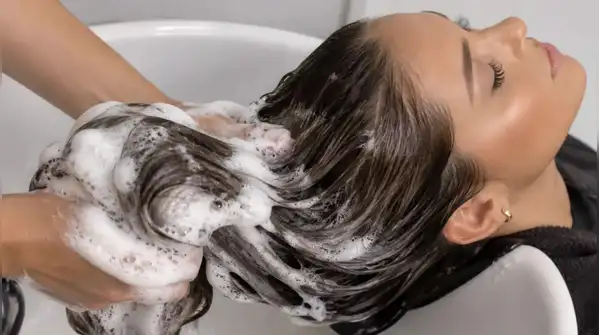
For many years, washing hair in Indian homes has followed a standard protocol. You oil your hair, apply a generous amount of shampoo from roots to tips, rinse it off, condition it, and rarely do the final rinse after applying a washaway serum. However, people often overlook that their scalp and hair have different needs. So, let’s understand what you’re doing wrong.

Because the scalp constantly produces sebum, while the ends of the hair strands are the oldest part of the strand, this is.
After washing the hair, the lather moves down naturally and cleans the hair without requiring a lot of effort. (Image Credits: Pinterest) The concept of having a regular schedule for hair washing might seem attractive, but there is no “one size fits all” approach to washing hair. Consider the scalp as a type of skin and the hair strands as a string that has already grown out of the scalp. They have thus been subjected to brushing, sunshine, heat styling, dyeing, pollution, and other daily habits for a long time. People tend to wash the strands first and leave the scalp out, which makes your hair look greasy even after washing. This is why skin specialists suggest that one should always concentrate shampoo use on the scalp and not apply it along the entire hair. The American Academy of Dermatology provides useful recommendations regarding how often to wash your hair. Other factors included in the study are the speed with which your hair becomes dirty or greasy. The study also supports the fact that frequent washing does not necessarily damage hair. However, it does not imply that everyone needs to wash their hair every day. https://www.aad.org/public/everyday-care/hair-scalp-care/hair/healthy-hair-tips (Image Credits: Pinterest) Even though your hair appears to be clean, treat it with respect and do not rush to brush it. It is advisable to treat wet hair with care and use a wide-toothed comb for detangling. It further recommends starting from the tips rather than pulling the comb all the way from the roots downwards. When it comes to curly or thick hair, detangling can be achieved much more easily if conditioner is left in the hair. In general, the aim is to lower the force applied to the process of detangling and prevent hair fall. (Image Credits: Pinterest) One of those small routines that can have a significant impact. Wet hair can easily sustain physical damage. Allow your hair to dry using a towel or T-shirt rather than roughly rubbing it dry. Don’t twist your hair or rub it between your hands. Simply squeeze the moisture out and wrap it in a soft towel or T-shirt. Try to avoid unnecessary handling if you have curly or textured hair. (Image Credits: Pinterest) No ideal method exists, but an easy framework based on evidence is displayed below:
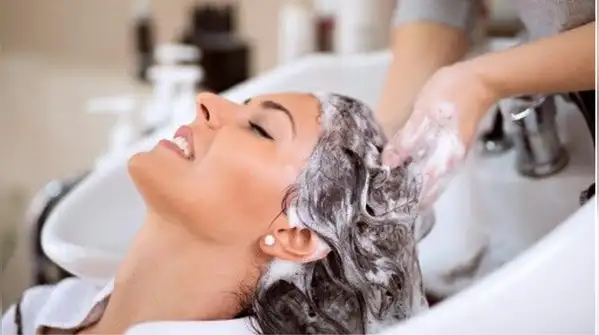

- The first step of the process is to soak the hair : Before shampooing, ensure that the hair and scalp are wet well enough.
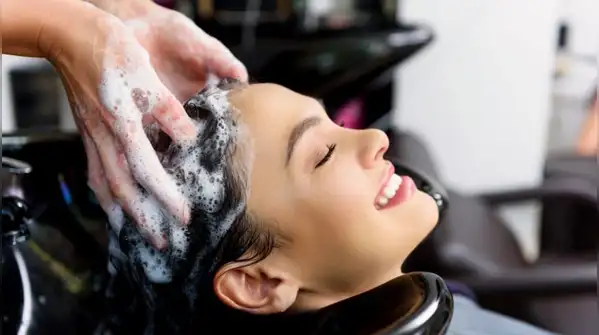
- The second step involves shampooing the scalp : The shampoo should be put on the scalp. Make sure to use the pads of the fingers without scratching with the nails.
- The third step requires rinsing the hair for a while : When rinsing out the shampoo, its diluted state cleans the hair. Be careful not to rub the hair.
- Involve a conditioner : Put conditioner on the hair wherever it is needed. Use it especially on the mid-lengths and ends in case of fine or straight hair, and use it more for damaged or curly hair.
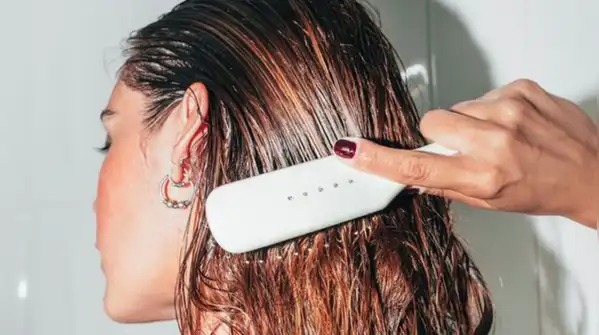
- Detangle the hair: To do this, you need to run a wide-tooth comb through the hair.
- Dry the hair without damaging it by using a towel: The last step does not involve using any heat for drying the hair when it can be avoided. (Image Credits: Pinterest)