
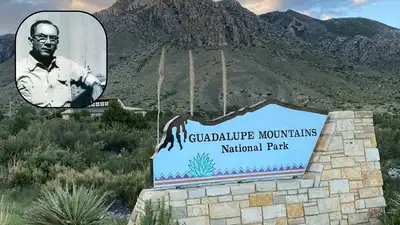
In 1934, J.C. Hunter offered 43,200 Texas acres to the US for $237,600; 35 years later, his family’s 72,071-acre ranch sold for $1.5 million, forming over 90% of Guadalupe Mountains National Park (Image Credit: National Park Service)
What if a piece of land offered to the government for $237,600 had been bought then? In 1934, Texas rancher J.C. Hunter offered 43,200 acres to the US government, hoping the spectacular mountain country could be protected. Hunter Jr., sold the family land to the federal government; this time, 72,071 acres for $1.5 million. The later acquisition accounted for more than 90% of the land that became Guadalupe Mountains National Park, according to the National Park Service. Hunter’s idea took a concrete form in 1934. That year, he offered 43,200 acres to the federal government for $237,600, according to the National Park Service. By 1966, efforts to acquire Hunter Jr.’s property for the federal government had gained more momentum. The deal was eventually completed in December 1969. The government bought 72,071 acres from Hunter Jr. for $1.5 million, according to the National Park Service. He eventually donated nearly 6,000 acres there to the federal government, adding another important piece to the effort to preserve the Guadalupe Mountains. Congress authorised Guadalupe Mountains National Park in 1966. The park was dedicated and opened to the public in September 1972.
The answer might have changed the history of the Guadalupe Mountains by decades. The offer went nowhere. More than three decades later, his son, J.C. The property was owned by the Grisham-Hunter Corporation, and the price was based on what the corporation had paid for the land. There was some support for the idea of protecting the area. Roger W. Toll, then superintendent of Yellowstone National Park, had visited the Guadalupe Mountains and discussed the possibility of creating a national park with Hunter. But several things stood in the way. The federal government was not prepared at that time to spend large amounts of money acquiring privately owned land for a new park. The Guadalupe Mountains were also remote, and there was little infrastructure in the area. So Hunter’s offer did not result in a park. For the next several decades, the mountains remained part of a working ranch landscape. Owning tens of thousands of acres, however, came with its own problems. Hunter Jr. was also concerned about the financial burden that could fall on his family, including taxes. Selling the ranch to the government became a possibility again. This time, the circumstances were different. The idea of creating a national park in the Guadalupe Mountains had gained much more momentum, and the federal government was interested in acquiring the land needed to make it happen. The park’s creation was not the work of the Hunter family alone. Wallace Pratt, a petroleum geologist, had become closely associated with McKittrick Canyon. The Hunter land purchase followed, and the National Park Service continued putting the pieces together.