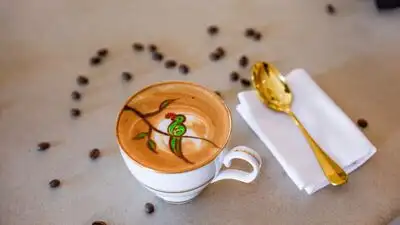
Hand painted coffee that give diners a personalised feel
We live in an age where the fine-dining space is in a constant state of flux. For a while, an invitation to a pop-up by a Michelin-starred chef at a five-star hotel was perhaps the most enticing culinary experience one could look forward to. Bartenders were experimenting with caviar-infused drinks, chefs were deconstructing familiar dishes and molecular gastronomy had turned the dining table into a theatre of smoke, foams, gels, specification and surprise. There was a sense of awe attached to food. The more unusual the technique, the rarer the ingredient and the more elaborate the presentation, the more extraordinary the experience appeared. But slowly, the definition of extraordinary began to change.
What excites diners today may seem almost unthinkable a decade ago.
Because the home chef is no longer necessarily being positioned as an alternative to the professional restaurant chef, it is significant. The future of gastronomy may therefore belong not only to the chef who can create the most technically perfect dish, but to the person who can make a diner feel that, for a few hours, they have entered another world – a grandmother’s kitchen, a village courtyard, a farm at harvest time, a chef’s private table or a room full of strangers who slowly become companions. Because ultimately, people may forget exactly what they ate.But they rarely forget where they were, whom they met and how a meal made them feel.
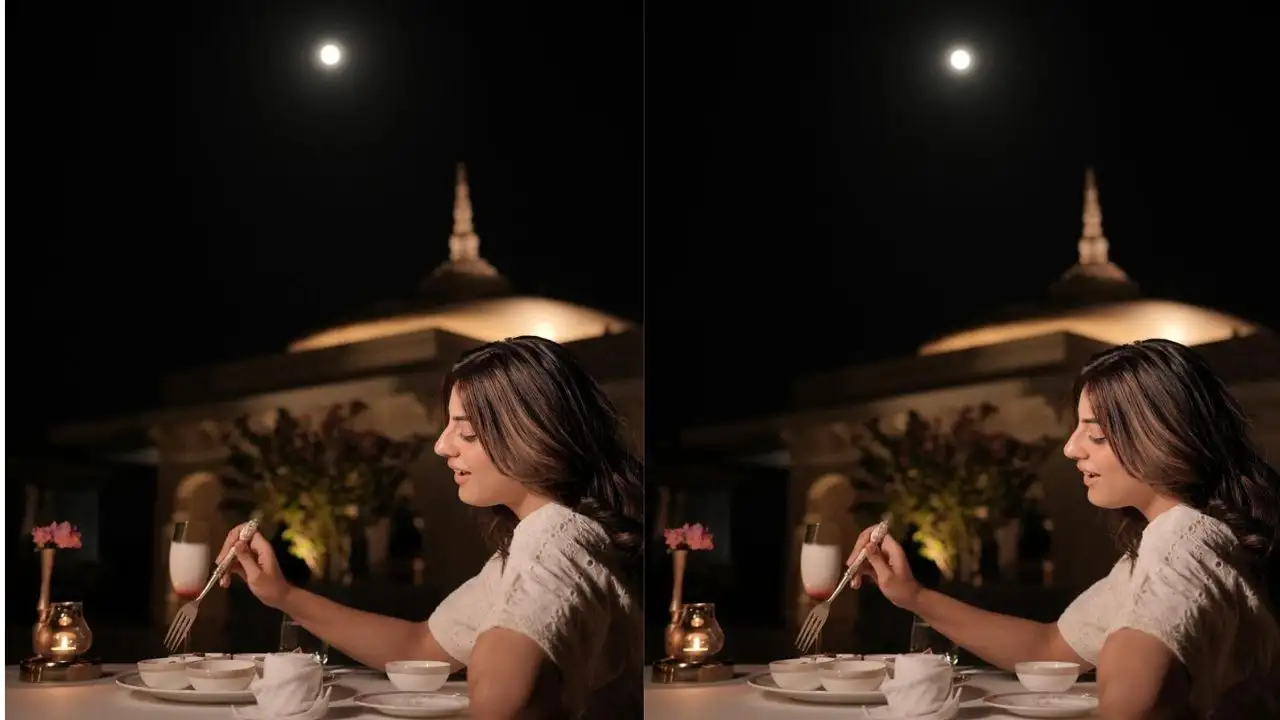
But now five-star hotels invite people for curated meals and I prepare my own dishes,” she says. “The difference I make is that I add authenticity to what I cook,” she says. Fairmont, Jaipur When “setting” is the main character in a meal Raffles Jaipur, for example, offers a unique experience through Celestial Dining at Sehara, a monthly rooftop dinner designed around the full moon.
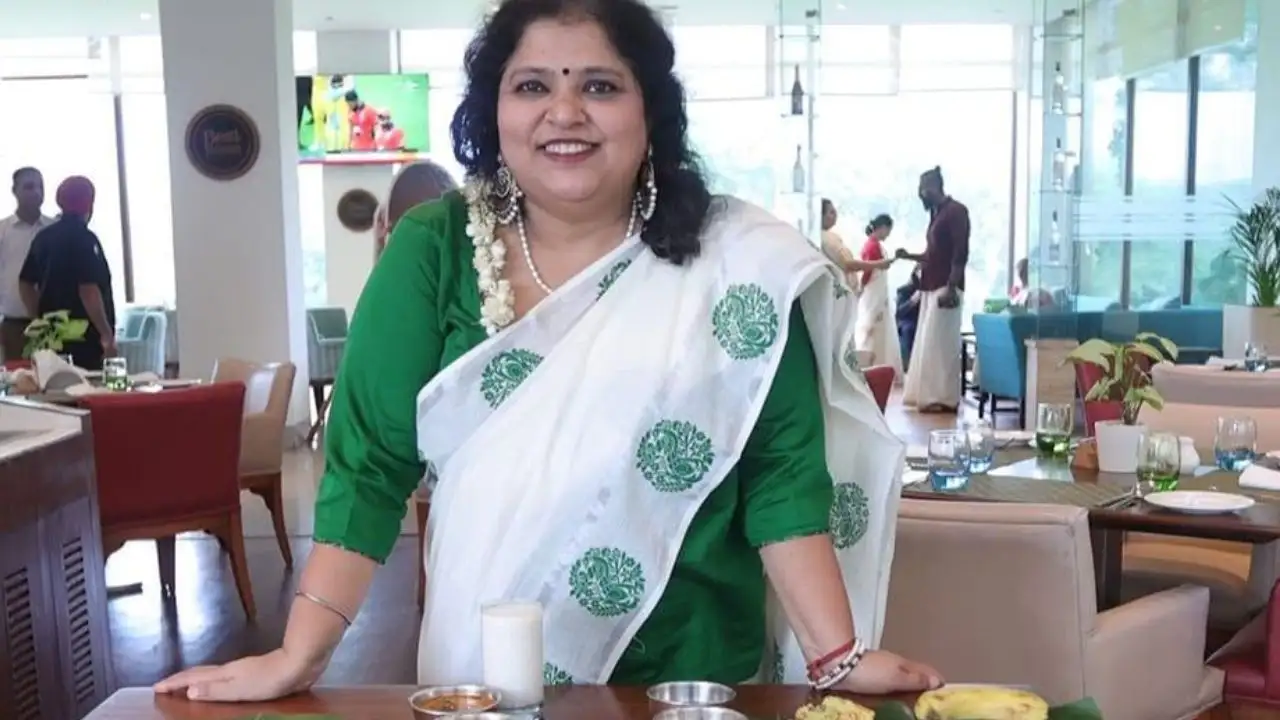
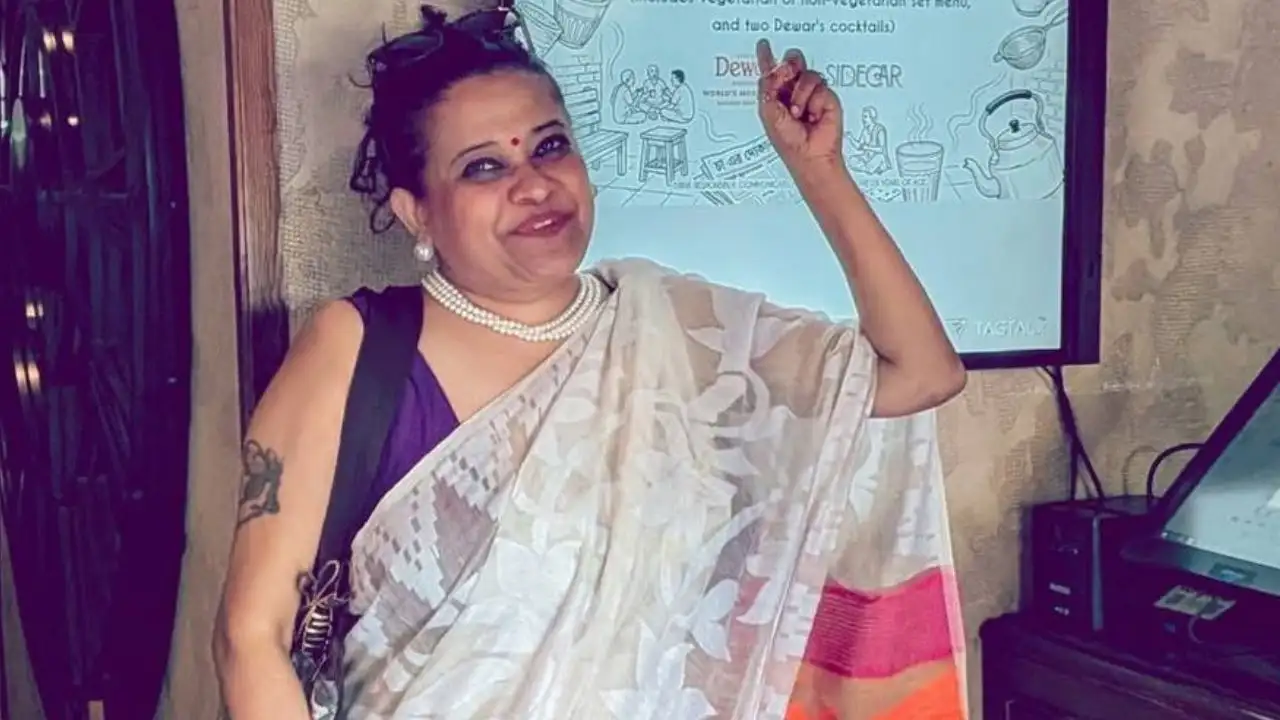
The home chef emerged as an unlikely new star of the culinary world. Diners began seeking out food cooked in authentic home kitchens, using recipes that had been passed down through generations and ingredients that had not travelled halfway across the world before reaching the plate. The attraction was not necessarily technical perfection. It was familiarity, provenance and the feeling of eating something that had a history. People wanted to know whose grandmother had created the recipe. They wanted to know where the spice came from, why a particular dish was cooked during a festival and what made one community’s version different from another’s. And now, even that movement has evolved. The experience of dining is increasingly not just about gastronomy. It is about participation. The rise of supper clubs is perhaps one of the clearest manifestations of this change. Instead of entering a restaurant, occupying a table for two and leaving after the meal, diners may find themselves sitting with strangers around a communal table, sharing food and conversation. The chef may be sitting at the same table. The menu may not be fixed weeks in advance. The meal may happen in a private home, a farm, a studio or another unconventional setting. The food is still important. But the people, the conversation and the setting have become part of the meal. That is a significant change in the meaning of dining. The diner is no longer simply a customer. The diner is becoming a participant. And perhaps the most interesting part of this transformation is that luxury hotels- once the ultimate symbol of formal, predictable fine dining – are moving in the same direction. Rekha Raghavan When the home chef enters the five-star hotel Home chefs and custodians of regional food traditions are increasingly being invited into spaces that were once dominated by professionally trained chefs. Rekha Raghavan, known for her focus on regional Indian cooking, has witnessed this change herself. “When I started out as a home chef, I thought sending food to homes and parties was the norm. She cooked at the wedding celebrations of actors Rajkumar Rao and Patralekhaa at Raffles Udaipur, bringing her repertoire into a setting associated with luxury hospitality. Instead, the two are increasingly becoming part of the same culinary ecosystem. What the home chef brings to the table is something that cannot easily be taught in culinary school: memory. The recipe may belong to a grandmother. The technique may have been learnt by watching a mother cook. The ingredients may be sourced from a particular region. The proportions may exist only in someone’s memory rather than in a cookbook. That is precisely what makes the experience valuable. Ayandrali Dutta When authenticity becomes the luxury Former journalist Ayandrali Dutta has become a popular name when it comes to Bengali food and is increasingly invited by hotels to curate Bengali meals. “They are my grandmother’s recipes and they are loved by people. Being a former journalist she knows the art of weaving stories around food-something that most food lovers want. That word-authenticity-perhaps explains the larger change taking place in fine dining. For years, luxury dining often meant creating distance from ordinary food. Ingredients were rare, techniques were elaborate and plates were constructed to look unlike anything one might encounter at home. Now luxury can mean moving in the opposite direction. It can mean getting closer to the source. A traditional recipe cooked by someone who has inherited it from a grandmother can be more compelling than an elaborate reinterpretation. A regional thali can become more memorable when the person serving it explains why a particular dish exists. A meal prepared by a village family can offer something a perfectly executed restaurant meal cannot: access to a way of life. This is why hotels are increasingly looking beyond their kitchens. Set against the Aravalli Hills, the experience brings together food, Rajasthan’s traditions and the landscape in a way that goes beyond a conventional fine-dining meal. The evening is conceived as an intimate gathering inspired by the age-old tradition of coming together under a full moon, with the setting, food, music and conversation all forming part of the experience. inspired by seasonal traditions While the evening concludes with a Celestial Dining Special Sharad Purnima Kheer. An all-white setting evokes the glow of the full moon, while unplugged folk music adds a distinctly local character to the evening. What makes the experience interesting is that the meal does not exist in isolation. The Aravalli Hills become part of the setting, regional flavours connect the diner to Rajasthan, folk music brings in another element of local culture, and the full-moon ritual gives the evening a sense of occasion. The hotel is not merely serving a meal; it is creating a context in which the meal is experienced. Dining at Raffles, Jaipur where moon exudes the main character energy Another example from the same city is Fairmont Jaipur which gives its guests an exclusive village experience. Imagine being taken on a bullock-cart ride into a village, meeting a family, watching them prepare a traditional Rajasthani meal and then sitting down to eat what they have cooked in their own home. That is very different from ordering a Rajasthani thali in a five-star restaurant. You are not simply tasting Rajasthan. You are spending time inside it. The same principle can be applied to farms, fishing communities, plantations and traditional food-producing regions. A hotel can take guests to a farm to pick seasonal vegetables before returning to the kitchen. A chef can introduce diners to the farmer who grows a particular grain. Guests can learn how a regional pickle, papad or spice blend is made. A meal can be organised around a harvest, a festival or an old community tradition. The experience then becomes impossible to reproduce simply by copying the recipe. When the experience is immersive This does not mean that molecular gastronomy, Michelin-starred chefs or elaborate tasting menus are disappearing. Far from it. There will always be diners who want to experience a chef pushing the boundaries of technique. There will always be excitement around a globally celebrated chef arriving in a new city, a limited-seat pop-up or an extraordinary ingredient. But the definition of what makes that experience memorable has changed. The plate is no longer enough. The story behind the plate matters. The person who cooked it matters, the place where it was cooked matters, the people sitting around the table matter and increasingly, what happens before and after the meal matters too. A guest may remember a spectacular dessert, but they may remember even more vividly the farmer who explained how the ingredient was grown, the grandmother whose recipe they tasted, the chef who sat beside them or the strangers with whom they ended up sharing an evening. That is where fine dining appears to be heading. Not away from luxury, but towards a more meaningful idea of luxury. The most coveted dining experience may no longer be the one that makes you feel like a VIP sitting apart from the world. It may be the one that makes you feel temporarily connected to it. And that could be the biggest change of all. After years of making food more spectacular, fine dining is discovering the value of making it more human. Looking for trusted parenting advice? Follow TOI Parenting Circle on Instagram for expert guidance, relatable stories, and practical tips delivered every day. Get the latest Lifestyle News and more. Download the TOI app.

There may be only 10, 20 or 30 seats. Because it removes some of the formality between the kitchen and the guest, the chef’s table has become increasingly popular. Because food has always been a social activity, that is important.
At the Taj Surajkund Resort & Spa, Delhi NCR the guests are made to experience private “Barefoot Dining” where the table is set in a shallow water body next to the infinity pool so one can soak the feet while one eats. Nadhun Punchihewa General Manager, Jetwing Kaduruketha says on the website, “For centuries, agriculture has shaped the way of life for civilizations across Sri Lanka. The table is set in a shallow water body next to the infinity pool. The experience is relaxing and many guests opt for it after a long working day. Barefoot dining experience at Taj, Surajkund The rise of the chef’s table Even within restaurants, the traditional distance between chef and diner is disappearing. Instead of receiving a plate without context, diners can hear why a dish was created, where its ingredients came from and what the chef was trying to achieve. A recent look at Pune’s dining scene, for instance, highlighted how chefs are using intimate tables to share the stories and ideas behind their menus. The experience is increasingly about conversation and discovery as much as eating. Fine dining had, for a while, become almost solitary in its pursuit of perfection: the perfect plate, the perfect pairing, the perfect service. The new dining culture is bringing conversation back. Supper clubs: Strangers become part of the meal Supper clubs take that idea one step further. The appeal of a supper club is partly its impermanence. The menu may exist for one evening. The chef may be someone who normally cooks from home. The guests may not know one another. And yet, by the end of the evening, everyone has shared the same food and the same table. That creates something restaurants have traditionally struggled to manufacture: community. In a world where much of our eating has become solitary- a meal ordered on an app, eaten at a desk or consumed while watching a screen- the communal table feels almost radical. People are paying not only for food but for the opportunity to sit down with other people and talk. The table becomes the experience. Rice fields that grow what is served to the guests (Canva) From ingredients to provenance Another major change is the increasing importance of provenance. The modern diner wants to know where the ingredient came from. Was the rice grown locally? Who produced the cheese? Which farm supplied the vegetables? Is the millet indigenous to the region? Which community has been making the pickle for generations? The ingredient itself now carries a story. This is particularly significant in India, where almost every region has its own culinary vocabulary. Villages such as our own were home to farmers who inspired a lifestyle filled with simple luxuries. Farmers were also held in high regard for their service to these traditional lands, once thriving with a culture that truly represents the heart of Sri Lankan hospitality. Modeled after a traditional village home, the guests experience rustic comforts of a farm life and eat the rice and vegetables grown in the fields. There are grains, greens, spices, pickles, breads, sweets, fermentation techniques and cooking methods that rarely make it onto mainstream fine-dining menus. The renewed interest in regional food gives chefs an opportunity to bring these traditions into the spotlight without stripping them of their context. And for hotels, it offers something else: differentiation. Almost every luxury hotel can serve a tasting menu. Far fewer can offer a meal that can only happen in that particular place. The new meaning of luxury Perhaps this explains why the definition of luxury dining is changing. Luxury is no longer simply about expensive ingredients. It can be about access-to home chefs, old family recipe, village kitchen, farmer, chef’s creative process and to a place or tradition that most people would never otherwise experience. Exclusiveness is what people are looking for (Canva) From spectacle to story
Today, we welcome guests to our icon of agro-tourism at Kudurketha, which continues to embody this legacy within luxury accommodation in the town of Wellawaya.