
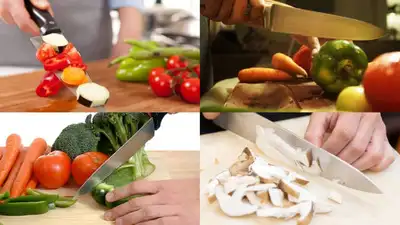
3 tips to know
Since the sticking problem starts with surface tension between two wet surfaces, changing the blade’s own surface can break that effect. Running the knife under water periodically while chopping, or wiping a very light coat of neutral cooking oil across the flat of the blade before you start, gives the metal surface less for a wet vegetable slice to cling to. It’s a small habit, but one worth building in specifically for stickier vegetables like potatoes, sweet potatoes, or aubergine. None of these three tips require buying new equipment or changing how you cook, just a slight adjustment to cutting angle, a bit of moisture management on the blade, and the occasional quick wipe mid-chop. Together, they turn a genuinely common kitchen annoyance into something barely worth noticing.
There’s a particular kind of kitchen frustration that comes with chopping a potato or a cucumber, only to have each slice cling stubbornly to the flat of the blade instead of falling cleanly away. It happens often enough that most people just assume it’s an unavoidable part of cooking, but there’s genuine physics behind why it happens, and a few real, well-tested fixes that actually work. Here’s what’s actually going on, and three tips worth knowing. This is the single biggest factor in how much sticking you’ll actually deal with, and it comes down to technique rather than any tool. Letting the blade enter the food at a slight angle, rather than pressing straight down flat against it, reduces how much surface area actually makes contact in the first place. This article is intended for general informational purposes only. Always use a sharp, well-maintained knife and a stable cutting surface, and exercise caution when wiping or cleaning a blade to avoid injury.
A quick note on “non-stick” knife designs
Many knives marketed for exactly this problem feature small oval dimples along the blade, often called a Granton edge, and while these are widely sold as a food-release feature, the reality is a bit more nuanced. Culinary research suggests the dimples were originally designed to make the blade thinner and lighter for easier slicing while keeping the spine sturdy, with any actual non-stick benefit being a secondary, debated effect rather than the main purpose. In practice, the physical shape, thickness, and grind of a blade tend to matter more for sticking than dimples alone, so it’s worth treating a Granton-edge knife as a nice bonus rather than a guaranteed fix.