
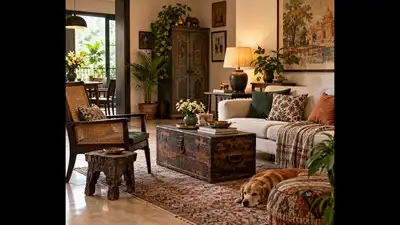
The future of home décor belongs to the past (AI generated)
Images of restored furniture, thrifted finds and “heritage corners” have made old objects aspirational again. There was a time when an old wooden cabinet, a cane chair with a broken weave or a heavy trunk pushed into a storeroom was simply considered too cumbersome to fit into a small flat. Across contemporary Indian homes, furniture with a past is finding a second life. The appeal is partly aesthetic. After years of coordinated furniture, minimalist interiors and homes that looked as though they had been assembled from the same catalogue, there is a growing desire for spaces with character. An old teak cabinet brings warmth into a modern room. A cane chair adds texture. A colonial-era writing desk can sit comfortably beside a contemporary sofa. The contrast is often what makes the room interesting. But this is more than a décor trend. It is also a quiet rejection of the idea that everything in a home needs to be new. For most of us, inherited furniture carries emotional weight. It may be the dining table around which generations ate together, a dressing table that belonged to a parent, a grandfather’s bookshelf or the old steel trunk that travelled between cities. These objects are physical reminders of people and places that may no longer exist. Keeping them allows memories to remain part of everyday life rather than being packed away in boxes. The new generation is also changing the way inherited furniture is used. The old piece does not necessarily have to remain in the room or serve the purpose for which it was originally made. A vintage trunk can become a bedside table. An old wooden door can be transformed into a dining table. A traditional cabinet can become a bar or a storage unit. A cane chair can be given a new cushion and placed beside a contemporary reading lamp. Solid wood pieces, particularly those made from teak, rosewood or sheesham, were designed to last. They can be repaired, polished, reupholstered and adapted instead of being replaced. In a time when conversations around sustainability and responsible consumption are becoming more prominent, extending the life of an existing object can make both aesthetic and environmental sense. There is also something reassuring about imperfection. A scratch on a table, a faded finish or a small dent in a trunk is evidence of use. These marks tell us that the object has lived. In contrast to mass-produced furniture designed to look new for as long as possible, vintage pieces become more interesting as they acquire signs of age. The renewed interest in traditional crafts has strengthened this movement. Cane, rattan, brass, hand-carved wood, old textiles and handloom fabrics are increasingly being combined with modern interiors. The result is not necessarily an old-fashioned home. In fact, the juxtaposition can make a space feel distinctly contemporary. A vintage Indian chair against a plain wall can have more visual impact than an entire matching furniture set. Social media has also played its part. Younger homeowners are discovering the pleasure of finding something unusual rather than simply ordering everything online. Flea markets, antique stores, family attics and second-hand furniture shops have become sources of individuality. There is still a difference between collecting old things and living with them. The most successful second-life homes do not look like museums. They mix periods and styles. Think a contemporary lamp sitting on an old side table; a modern artwork hanging above a century-old chest; a traditional rug softening a minimalist room. The past works best when it is allowed to have a conversation with the present. The old chair does not have to remain exactly as it was. It can be repaired, repainted, re-covered or moved into a completely different room. What matters is that it gets another chance to be part of someone’s life. Looking for trusted parenting advice? Follow TOI Parenting Circle on Instagram for expert guidance, relatable stories, and practical tips delivered every day. Get the latest Lifestyle News and more. Download the TOI app.
Today, however, the old cupboard is being polished rather than discarded, the grandmother’s chair is being reupholstered, and the battered trunk is being turned into a coffee table.