
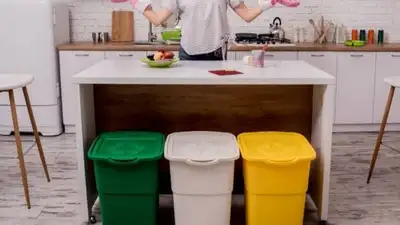
Enter most Indian kitchens, and you will find the same arrangement, one lonely dustbin quietly collecting everything from vegetable peels to plastic wrappers to leftover food, all thrown together until someone finally gets around to emptying it. It seems practical enough on the surface, but that single bin is probably doing more damage to your kitchen’s cleanliness and smell than you’d expect. Switching to three separate bins, one for wet waste, one for dry waste, and one for anything that needs a little extra care, sounds like a small change, but it genuinely transforms how a kitchen looks, smells, and functions day to day.
When wet scraps, used tissues, dry packaging, and everything else all sit together in a single bin, you’re essentially creating the perfect environment for bacteria and odour to build up fast. Wet waste, think vegetable peels, leftover food, tea leaves, starts decomposing almost immediately, and once it’s tangled up with dry waste like paper and plastic, that smell has nowhere to go but straight into your kitchen air. On top of that, a mixed bin fills up faster, meaning you’re taking the trash out more often just to keep the smell under control, which honestly gets tiring fast. A dedicated bin for wet waste, vegetable and fruit peels, food scraps, tea bags, anything with moisture, is really the single biggest thing you can do to cut down on kitchen odour.
Dry waste, paper, cardboard, plastic packaging, glass, metal, doesn’t rot or smell the way wet waste does, which is exactly why they deserve their own separate bin. Keeping it apart from wet waste means it stays clean and genuinely recyclable, rather than getting soggy and contaminated by food scraps sitting right next to it. This one small habit makes a real difference if you’re someone who tries to recycle regularly, since clean, unsoiled paper and plastic are far more likely to actually get processed rather than tossed aside for being too messy to bother with. The third bin is where things like broken glass, sanitary waste, batteries, or anything hazardous should go, items that genuinely shouldn’t be mixed in with either wet or dry waste for safety reasons. Keeping this separate protects whoever’s handling the trash, whether that’s a household helper, a garbage collector, or you yourself, from unexpected injuries or exposure to things that need careful handling. It also means hazardous waste actually gets disposed of correctly instead of quietly ending up in a landfill mixed in with everything else. Beyond the practical cleaning benefits, having designated bins for different types of waste tends to make a kitchen feel more organised and put-together overall. A single overflowing bin with a mix of wrappers and food scraps spilling out is never a good look, whereas three neat, smaller bins, each doing their own job, quietly signal that the space is well cared for. It’s a small design choice, but it genuinely shifts how a kitchen feels to work in and how it comes across to anyone who walks in. Switching from one bin to three isn’t a dramatic renovation or an expensive upgrade; it’s just a small shift in habit that pays off almost immediately in how your kitchen smells, looks, and functions. Once the system’s in place and everyone’s used to it, sorting waste stops feeling like extra work and starts feeling automatic, the same way rinsing a dish or wiping down a counter does. For something this simple, the difference it makes to a home’s everyday cleanliness and ambience is honestly hard to overstate.