
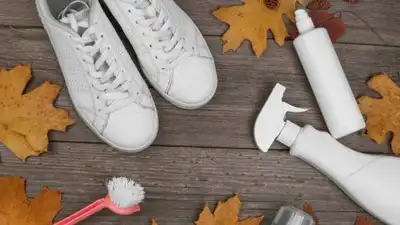
Scuffed white soles, grimy canvas sneakers, and shoes that carry a faint whiff no matter how many times they’ve been aired out- these are the kinds of problems that usually send people straight to a speciality shoe cleaner or a harsh commercial spray. As it turns out, three things already sitting in most kitchens and bathrooms handle almost all of it just as effectively, without the sharp chemical smell or the risk of discolouring a favourite pair. Here’s what each one actually does, and how to use them properly.
Baking soda is genuinely the workhorse of natural shoe cleaning, and it earns that reputation on two fronts at once. Its mild abrasive texture lifts dirt and stubborn stains off canvas, mesh, and rubber without scratching the material, while its alkalinity actively neutralises the acidic compounds responsible for a lot of shoe odour, rather than just masking the smell. Mixing roughly three parts baking soda to one part water creates a thick paste that can be worked into stained areas with an old toothbrush, left to sit for about half an hour, then rinsed clean. For odour alone, a spoonful sprinkled directly inside a shoe overnight and shaken out in the morning works just as well. Mixing equal parts white vinegar and water in a spray bottle creates a genuinely effective all-purpose cleaner, its acetic acid dissolves soap scum and mineral deposits while helping kill odour-causing bacteria on contact. Spray it directly onto soiled areas, scrub gently with a soft brush, and wipe away with a damp cloth. It’s particularly useful for the interior of shoes, where sweat and bacteria tend to build up most, well away from the outer material most people focus their cleaning efforts on. Not every shoe material responds the same way to these ingredients, so it’s worth adjusting based on what you’re actually cleaning. Leather shoes generally do better with a barely damp cloth and a small amount of mild soap rather than a full soak, since excess water can cause leather to warp. Suede is particularly delicate and should stick to a dry brush rather than any wet paste. Whatever the material, spot-testing a small, hidden area first is always worth the extra minute, since some rubber soles and dyed materials can react unpredictably even to genuinely natural ingredients. Between baking soda’s stain-lifting and deodorising power, vinegar’s degreasing and antibacterial action, and toothpaste’s precision fix for scuffed soles, these three ingredients cover the vast majority of everyday shoe-cleaning needs. None of it requires a special trip to the store, just a few minutes with things already sitting in a kitchen drawer or bathroom cabinet.
This article is intended for general informational purposes only. Always spot-test a small, hidden area before applying any cleaning solution to shoes, particularly on leather, suede, or dyed materials, and avoid soaking leather shoes in water.