
Image: AI
5 Oct 2026 | 12:06 Ahead of World Sight Day, Dr Vivek Jain, Chairperson–Paediatrics Department Development and Principal Director–Paediatrics, says parents should look at the behaviour as a pattern rather than panic over one episode. In one study of 1,204 schoolchildren aged 6 to 15, refractive errors were found in 15.7% of children, with myopia accounting for 9.1%. Because the screen feels more engaging or because they like seeing the picture up close, kids may move forward. Because sitting unusually close to the TV does not damage a child’s eyes by itself, but it can sometimes be a clue that the child is struggling to see things at a distance, that is.
“Although the child’s behavior may not mean anything serious, it could sometimes indicate that they are not able to see properly from afar,” Dr Jain says. The American Academy of Ophthalmology also says that sitting close to a TV does not damage a child’s vision. These include: Frequently sitting very close to the television Holding books or other objects unusually close to the face Squinting to see distant objects Tilting or turning the head to see better Complaining of headaches or eye strain Blurry vision Rubbing the eyes frequently or blinking excessively Difficulty seeing the blackboard at school “Parents should keep in mind that if the child often stays too close to the TV, reads with books very close to the face, squints a lot, twists his or her head to see more comfortably or suffers from headaches, eye strain or blurry vision, it might be the case for concern,” Dr Jain says. Uncorrected refractive error is the leading cause of vision impairment globally, according to WHO . That is why a child who repeatedly struggles to see the blackboard, squints at distant objects or moves progressively closer to the TV should have their vision assessed rather than simply being told to “sit back”. Dr Jain says parents should “keep tabs on their kid’s behaviour, teach them healthy screen habits and take their child for eye examination if necessary.
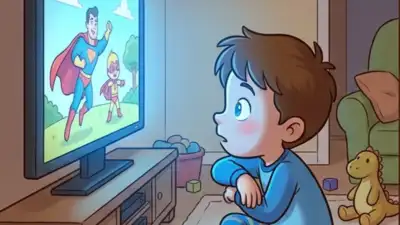
A child inching closer and closer to the television can be a familiar sight at home. Sometimes, it is simply curiosity. But if the same thing happens almost every day, the habit deserves a little more attention. The American Academy of Ophthalmology notes that habitual close viewing can be a sign of nearsightedness, or myopia. Children have a strong ability to focus on things that are close to them. So, a child occasionally sitting near the television does not automatically mean there is a vision problem. It may cause temporary eye strain or a headache, but the bigger question is why the child keeps doing it. A child may simply prefer being close to the screen, particularly if they are absorbed in a cartoon or game. But when the behaviour becomes routine, parents should start watching for other clues. Dr Jain points to several behaviours that may suggest a child is having difficulty with distance vision. And there is another reason parents should not wait for a child to complain. Some children simply do not realise that their vision is blurry. If they have always seen the world that way, they may assume everyone sees it the same way. One condition doctors may look for is myopia, commonly called short-sightedness. A child with myopia can see nearby objects clearly but may struggle to see things farther away. It is not the only possibility, though. Focusing problems, astigmatism or unequal refractive power between the two eyes can also affect how comfortably a child sees. And these problems are not rare. The prevalence of myopia increased with age in that study. For school-age children, untreated vision problems can affect more than what they see at home — vision is closely tied to learning and development. The key distinction is simple: one evening spent sitting close to the TV is usually not a reason to worry. A repeated habit accompanied by other vision-related behaviours is worth checking. And perhaps the most useful thing parents can do is resist the urge to keep scolding the child to move back. Instead, watch why they keep moving forward. Sometimes, that little movement towards the screen is the first clue that the child needs help seeing what everyone else can already see. You use AI every day. Now get your AI Quotient. Take the AIQ test Get the latest Lifestyle News and more. Download the TOI app.