
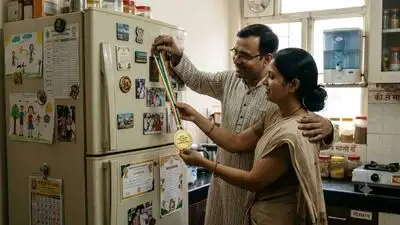
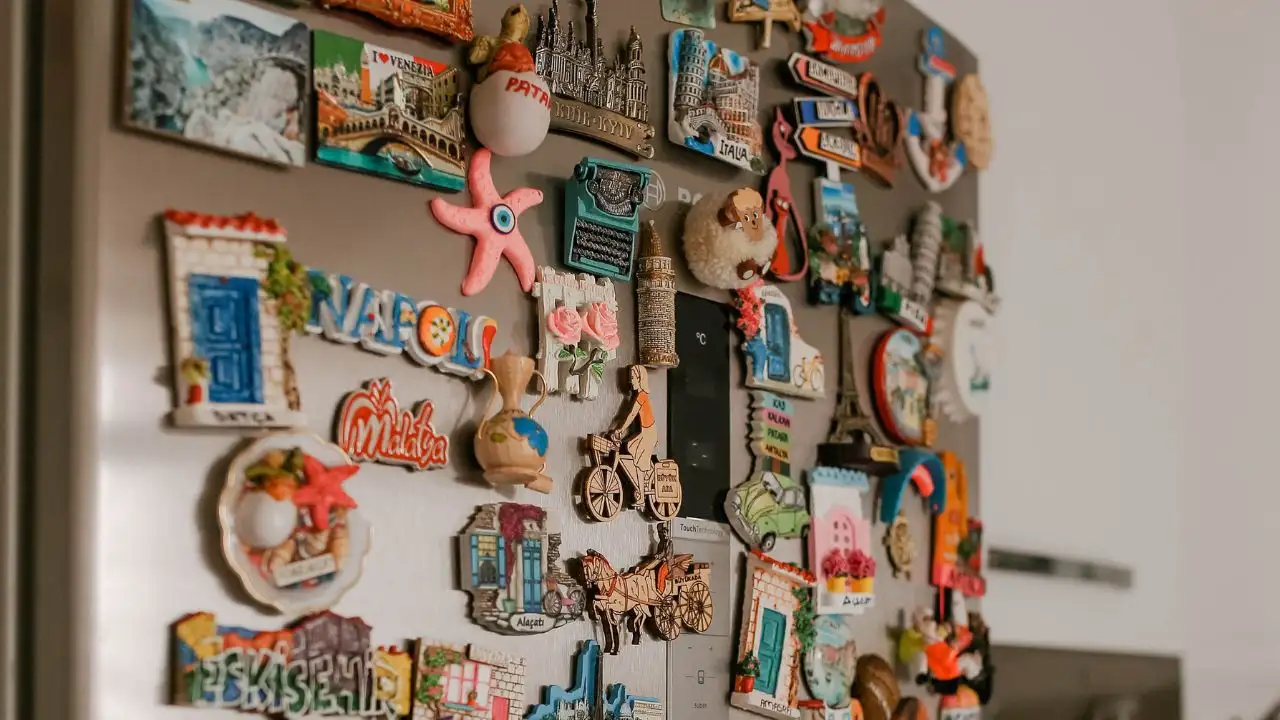
Walk into a family kitchen, and you may find the refrigerator covered with colourful drawings, school certificates, photographs, tiny craft projects, or a child’s first medal. To some, it may look like a simple parenting habit. To others, it may seem like parents showing off their child’s achievements. But psychology suggests there can be much more behind this small everyday gesture. When parents put a child’s work somewhere everyone can see it, they are not only decorating the kitchen. They may be showing the child that their effort has been noticed and that what they create has value. The meaning, however, depends largely on what parents choose to celebrate: the child’s natural talent or the effort that went into the achievement.
One parent says, “You are naturally brilliant. Another says, “You worked so hard for this. Competence is the feeling that you are capable and can do things well. Relatedness is the feeling of being valued and connected to others. A child seeing their painting, certificate, or medal displayed at home may experience both. It can make them feel capable while also reminding them that their family cares about what they do. That does not mean putting a drawing on the fridge automatically creates confidence or a “growth mindset. ” Psychology does not support such a simple cause-and-effect conclusion. But visible recognition can become one small part of a supportive family environment. Imagine two children bringing home medals. You are the smartest child here. I saw how much you practised. Both parents are proud. But the messages are different. Research involving psychologist Carol Dweck and colleagues has examined how different forms of praise can influence children’s beliefs about ability. Praise that focuses on effort, strategies, and the process of learning can be associated with a more incremental view of ability, the belief that skills can develop. That is why the words surrounding a refrigerator display may matter as much as the display itself. A painting pinned to the fridge does not have to mean, “My child is the best artist. It can mean, “My child tried something and created something, and I am proud of that effort. This distinction becomes especially important when children face failure. If they believe their worth comes only from being talented or winning, setbacks can feel threatening. If they understand that practice and learning matter, failure can become easier to handle. Psychology also offers another way to understand the habit through positive reinforcement. When children receive attention, encouragement, or recognition after putting effort into something, that positive response can encourage them to continue engaging with similar activities. A child who practices for a race, works on a painting, or learns a musical instrument may feel encouraged when parents recognise that effort. But there is an important difference between celebrating effort and making achievement the condition for love.

Pingback: Even when children grow into adults, parents may continue to keep folders filled
Pingback: Calling your parents every day can look like a sign of emotional dependence, especially