
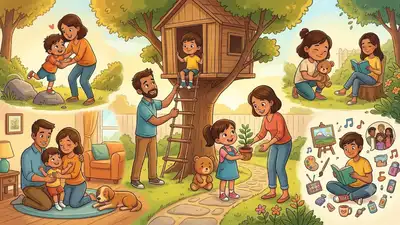
When we think of childhood, we think of milestones such as our first day at school, birthday celebrations, family vacations or the games we played with friends. But behind these memories lies something far more powerful, the emotional environment we were raised in. A happy childhood is not about having perfect parents, expensive toys, or a life devoid of struggle. All families have their arguments, heartbreaks and their tough times. What really shapes the child is what they are always feeling through those experiences, whether they felt heard, safe, loved, accepted and supported.
A stable, secure childhood enables little humans to grow up into adults who : 28 Jul 2026 | 16:22 1.Have the confidence of being seen: Kids don’t gain confidence from being told over and over that they are the best.They gain confidence from knowing that somebody believed in them all the way, even when they screwed up.When parents and caregivers respond with patience instead of shame, curiosity instead of criticism, and encouragement instead of constant comparison, children begin to internalize an important message: I am worthy, capable, loved and accepted even when I don’t get everything right.This belief becomes super powerful as an adult.Rather than viewing failure as evidence that they are not good enough, emotionally secure adults tend to see setbacks as opportunities to learn. Because their value isn’t tied to perfection, they don’t fall apart every time something goes wrong. One of the biggest misconceptions I encounter as a psychologist is the belief that resilience is something people are simply born with. Relationships, honestly, tend to build emotional resilience. The way we are comforted, encouraged, listened to and accepted in childhood, sets the template for how we live our lives as adults. However, that automatically doesn’t mean that everyone who had a happy childhood will have a good life. It also doesn’t mean that people who have experienced adversity cannot heal or become emotionally resilient. Instead, a nurturing childhood provides an emotional foundation that often helps people weather the inevitable storms of life.
- Are better able to regulate their emotions : One of the best gifts a child can receive is not endless happiness but help in learning to deal with difficult emotions. A child who is allowed to cry without being laughed at, to be afraid without being belittled, to be angry without being called ‘bad’, learns bit by bit that feelings are not dangerous. Over time they become better at recognizing, naming and managing their emotional experiences. As adults, these people are often able to stop before they act. They are better at communicating their feelings, asking for help when they need it and getting over stressful situations quicker. But that doesn’t mean they never get overwhelmed. That just means they are better equipped to deal with emotional discomfort. 3.Are secure in relationships: The relationships we form earliest in life quietly set our expectations for those to come. Children who get warmth, consistency, and emotional availability often grow up to be adults who believe that relationships can be safe and dependable. They are more likely to feel comfortable trusting others, showing affection, asking for help, and setting healthy boundaries. They don’t live in fear of abandonment or feel like they must perform to get love. Because they were accepted early on, they are less likely to confuse love with control, unpredictability or emotional neglect.
- Because they enjoy them, not because they need to prove something.They can be proud of what they accomplish without having their identity defined by success or failure, don’t need external validation every minute: Kids who are consistently affirmed emotionally learn that their value does not depend on applause.As adults, they certainly like to be praised, but they don’t need that praise to feel valuable.They are more likely to go after things.
- Have an easier time trusting themselves: As children are encouraged to think for themselves, to make decisions that are age appropriate and to voice their opinion they begin to develop self-trust.They learn that their thoughts and feelings count.As adults, this often means increased confidence in life decisions. They don’t eliminate self-doubt altogether but they are less likely to be paralysed by it.They can trust their own judgement instead of constantly seeking reassurance from others.
- Bounce back faster from life’s bumps: Many people think of resilience as not having a struggle.What resilience really is, is the ability to bounce back.People who experienced emotional safety in childhood tend to have an inner sense that hard times are temporary and manageable.They are more likely to ask for help, embrace healthy relationships, adapt to change, and believe they can weather adversity.This internal security serves as an emotional anchor in times of uncertainty. However, it’s important to understand that a happy childhood doesn’t mean perfection.Understand, no childhood is utopia.All parents lose their patience, even loving ones and no family is without conflict.Kids don’t need to have perfect parents. They need caregivers who are emotionally available most of the time, who will repair when they mess up, and who can communicate love consistently.Research has consistently shown that healthy “repair” after a conflict, when parents recognize mistakes, reconnect, and reassure their child is just as important as avoiding conflict altogether. Kids learn that relationships can have conflict and still be safe, but that relationships are not free of conflict. And yes, sometimes reading about the benefits of a happy childhood can cause grief to those who didn’t have one.Maybe you grew up in a place where emotions were not welcome. Perhaps love felt like it came with strings attached, criticism was a constant, or you became independent way too soon.We are shaped by those early experiences, but not defined by them.The most important thing about the human brain is its ability to adapt throughout its life. Many beliefs formed in childhood can be slowly reshaped by safe relationships, therapy, supportive friendships, self-awareness, and intentional emotional work.Healing doesn’t wipe the slate clean.It loosens its hold on the present. Looking for trusted parenting advice? Follow TOI Parenting Circle on Instagram for expert guidance, relatable stories, and practical tips delivered every day.