
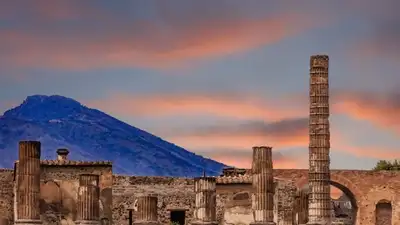
In 79 CE, Vesuvius’ eruption buried Pompeii; today, that 2,000-year-old eruption is helping scientists date Earth’s history more precisely
Pliny the Younger, a Roman teenager (just 17 years old at the time), watched the eruption, lived to tell the tale, and wrote two letters describing it. However, there’s a small twist: the exact date of Pompeii’s destruction isn’t 100 percent settled. Pliny’s account puts it on August 24, but some evidence, like ancient fruit, clothing, and even a charcoal scribble with a later date, suggests the eruption might’ve happened in the autumn.
A new study published in Science Advances has used minerals formed in the Vesuvius eruption to fine-tune argon-argon dating. This isn’t just some academic tweak; arguably, it’s a game-changer. Argon-argon dating is a go-to method for scientists hunting the ages of rocks, volcanic eruptions, asteroid impacts, and even mass extinctions. If you want to know when the dinosaurs vanished or how fast the planet flipped through climate disasters, this clock is one of your best bets. But even good clocks need recalibrating from time to time, especially when the tick of each second could mean thousands or millions of years. What makes Vesuvius so special for scientists isn’t just the volcanic violence; it’s the fact that we know almost exactly when it happened. Historians have argued about whether he wrote them years later, glossing some details, but remarkably, those letters became one of the best time-stamped disasters we have from the ancient world. That certainty is gold for geologists. In science, it’s tough to find a rock whose birthday is written down in a literal eye-witness account. The new study took this into account, checking whether those uncertainties could throw off the recalibration. Thankfully, they don’t really matter for the geological dating. Whether Vesuvius blew its top in August or October, the method remains solid.