
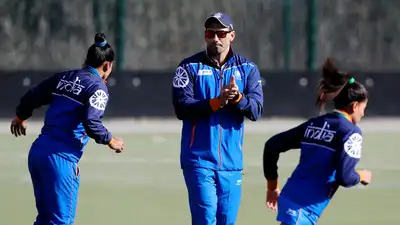
Lombard stresses on menstrual management in training
“We tend not to rest players simply because they’re on the first or second day of their cycle,” he added. “We have realised that it is possible to train and compete during our periods,” said Savita. “The most important thing is to respect our bodies, pay more attention to recovery and understand how to manage the training load.”
“But if they have severe symptoms, we try to manage it, and if required, we rest them in training. That distinction is important in elite sport, where a semifinal or final may fall during a player’s period. The challenge is to prepare athletes to compete through those days while giving them the support they need. Fresh from finishing fifth at the World Cup, India’s women’s hockey team is now preparing for the Asian Games, with menstrual health management part of its performance strategy. For Savita Punia, the approach marks a significant change from the early years of her career, when taking two or three days off during a period was more common.
Today, the focus is on understanding the body, managing training loads and preparing to compete regardless of the cycle.
Wayne Lombard, head of athletic performance, says the approach is guided by symptoms rather than by the calendar alone. “The key for us is to monitor the symptoms during the five days of the cycle,” said Lombard. Players also use training to prepare themselves for periods arriving during tournaments, according to Navneet Kaur. Everyone has a different capacity to tolerate pain,” said Navneet. “We cannot simply say that three or four players are on their periods and take them out,” said Navneet. “I don’t think, as men, we know exactly what women go through,” said Lombard.
Players report on how they are feeling, including where they are in their menstrual cycle and any discomfort they may be experiencing. “If players are having severe symptoms, we adjust things for them. The team also uses WHOOP to track menstrual cycles and provide feedback. But being on a period does not automatically mean being rested. “Every player is different. “I try to prepare myself with the mindset that if my period comes during a tournament, I still have to perform. That does not mean ignoring discomfort. Players can speak to Lombard or the physiotherapists, who may modify a session, offer an alternative or provide rest. Medical support, including pain relief when required, is also available. During an important match, however, the situation has to be managed collectively. “A player can take painkillers if required, and the team also supports her. If she needs a little help, or if another player needs to play a little more in her place, we manage it that way. Join conversation Share your thoughts in the comments Be respectful · TOI community guidelines The willingness to speak openly is perhaps the biggest change. Both players believe younger athletes need to be educated about menstrual health, while teammates should understand the discomfort and mood changes that can accompany a cycle. For Lombard, the experience has also highlighted how much remains to be understood about female physiology. “That’s why the physiology side of women’s sport is really interesting. The aim is not to make periods disappear from the sporting calendar, but to ensure they are no longer treated as an obstacle athletes must face alone. Get the latest Sports News and Live updates. Download the TOI app.
KOLKATA: While the conversation around the impact of menstruation in women’s sports began some time back, the ways to overcome its effects scientifically in a highly physical game like hockey is a recent discussion in Indian women’s hockey. From simply managing periods, the narrative has changed to understanding how they affect each player and adapting one’s training accordingly.
Adjusting Training Based on Player Health
The team is adapting its training regimen to accommodate varying symptoms and pain tolerance among players. During the initial days of recovery, heavy weight training will be minimized, while hockey practice can maintain its intensity, contingent on each player’s condition.
Former India captain emphasized the importance of harnessing natural strengths, stating, “I believe it gives you energy and strength. These are things that women experience naturally, and we shouldn’t view them negatively. We should understand them and use that understanding positively.” This perspective highlights a proactive approach to player wellness and performance.
The focus remains on personalized training adjustments to ensure optimal recovery and maintain team performance.