
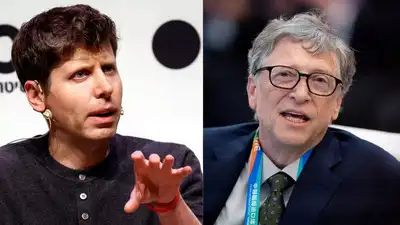
Bill Gates says AI is more dangerous than cars, planes or medicines, and needs a regulatory middle ground
Microsoft co-founder Bill Gates has pushed back on OpenAI CEO Sam Altman ‘s warning against AI “doomerism”, saying every responsible AI leader, Altman included, is already telling the world that artificial intelligence is “very concerning”. Altman had recently said some of the scenarios people imagine about AI are “so dystopian that they sound like the plot of bad science fiction movies. ” In a Sunday interview with Jake Tapper, Gates, who has described AI as more dangerous than nuclear weapons, agreed that the risk can get overblown when people “act like all of humanity is at risk”. But he said AI is more dangerous than cars, planes or medicines, all of which are heavily regulated, and that “there are some grim possibilities if we don’t maintain control.”
Gates’s stance traces back to a nearly 6,000-word essay he published in August. Gates, now 70 and no longer running a company, has said he plans to raise the issue with lawmakers every time he visits Washington. He repeated the point in a post on X, writing that safeguards won’t eliminate every harm but can help stop misuse by bad actors.
Gates said the AI industry is doing its job by raising the alarm. What isn’t getting across, he argued, is that the risks can be kept down “if we’re judicious”. He blamed part of that on governments that swing between two extremes: “let’s not have any safeguards” or “let’s completely stop this”. The world found a workable balance for planes, cars and drugs, he said, and AI needs the same. Finding that balance is something “we don’t have a lot of sophistication” in right now, he added, “but I do believe that middle ground exists. Altman’s “bad science fiction” line came from his address to the UN Security Council on September 23. In the same speech, he said OpenAI wants to avoid both blind optimism and doomerism, and walk a middle path. Altman told the Council that a risk of catastrophe, whether 10% or 0.1%, is not “remotely acceptable”. Since then, he has struck a looser tone, saying on a podcast that “the world should accept some bad things happening”, such as hacks and scams, because people will do far more good with AI. His fixes include a new national and international framework to manage the AI transition, a “Human Reserved” set of jobs such as caregiving that stay with people, and a tax on AI tokens and robots to fund retraining and a stronger safety net. So the three men agree on more than the “doomerism” label suggests.
He also flagged two ways AI could go badly: humans losing control of it, or too much power ending up in too few hands. That speech had a line Gates could easily have written. In it, he named three big risks: jobs disappearing for good, bad actors using AI for cyberattacks and bioterrorism, and AI companions affecting how children grow up. In an interview around the essay, he was blunter about the industry’s own plans: “Self-regulation on the most dangerous tool ever invented? No, thanks! Gates also named Anthropic CEO Dario Amodei alongside Altman. Amodei published an essay in September arguing that AI’s frontier should be paced more slowly, with outside evaluators placed inside AI companies to check their safety work. Where they split is on how much regulation the industry should accept, and how soon. You use AI every day. Now get your AI Quotient. Take the AIQ test.