
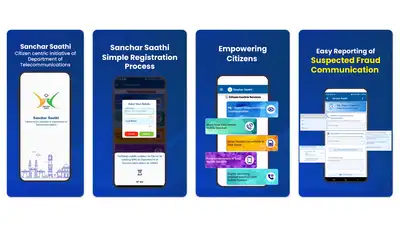
Even though Apple might push back, the government says you can ditch the app if you want. India’s making a new cybersecurity app, Sanchar Saathi, a must-have on all new smartphones. It’s designed to fight phone scams and theft, and it’s already been a big help, recovering tons of stolen devices and stopping millions of fake phone lines.
The Department of Telecommunications (DoT) issued the directive on November 28, 2025, under the Telecommunication Cybersecurity Amendment Rules, marking the first time India has required state-backed software on all mobile devices. The move affects one of the world’s largest smartphone markets, with over 1.2 billion mobile users. The government has mandated that all smartphones sold in the country must come pre-installed with Sanchar Saathi, a cybersecurity application.
From fraud reporting to device blocking, what are the features of Sanchar Saathi app
The app is available both as a mobile application and through a web portal at www.sancharsaathi.gov.in, offering various services aimed at protecting India’s 1.2 billion mobile users from fraud and device theft. Another feature allows users to block and trace lost or stolen mobile devices using the phone’s unique 15-digit IMEI code. Apple’s iOS powers an estimated 4.5% of the 735 million smartphones in the country by mid-2025, according to Counterpoint Research While India’s smartphone market is dominated by Android devices.
Sanchar Saathi, launched in January 2025, is described by DoT as a “citizen centric initiative” designed to empower mobile subscribers and strengthen their security against telecom-related cyber threats. Through its “Chakshu” feature, citizens can report suspected fraud communications, including impersonation scams involving government officials, banks, or police, as well as unsolicited commercial communications (spam). Tarun Pathak, a research director at Counterpoint, told Reuters that “Apple has historically refused such requests from governments,” suggesting potential friction ahead as the 90-day compliance deadline approaches.
The DoT justifies the initiative by citing the prevalence of duplicate or spoofed IMEI (International Mobile Equipment Identity) numbers, which pose serious cybersecurity threats. The app offers several practical services for users. Users can also report malicious web links received through SMS, WhatsApp, Telegram, and other platforms. Once blocked through the app, the device becomes unusable across all networks, even if the SIM card is changed.