
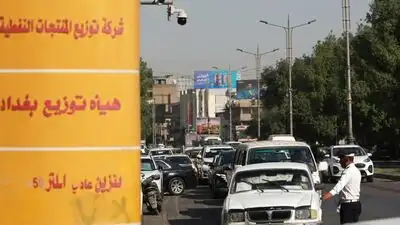
An Iraq’s traffic police officer controls the queues at a petrol station in the Iraqi capital Baghdad (AFP)
Iraq’s oil ministry spokesman Salim Al-Rikabi said the country had been forced to import gasoline to cover the gap between domestic production and consumption, but regional fighting had disrupted tanker movements and delayed shipments, according to Arab News. Iraqis are facing renewed petrol shortages, with long queues forming at petrol stations in Baghdad and other provinces as regional fighting disrupts fuel imports. The petrol disruption is linked to the wider impact of the regional war on shipping through the Strait of Hormuz, a key route for oil and fuel shipments in the Gulf. Reduced tanker traffic has made it harder for Iraq to secure imported gasoline, leaving petrol stations increasingly dependent on limited domestic supplies.
Oil ministry figures cited in recent reports put domestic gasoline production at roughly 31-33 million litres per day, while consumption can reach about 38 million litres, leaving a shortfall of around 5 million litres a day. The US Energy Information Administration (EIA) says Iraq consumed nearly 1.1 million barrels per day of petroleum and other liquids in 2024, while its refineries produce excess heavy fuel oil but insufficient gasoline and diesel. Iraq has expanded its refining capacity in recent years, including the 140,000-barrel-per-day Karbala refinery and a 70,000-bpd expansion at the Basra refinery.
Because of the security situation, while the ministry was seeking additional vessels to maintain daily supplies and strengthen strategic reserves, he further said that Iraq had so far secured only one tanker. Because its domestic refineries do not produce enough gasoline to meet demand, iraq is a major crude oil producer but remains dependent on imported refined fuel. Because its refineries do not produce enough petrol and diesel to meet domestic demand, iraq’s petrol problem Despite being an OPEC+ (Organization of the Petroleum Exporting Countries) member and a major global crude oil producers, Iraq still depends on imported refined fuel.
The government says the shortage is temporary and is working to secure additional tanker shipments and rebuild fuel reserves. The International Energy Agency also said Iraq’s product imports had declined as domestic refining activity increased, showing that the country had been moving toward reducing its dependence on foreign fuel before the latest disruption. Panic buying has also triggered the shortage. The impact has been visible across Baghdad and other parts of the country, with motorists facing lengthy waits at petrol stations and some stations closing after running short of supplies. Shortages of gasoil have also affected heavy vehicles, adding to congestion and pressure on transportation. But imports of petroleum products, primarily petrol, have remained necessary. Catch the latest World News and Live updates. Download the TOI app.