
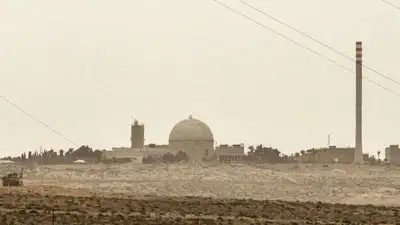
In 1960, a mysterious construction site in Israel’s Negev desert caught the attention of American officials. When questioned about the facility near Dimona, Israeli officials had a rather unusual explanation. It was a textile factory.
But behind that explanation, Israel was building the foundations of a nuclear programme that would remain hidden from public scrutiny for decades. Washington knew about it, successive American administrations chose not to challenge it publicly, and Israel continued to neither confirm nor deny possessing nuclear weapons.
On May 4, more than two dozen Democratic lawmakers, led by Castro, wrote to Rubio seeking information about Israel’s nuclear capabilities, its potential use of nuclear weapons and the administration’s contingency planning. A declassified July 1969 memorandum by then US national security adviser Henry Kissinger to President Richard Nixon reflected these concerns. During a September 1969 meeting with Prime Minister Golda Meir, the two governments reached an understanding that Israel would not publicly declare, test or advertise its nuclear weapons, while Washington would avoid publicly challenging its nuclear status.
Responding to questions from Democratic Congressman Joaquin Castro, Rubio said, “I think most of the world assesses that they do, but we’ve never, they’ve never, acknowledged that publicly. Castro, who serves on the House foreign affairs and intelligence committees, told CNN that the policy of nuclear ambiguity had become “reckless and dangerous”. In their letter, the lawmakers warned that “the risks of miscalculation, escalation, and nuclear use in this environment are not theoretical”. Kissinger argued that Washington should prevent Israel’s nuclear possession from becoming an “established international fact”, fearing the consequences of openly acknowledging it.
He added that Washington does not discuss the matter as part of its foreign policy. The pressure has also moved to Capitol Hill. They argued that Washington could not develop a coherent non-proliferation policy for the Middle East while maintaining official silence about the nuclear capabilities of a country fighting alongside it. Washington eventually became central to preserving this arrangement. the approach changed under President Richard Nixon While President John F Kennedy initially pressed Israel to allow inspections of its Dimona facility.