
Bodies recovered from Nepal’s flood-hit rivers pile pressure on morgues, as authorities race to preserve and identify the dead
In Chitwan, 137 bodies had been recovered from stretches of the Trishuli and Narayani rivers between Phishling and Golaghat by Thursday morning. A temporary storage centre is being prepared in Bharatpur with a capacity for around 250 bodies. Ninety-three bodies have been brought there from Tanahun, Gorkha, Nawalparasi East and Dhading, while hospitals across Kaski can accommodate only 88 bodies.
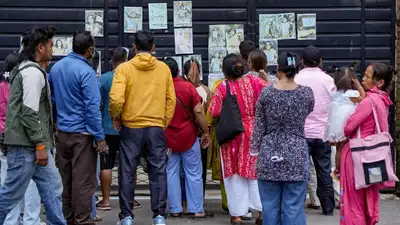
If needed, the electric crematorium at Devghat will also be used, according to a report by the Kathmandu Post. Nepal is facing a grim challenge after the devastating Bhotekoshi floods, with bodies being recovered across several districts and morgues running out of space. Bodies recovered from Rasuwa and Nuwakot have been found as far downstream as Chitwan, Tanahun and Nawalparasi. Authorities are transferring remains to neighbouring districts as hospitals struggle to accommodate them. Air conditioners, temperature-controlled rooms and dry ice will be used to slow decomposition. The disaster has also left families searching for missing relatives, with people arriving from Rasuwa, Nuwakot and Gorkha carrying photographs in the hope of identifying recovered remains. Pokhara is also struggling. Police are photographing bodies, collecting fingerprints and DNA samples and conducting post-mortems to help with identification. Unidentified remains may eventually be buried at designated sites, with tags and records maintained for possible identification later. The pressure is mounting in other districts too. Gorkha, Nawalparasi East and Dhading have transferred bodies to Pokhara, Kathmandu and other neighbouring areas after exhausting local storage capacity. Catch the latest World News and Live updates. Download the TOI app.
Bodies at Pokhara Academy of Health Science are being stored at 2-6°C, but officials say this can preserve them for only around 10 days to two weeks.
“By the numbers, we are already above capacity,” Kaski chief district officer Kuman Singh Gurung said as quoted by The Post He added that nearby districts may have to be used if more bodies arrive. Authorities are racing against decomposition. Longer-term storage would require sub-zero facilities, which Pokhara currently lacks.