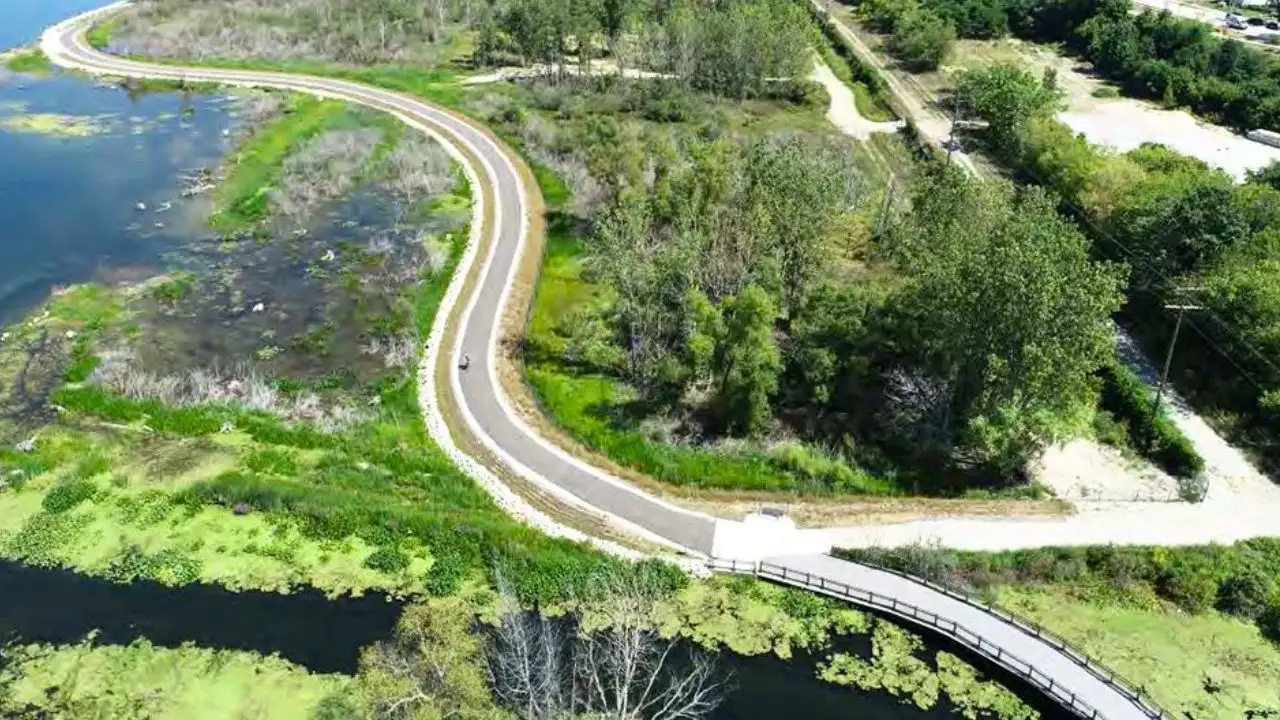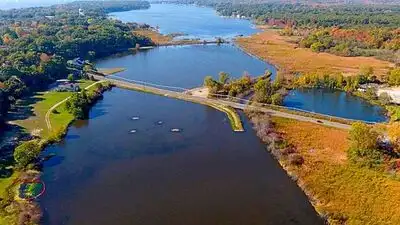
PC: Muskegon Lake Watershed Partnership/ NOAA Fisheries
The lake was designated one of the most environmentally degraded sites in the Great Lakes about 40 years ago. In September 2025, it was officially removed from the list after restoration efforts addressed problems including habitat loss, contaminated soils, and hardened shorelines. Since 2008, NOAA Fisheries has funded restoration projects around the lake through the Great Lakes Commission, with local oversight from the West Michigan Shoreline Regional Development Commission. The work has restored and reconnected 134 acres of wetland and offshore habitat and more than 7,000 feet of shoreline. It also removed 347,350 tons of debris and 190,000 tons of contaminated soil, while improving habitat for fish and wildlife. Since 2008, projects restored and reconnected 134 acres of wetland and offshore habitat and restored more than 7,000 feet of shoreline. They also removed 347,350 tons of debris and 190,000 tons of contaminated soil. At Veterans Memorial Park, partners restored more than 15 acres of habitat and more than 6,000 feet of shoreline. They also removed more than 40,200 metric tons of sediment. At the former Amoco site, work restored 9.8 acres of habitat and 575 feet of shoreline while removing 1,700 feet of concrete wall. PC: Muskegon Lake Watershed Partnership/ NOAA Fisheries Muskegon Lake was officially removed from the EPA’s Areas of Concern list in September 2025, marking the end of a process that began after its designation about 40 years earlier. Partners raised approximately $80 million for restoration in Muskegon Lake, according to NOAA Fisheries. More than $36 million came from NOAA Fisheries, primarily through the Great Lakes Restoration Initiative. In 1987, Muskegon Lake was listed as a Great Lakes Area of Concern. It was one of 43 ‘toxic hot spots’ in the United States and Canada. At Lower Muskegon River, three dikes were removed from a former celery farm, reconnecting nearly 58 acres of wetland habitat with the river. At Bear Creek, more than 36 acres of coastal wetlands were reconnected, improving water flow and fish passage to Muskegon Lake. The project removed roughly 120,000 cubic yards of sediment containing harmful levels of phosphorus. At Muskegon Lake Nature Preserve, nearly 8 acres of wetland habitat were restored. Another project removed more than 300,600 metric tons of logging-era sawmill debris from four sites.
Because environmental conditions were affecting the waterway, fish and wildlife, human health, and the local economy, the lake was listed. Muskegon Lake in Michigan has been removed from the US Environmental Protection Agency’s Areas of Concern list after about decades of restoration work. The restoration work changed several parts of the Muskegon Lake area. Other projects restored wetlands, improved water flow and fish passage, removed dikes, and cleared logging-era sawmill debris across Muskegon. Partners worked for decades to address the problems required for delisting. These included fish and wildlife habitat loss, contaminated soils, and hardened shorelines. Muskegon Lake’s environmental problems developed as industries expanded around the lake in the late 1800s. Lumber mills, chemical companies, foundries, a coal-fired power plant, and a paper mill filled parts of the shoreline and contaminated the water and sediment. The contamination included compounds such as mercury and polycyclic aromatic hydrocarbons. These conditions contributed to habitat loss and degradation, water quality concerns, and declines in fish and wildlife populations. The designation was based on beneficial use impairments, which indicate how poor waterway conditions affect the environment, human health, and the local economy. Projects also focused on reconnecting wetlands and improving habitat for fish and wildlife. You use AI every day. Now get your AI Quotient. Take the AIQ test.