
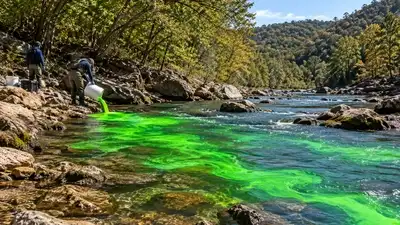
AI-generated representative image of researchers using fluorescent dye to trace the flow of water through a rocky creek. Image credits: ChatGPT
On October 13 and 14, 2020, the investigation began when USGS researchers examined the Big Creek watershed to identify regions where streams lost or gained water. The team took 13 stream-discharge measurements and recorded 48 observations of zero surface flow during the 28-hour investigation. After the initial examination, the team established 27 monitoring regions to detect fluorescent tracer dyes.
Primarily, the team focused on Big Creek and the Left Fork of Big Creek, while also examining the tributaries where road access permitted. These observations helped identify losing reaches, where water leaves a stream channel, and gaining reaches, where water enters it.
On October 15, they introduced fluorescein into a flowing section of the Left Fork of Big Creek, upstream of a completely dry reach. Because karst systems feature permanently flooded phreatic conduits deep beneath unsaturated surface gravel packs, this underlying subterranean plumbing network remained active, providing the necessary hydrostatic mechanism to transport the tracer. The dye gave a way to test whether water from the injection area was connected to the locations further downstream. Scientists could then examine monitoring sites for proof of the tracer instead of relying only on the appearance of the creek.
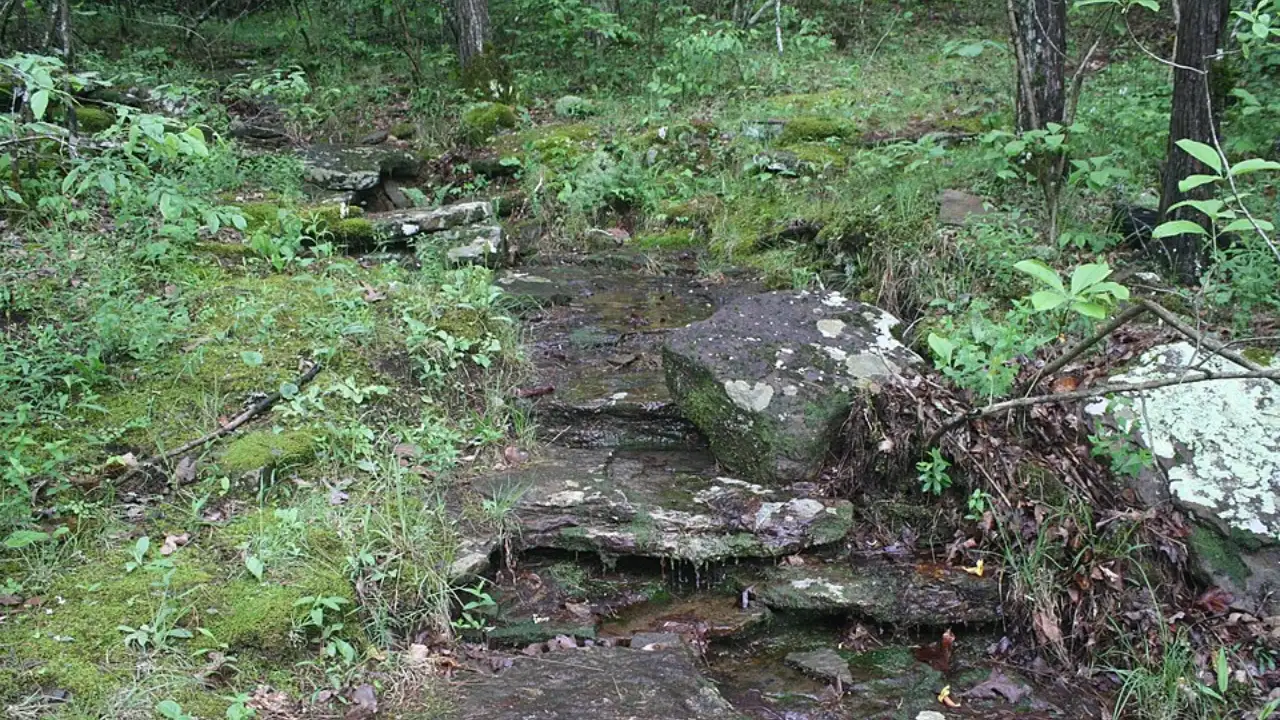
Activities that take place on the surface may impact the quality and quantity of groundwater in such interconnected systems, according to the USGS. It is essential to understand the interaction between surface water and groundwater in karst areas since the transport of water through the subsurface may be unpredictable. Identifying where streams lose or regain water can help researchers and resource managers understand how water moves through a watershed and assess potential pathways through which contaminants could travel. Notably, the Big Creek study identified the hydrological connection and was not a test for pollutants.